Abstract
The human capital theory states that individuals, such as smallholder farmers, can improve their skills through training and education to increase their future productivity and value in the marketplace and ultimately ensure food security. However, it is crucial to determine the gap in their skill set to allow for custom training programs. Against this backdrop, we employ the Borich needs assessment model to a dataset of 252 randomly selected smallholder farmers belonging to the Mulimi Farmer Scheme in Zambia to determine their training needs. Of these farmers, 35% had access to extension services and received technical farming support. However, only 30% of them attended some form of training in the past, mainly focusing on technical training. The biggest training need highlighted by the farmers was technical training, followed by farm business management training. Based on the Borich needs assessment model results, we recommend prioritizing the following areas for training: farm resource management, developing a business plan, and farm record keeping. However, considering the farmerâs diverse educational backgrounds and prior knowledge, we suggest tailoring the training approach to meet their specific needs.
1. Introduction
Smallholder farmers are vital to ending food insecurity (Fan and Rue, 2020) as they produce about 30% of the worldâs food supply on 24% of the worldâs arable land (Ricciardi et al., 2018). The definition of smallholder farmers varies depending on the context, country, and ecological zone (FAO, 2012). However, for this study, a smallholder farmer is a farmer who participates in one or more farming enterprises and cultivates a small plot of land varying between one to ten hectares. Smallholder farmers are usually subsistence farmers who produce mainly staple foods and only sometimes produce a surplus (ITA, 2022). Although these farmers are vital to ensuring food availability and security, particularly in developing countries, many face barriers to profitability (Fan and Rue, 2020) and need support to run their farms successfully (Fan and Rue, 2020). Often, help comes in the form of resources, which include finances (Aliber and Hall, 2012; Glover, 2007; Leonardo et al., 2018) and training programs (Alarima et al., 2011; Fan et al., 2013; Stewart et al., 2016). According to Becker (1962) and Rosen (1976) on human capital theory, individuals can improve their skills through training and education, thereby increasing their future productivity and value in the marketplace. This could also have a lasting impact on the sustainable development goals of no poverty, no hunger, good jobs and economic growth, quality education, and reduced inequalities (Abraham and Pingali, 2020). Therefore, training and education are crucial components of smallholder farmer development policies.
Several scholars evaluated the training needs of smallholder farmers in developing countries, including South Africa (Oladele, 2015; Tshwene, 2019), Nigeria (Adeogun et al., 2013; Daudu et al., 2019; Farinde and Ajayi, 2005), India (Sajeev et al., 2012), Iran (Hashemi, 2009) and the Philippines (Paladan, 2021). Although many studies were conducted in developing countries, there is a dearth of literature regarding the training needs of smallholder farmers in Zambia. In Zambia, smallholder farmers represent approximately 90% of Zambiaâs farmers (WFP, 2020) and produce about 80% of the domestic food supply (ITA, 2022), making them invaluable to the food system. Creating and developing training programs and development policies without insights into their training needs could be futile as the training programs might not address their specific needs. Against this backdrop, the study aims to determine the training needs of Zambian smallholder farmers to support the development of targeted training programs. Zambian smallholder farmers cultivate less than ten hectares of land, produce their leading food source, farm a greater variety of foods, and are not fully integrated into markets (FAO, 2015).
According to Garavan et al. (2003), a training need is a lack of skills or abilities that can be improved through training. Training needs analyses are strategic processes that provide clear guidelines to identify shortcomings in skill sets and insufficient knowledge that should be prioritized during training (Altschuld and Lepicki, 2010). Needs assessment research is essential in identifying training needs and prioritizing information dissemination (Dlamini and Huang, 2020). In the area of training needs analysis, numerous empirical models are used. These include the Kissack and Callahan Model (Kissack and Callahan, 2010), the Latham Model (Latham, 1998), the Training Need Analysis Model (Goldstein, 1998; McGehee and Thayer, 1961) and the Borich needs assessment model (Borich, 1980), which is employed in this study. Introduced by Borich (Hashemi et al., 2008; Dlamini and Huang, 2020), this model is widely employed in agricultural education to assess and address the training needs of agriculture teachers, extension officers, and farmers. Its strength lies in its capacity to gather data on the respondentsâ current and desired state (Borich, 1980).
The study makes the following main contributions. First, the study provides guidelines for universities, training centers, and extension officers in developing training programs for Zambian smallholder farmers. Second, although we acknowledge that African smallholder farmers are not a homogenous group, we expect the results to act as a point of departure for training programs in other African countries. Third, the study makes an empirical contribution to the dearth of literature on training needs for Zambian smallholder farmers.
Creating and developing training programs and policies without insights into farmersâ training needs could be futile as the training programs might not address their specific needs, hindering the adoption of the knowledge. Tailor-made training programs would mean improved farming operations and management decisions. This could improve the livelihoods of smallholder farmer families, improve food security, stimulate rural development, and contribute to economic growth. To achieve these goals, policymakers need to direct investments to adequate training programs, and designers and facilitators of training programs need to be cognizant of the differing needs of their participants.
The next section outlines the empirical framework, including a methodology overview, sample selection, data collection, and analysis using the Borich needs assessment model. The third section contains the descriptive results to provide an overview of the data collection and the analytical results of the Borich needs assessment model. In the fourth section, we draw key conclusions from the results to make recommendations for training program development.
2. Empirical framework
A training needs analysis is required for effective and accessible training programs to be developed. One of the earliest works influencing training needs analysis models was that of McGehee and Thayer (1961). This work introduced three areas to be evaluated in a training needs analysis. These include an organizational analysis to ensure that the training program supports the organizationâs strategic direction, an operational analysis to ensure that the employee has the necessary skills to efficiently and effectively perform the task at hand, and an individual analysis that identifies the training and development strategies to support employee performance. Later, Latham (1988) expanded this framework by adding a demographic analysis, evaluating the organizationâs staff, and incorporating a task analysis to compare job requirements with employee skills. Another model, the Kissack and Callahan Model (Kissack and Callahan, 2010), introduced a culture analysis in their training needs analysis to ensure that the training programs match the organizational culture and positively affect the organizationâs culture regarding its values.
To identify the training needs of Zambian smallholder farmers, the Borich needs assessment model was chosen due to its robust methodology for prioritizing training needs by comparing perceived importance and actual competence levels. Alternative methods were considered but found less suitable for the studyâs objective. McClellandâs Competency Model, for instance, emphasizes job-specific competencies (McClelland, 1973), but its focus on identifying ideal traits for high performance may overlook the specific training priorities of smallholder farmers, who often have diverse skill gaps. The Nominal Group Technique (Anderson and Ford, 1994) facilitates consensus building in identifying training needs but is labor-intensive and challenging to implement with large, dispersed farmer groups. While the Gap Analysis Matrix (Davids et al., 2002) visually identifies gaps between current and desired states, it does not incorporate the weighted importance of specific competencies, which is critical for prioritizing training efforts in resource-constrained settings. The Borich needs assessment modelâs ability to systematically rank training needs using discrepancy scores, grounded in both importance and competence, made it the most appropriate choice for addressing the skill gaps of smallholder farmers in Zambia.
According to Borich (1980), a needs assessment identifies the gap between the current performance and the expected performance of individuals through a discrepancy analysis using the mean weighted discrepancy score (MWDS). The Borich needs assessment model involves four steps: (1) Determine competencies to assess, (2) Participants (respondents) self-assess; (3) Rank training needs; (4) Compare high-priority competencies. The discrepancy is then calculated between the relevance of each competency task (importance) and the level of knowledge of each competency task (knowledge) (Tshwene, 2019). Therefore, positive MWDS indicates a training need, and the higher the positive MWDS, the more significant the gap between the level of importance and knowledge and the more significant the training need (Narine and Harder, 2021). A critical assumption of this method is that the respondent is the best (and objective) judge of their expertise (Umar et al., 2017). In addition to this assumption, there are two limitations to using the Borich needs assessment model, highlighted in more recent literature. First, the MWDS relies on using the mean value of a single ordinal item (importance or knowledge of a specific competency task), which should be interpreted with care. Secondly, the MWDS ranges from â4 to 20 for 5-point Likert scale questions, which cannot be compared with studies that use a 3-point or a 7-point Likert scale (Narine and Harder, 2021). Despite these limitations, the paper uses the Borich needs assessment model (Borich, 1980) because it is valuable due to its capacity to gather data reflecting the respondentsâ current situation and their desired state. The model provides a more accurate evaluation of the farmerâs competency needs by enabling the respondents to indirectly highlight their training requirements. The specific areas requiring training are identified through mathematical computations, utilising a discrepancy analysis with MWDS (Borich, 1980; Olorunfemi et al., 2020).
In addition, this precision is critical in designing effective training programmes (Hanagriff et al., 2020), particularly for smallholder farmers, where skills gaps directly influence productivity and profitability. The modelâs emphasis on quantifying skills gaps through MWDS provides actionable insights that are both measurable and specific for the training needs of farmers. In comparison to other developed needs assessment models, the Borich modelâs simplicity and practicality make it adaptable to varied contexts, enabling stakeholders to effectively identify and address the most pressing needs. The modelâs comprehensiveness provides a solid foundation for this study to evaluate the competencies evaluate training needs of smallholder farmers in Zambia.
3. Methodology
3.1 Study area
The study was conducted in Zambia with farmers in Lusaka, Copperbelt, and the Eastern and Southern Provinces. The provinces were selected based on the authorsâ knowledge of how they represent a diverse range of socio-economic and agricultural characteristics relevant to the research focus. As major agricultural and population hubs, these provinces provide a broad and representative sample of the population under study. Zambia is located between 8° and 18° south of the equator on a vast plateau. Its climate is mainly sub-tropical, with about 95% of rainfall occurring during the wet season from November to April (Kaczan et al., 2013). Around 12% of Zambiaâs land is suitable for cultivation, and an additional 21% is suitable for grazing. The agricultural sector contributes approximately 21% to the countryâs GDP (CIA, 2011). Zambiaâs population is proliferating, with two-thirds relying on agriculture for their livelihoods. About 64% of Zambians live in rural areas, where subsistence, rain-fed agriculture is the primary economic activity (Govereh et al., 2009). The main crops cultivated include maize, sorghum, millet, rice (paddy), wheat, cassava, groundnuts, sunflower, cotton, soybeans, mixed beans and tobacco. Maize, the staple food, holds the most significance, accounting for over half of the countryâs calorie consumption, although this proportion is declining (Dorosh et al., 2009).
3.2 Research design
This study employed a cross-sectional survey design, which aligns with the studyâs objective of assessing training needs among smallholder farmers in Zambia. A cross-sectional survey is particularly suitable for this research as it allows for collecting data from a relatively large sample at a single point in time, providing a snapshot of current training requirements and socio-economic conditions (Creswell, 2016). This design effectively identifies relationships between variables, knowledge, and the importance of skills to identify skills needs and is widely used in agricultural research to ensure systematic and replicable results (Khoza et al., 2022; Kithome et al., 2022).
The decision to use a quantitative approach was based on the need for objective and statistically robust analysis of data collected from smallholder farmers. Structured questionnaires were used to gather data, enabling the systematic measurement of variables and allowing for statistical analysis to identify trends, patterns, and correlations. By adopting this design, the study ensures that the research objectives are addressed in a logical and evidence-based manner.
3.3 Sample selection
The research employs a probability sampling technique (simple random sampling) to sample smallholder farmers in Zambia. We used smallholder farmers belonging to the Mulimi Farmersâ Scheme as the sample frame. The Mulimi Farmersâ Scheme, founded by Zindaba Hanzala, is a Zambian social enterprise that provides extension, funding, insurance, sales and marketing services to their farmer members. This farmersâ scheme comprises a population of approximately 6000 farmers with 30% in the Eastern Province, 26% in Lusaka, 20% in the Central Province, 10% in the Copperbelt Province, 5% each in the Southern and Northern Provinces, and 4% in the Western Province. Within the population, we identified current members with access to training and extension services, ensuring they are informed about available training opportunities, and we selected 60 respondents from both Lusaka and Eastern provinces, 55 from Copperbelt, and 76 from the Southern Province to get a representative sample while staying within the budget. By utilizing this sampling technique, the study can include a diverse group of smallholder farmers across Zambia with different farming enterprises from different provinces to answer the research question related to training needs (Saunders and Townsend, 2018), ensuring a comprehensive insight. The selected farmers typically farm with field crops, vegetables, and livestock in four provinces, including Lusaka, Copperbelt, Eastern Province, and Southern Province.
Of the 273 farmers initially interviewed, 252 respondents were included in the final data set used for analysis. During the data cleaning, eight respondents were excluded due to partial completion, and 13 were excluded because they cultivated more than 10 ha, exceeding the defined threshold. To ensure the study targeted the intended population, we adopted the FAO definition of smallholder farmers as those farming less than 10 ha (FAO, 2015). Although the Mulimi Farmersâ Scheme provided the sampling frame, they do not have a formal definition of smallholder farmers. By aligning our criteria with an internationally recognized standard, we ensured analytical validity and maintained the studyâs focus on the smallholder farming population. These exclusions represented a small proportion (4.8%) of the initial sample and were necessary to ensure homogeneity within the sample and adherence to the studyâs target group. This process was essential for maintaining the integrity of the analysis and accurately reflecting the characteristics of smallholder farmers in Zambia.
3.4 Data collection and analysis
The researchers utilized a primarily a close-ended questionnaire with a few open-ended questions to gather primary data from the respondents. The questionnaire was administered by eight pre-trained interns working with the Mulimi Farmersâ Scheme in Zambia in May 2022. These interns are familiar with the local language, the areas, and the smallholder farmers of Mulimi.
The questionnaire was divided into five subsections covering the following: (1) demographics and farm characteristics, (2) challenges faced by the smallholder farmers, (3) current training programs and extension services available to the smallholder farmers, (4) questions related to the importance, and knowledge of specific competencies, and (5) preferences related to the type and mode of training. Upon completion, the questionnaires were coded in Excel, and the MWDS were calculated to determine the smallholder farmersâ training needs using an Excel-based MWDS calculator (Umar et al., 2017). In addition to the MWDS, descriptive statistics were used to describe some of the key attributes of the surveyed smallholder farmers, such as the farmer and farm characteristics, key challenges faced, and training preferences.
The MWDS, based on the 3-point Lickert scale questions related to importance (not important, important/ neutral, very important) and knowledge (none, medium, high) of specific competencies, was used to determine the overall ranking of each competency. The competencies selected for this study were sourced from other farmer needs assessment studies (Farinde and Ajayi, 2005; Olorunfemi et al., 2020; Sajeev et al., 2010; Tshwene, 2019) and verified by the Mulimi Farmersâ Scheme management for relevance. These competencies included maintaining farm records, business planning, financial management, and specific sets of competencies related to specific farming enterprises, such as crop farming, vegetable farming, and livestock farming, depending on their most significant source of income.
To calculate the MWDS, first, a discrepancy score (DS) was calculated for each individual on each competency by subtracting the knowledge rating from the importance rating (Equation 1). Second, a weighted discrepancy score (WDS) was calculated for each individual on each competency by multiplying the discrepancy score by the mean importance rating (Equation 2). Third, the MWDS was calculated for each competency by taking the sum of the weighted discrepancy scores and dividing it by the number of observations (Equation 3) (Borich, 1980).

Citation: International Food and Agribusiness Management Review 28, 1 (2025) ; 10.22434/ifamr1069
where DS is the discrepancy score, A is the importance rating of each competency, B is the knowledge rating of each competency, i is the individual smallholder farmer, j is the competency area, WDS is the weighted discrepancy score, Ä is the mean importance rating, MWDS is the mean weighted discrepancy score and N is the number of observations. A positive MWDS indicates the need for training, while a negative MWDS indicates no need for training (Harder et al., 2009). Moreover, the higher the MWDS, the greater the knowledge of the competency (Oladele, 2015).
4. Results
This section presents results from the study, presenting an overview of the demographics of the smallholder farmers, their farm characteristics, and their primary farming activities. Following this, the needs analysis is detailed, starting with an exploration of the challenges encountered by the farmers. Subsequently, the MWDS is calculated and interpreted, providing insights into the farmersâ training needs. Finally, the section discusses the preferences expressed by the farmers regarding the type and mode of training they prefer.
4.1 Demographic characteristics
The dataset comprised responses from 58% males and 42% females. The findings are consistent with those of Mdoda and Mdiya (2022), who observed male dominance in farming and agriculture, as males typically serve as the landowners and heads of households responsible for making family decisions. The majority of the farmers mainly farmed in the Lusaka Province (41%), followed by the Copperbelt (21%), Eastern (20%), Southern (16%), and Central (1%) provinces.
Before starting their farming operations, 19% of the farmers were unemployed, 42% had always been farmers, and the remaining 39% had off-farm employment. The average age of the smallholder farmers is 42 years, with the oldest farmer being 89 and the youngest being 19. The results are consistent with those of Sikundla et al. (2018), which suggest that farming is predominantly practised by older individuals. This trend may have significant implications for the sustainability of farming among the younger generation, who are expected to succeed the current farmers. On average, these farmers have 12 years of farming experience. The majority (39%) of the farmers completed primary school education, followed by secondary school education (35%) and no formal education (17%). Only 8% of the farmers completed tertiary education, and 1% completed a postgraduate degree. Farmers with more knowledge and education are more likely than illiterate ones to access training programs to increase their production (Makamane et al., 2023).
4.2 Farmer socioeconomic characteristics
This section explores the socio-economic characteristics of the 252 smallholder farmers surveyed, providing insights into their land use, income sources, farming profitability, key challenges, and production diversity. Understanding these characteristics is essential for contextualizing their constraints and opportunities and later-on understanding their skills needs.
The land sizes ranged from 0.4 to 300 ha with an average of 8 ha. The area cultivated ranged from 0.01 to 10 ha, with an average area cultivated of 3ha. Most of the smallholder farmers own the land (79%) and work their own land without support from hired employment (72%). The remainder farm on family land (18%), communal land (19%), or privately leased land (2%). Farming was the main source of income for most farmers (84%), while the rest relied mainly on off-farm income. The farmers reported an average annual farming income of 2314 USD.1
Farmers were asked to rate the perceived profitability of their farming operations. The majority (46%) of the farmers perceived their farms as profitable, 26% were neutral towards the statement, and 28% perceived their farms as unprofitable. The farmers identified high input costs, lack of inputs, lack of capital, and high prevalence of pests and diseases as the key constraints to profitability, aligning with the constraints identified by the World Food Programme (2020) as limited access to inputs, finance, and post-harvest storage.
Subsequently, the farmers were presented with a 5-point Likert scale questionnaire featuring 30 challenges gathered from previous studies (Dlamini and Huang, 2020; Mabuza and Ndoro, 2023; Sanjeev et al., 2012; Tshwene, 2019). The top three challenges identified by the smallholder farmers were the cost of transport (4.8), high input costs (4.7), and distance to the market (4.6). Low product prices and a lack of capital, credit, and knowledge all scored 4.5, followed by pests and diseases (4.4) and water availability (4.4).
Smallholder farmers often produce a wider range of products compared to larger commercial farmers. According to the FAO (2015), smallholder farmers who are not fully integrated into markets produce their main staple in combination with other products as a risk mitigation strategy. By producing many crops, they stabilize their income and avoid price shocks. This diverse production system also contributes to improved dietary diversity, ensuring that farmers and their families can access a range of nutrients from different food sources (Giller et al., 2021). This trend was evident in the sample of smallholder farmers in the study area, where a similar pattern of diversified agricultural production was observed. On average, smallholder farmers in our study produce at least four products. Specifically, 21% of farmers produce three products, 19% produce four, and 15% produce two. Additionally, 15% of farmers produce up to seven products, while only 6% focus on one product. Similar to the rest of the Sub-Saharan smallholder farmers (FAO, 2015), maize (as the main staple product) is the most produced product by the respondents (91%), followed by vegetables (mainly rape, sweet potatoes and tomatoes) (60%), chicken (55%), groundnuts (27%), goats (25%), soybeans (21%), beans (21%) and cattle (19%). Recent research by the FAO (2023) emphasizes the crucial role these mixed farming systems play in sustaining agricultural livelihoods and supporting rural development throughout the East and Southern African region.
4.3 Training needs analysis
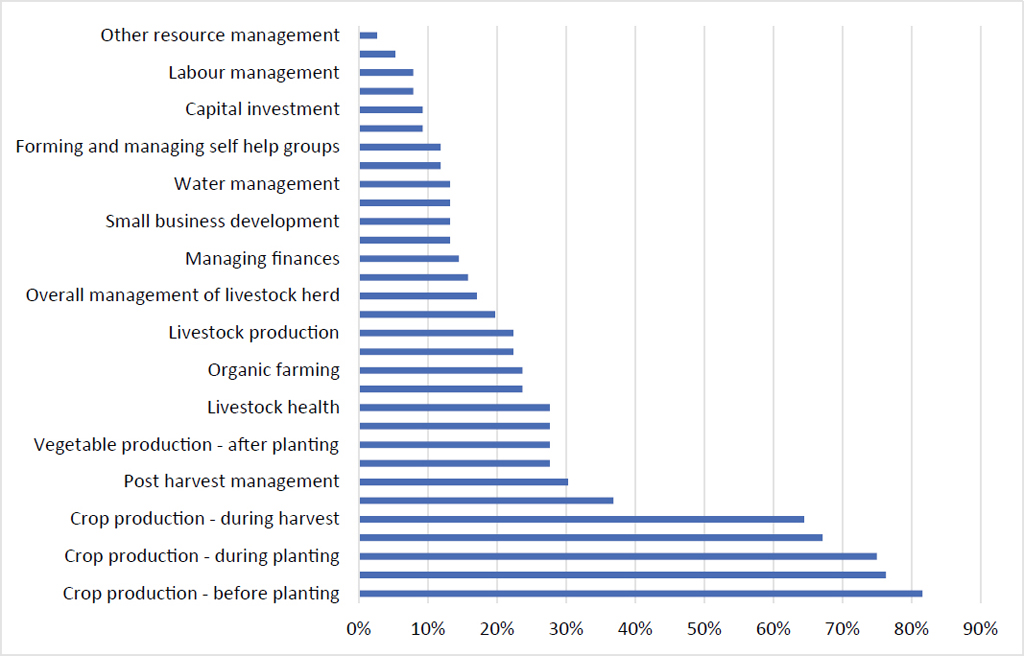
The smallholder farmersâ training needs were gauged through a series of questions. First, we asked the farmers if they attended any training programs since they started farming. Only 30% of the farmers attended training programs, with most of the training programs focusing on the technical aspects of crop and livestock production (65%). Only 18% of the farmers attended finance and business management training. Interestingly, 7% of the farmers received training in conservation agriculture. The main reason for farmers not attending training programs is that they are unaware of training opportunities (63%) and could not attend due to other responsibilities (14%). Second, the farmers were asked about the availability of extension services for farmer support. Findings revealed that only 35% of the farmers had access to mainly government extension officers (86%) who provided technical training on crop, vegetable, and livestock production (Figure 1). Third, an open-ended question was posed to the farmers: âIf you could get training in any five things, what would those five things be?â All smallholder farmers expressed a need for technical training to enhance their current farming enterprises. This is noteworthy, considering that many had previously received technical training, and these are the typical areas where extension officers assist.
Extension services available to smallholder farmers.
Citation: International Food and Agribusiness Management Review 28, 1 (2025) ; 10.22434/ifamr1069
Farm business management emerged as another significant training need (15%), particularly the need for training in completing credit applications and insurance use. Other identified training needs included mechanization (8%), beekeeping (7%), fish farming (7%), animal health management (6%), financial management (6%), marketing (6%), water management and irrigation (6%).
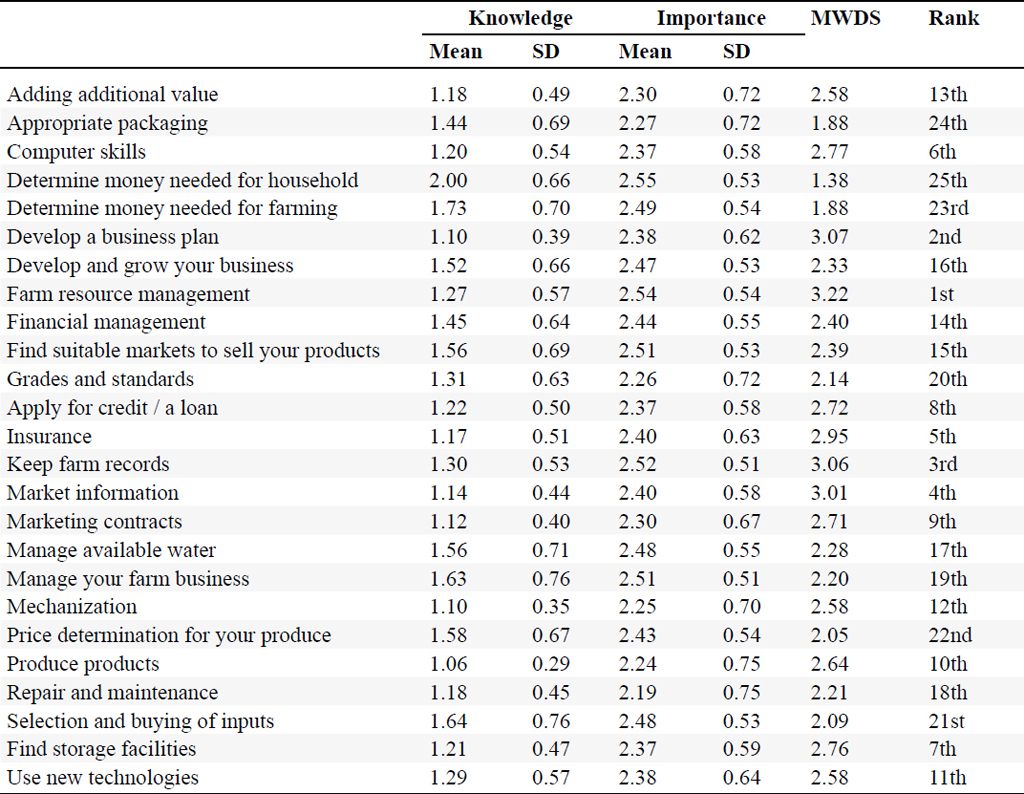
Lastly, to identify the gap between the smallholder farmersâ current and expected knowledge, the respondents were presented with three sets of 3-point Likert scale statements relating to their competencies. The first set contained statements relating to general farm management competencies, and the second and third sets were specific to crop farming and livestock farming. The five most important training needs relating to general farm management were farm resource management, developing a business plan, keeping farm records, knowledge of market information, and insurance (Table 1).
General training needs of Zambian smallholder farmers
Citation: International Food and Agribusiness Management Review 28, 1 (2025) ; 10.22434/ifamr1069
Earlier studies (Daudu et al., 2019; Oladele, 2015; Sajeev et al., 2012) have not extensively focused on general farm management competencies. However, a study on smallholder women irrigation farmers in South Africa identified the marketing of products as a critical training need (Tshwene, 2019). Paladan (2021) also found that developing a small business was a critical need among female smallholder farmers in the Philippines.
We disaggregated our general training needs results by gender to explore potential gender-specific training needs. For the 58% male farmer respondents, farm resource management was the most important need, followed by developing a business plan, insurance, knowledge of market information and keeping farm records. The 42% female farmer respondents highlighted training needs for keeping farm records, farm resource management, service provider storage facilities, knowledge of market information, and developing a business plan (Table 2).
General training needs of Zambian smallholder farmers by gender.
Citation: International Food and Agribusiness Management Review 28, 1 (2025) ; 10.22434/ifamr1069
Interestingly, our results regarding the training needs for market information among female farmers differ from the findings of Tshwene et al. (2019), who reported that South African female farmers prioritized training in marketing competencies, including reading and interpreting marketing information, price determination, and marketing contracts. This difference may be attributed to variations in agricultural systems, market access, and socio-economic conditions between Zambia and South Africa. Such regional differences highlight the importance of tailoring training programs to the specific needs and contexts of smallholder farmers in different countries.
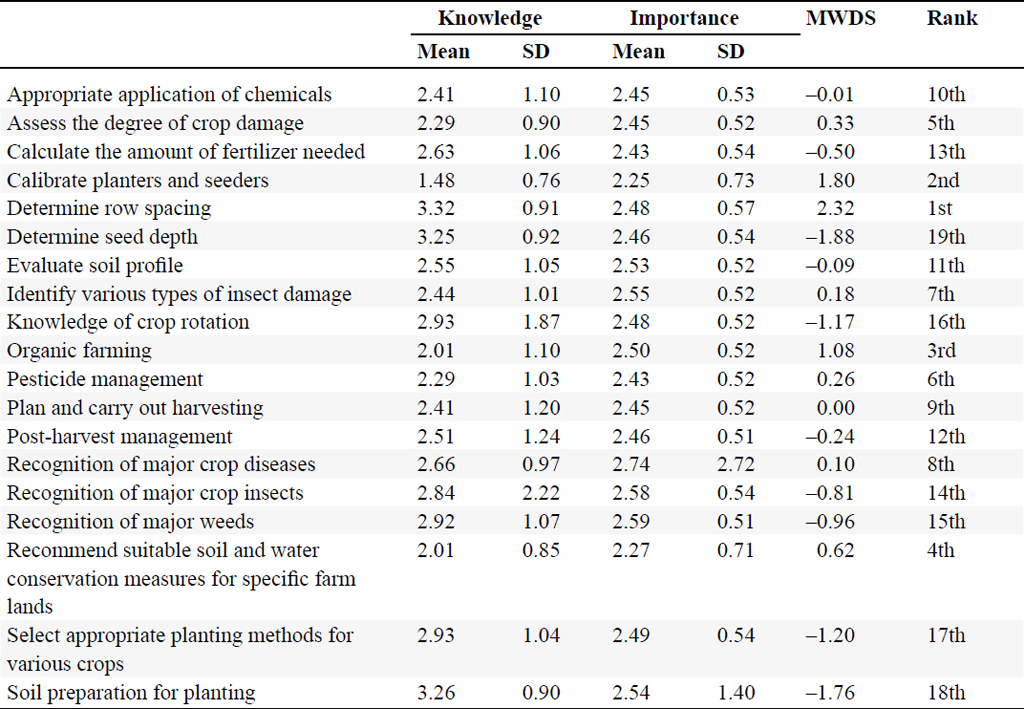
Many of the earlier training needs studies among smallholder farmers focused on crop farming competencies and identified ten training needs between them: weed management, soil fertility management, soil and water conservation (Sajeev et al., 2012), crop production, water management, pests and diseases (Paladan, 2021), pre-and post-harvesting tasks, irrigation management (Tshwene, 2019), and training on chemicals for pest management (Seyyed et al., 2009). According to this study, the five most important training needs relating to crop farming were determining row space, calibrating planters and seeders, organic farming, recommending suitable soil and water conservation measures for specific farmlands, and assessing the degree of crop damage (Table 3). The MWDS for crop-specific training needs were generally less than the general farming training needs outlined in Table 1, indicating a less critical training need.
Crop-specific training needs of Zambian smallholder farmers.
Citation: International Food and Agribusiness Management Review 28, 1 (2025) ; 10.22434/ifamr1069
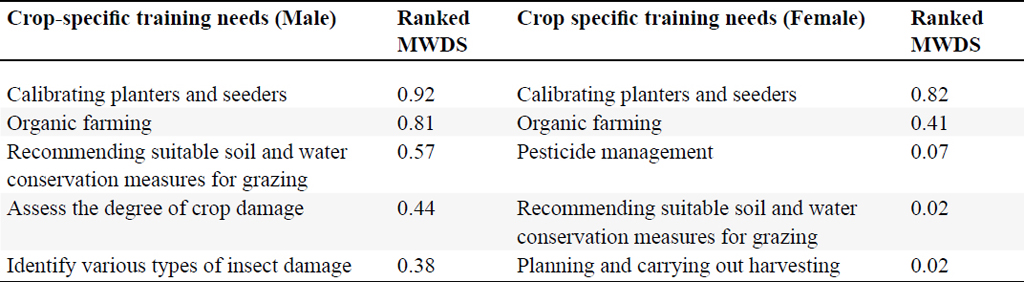
We disaggregated our crop-specific training needs results by gender to explore potential gender-specific training needs. The crop-specific training needs of male and female farmers are similar, with calibrating planters and seeders and organic farming as the top two needs. After this, male farmer training needs are, recommending suitable soil and water conservation measures for grazing, assessing the degree of crop damage, and identifying various types of insect damage. Female farmer training needs are pesticide management, recommending suitable soil and water conservation measures for grazing, and planning and carrying out harvesting (Table 4).
Crop-specific training needs of Zambian smallholder farmers by gender.
Citation: International Food and Agribusiness Management Review 28, 1 (2025) ; 10.22434/ifamr1069
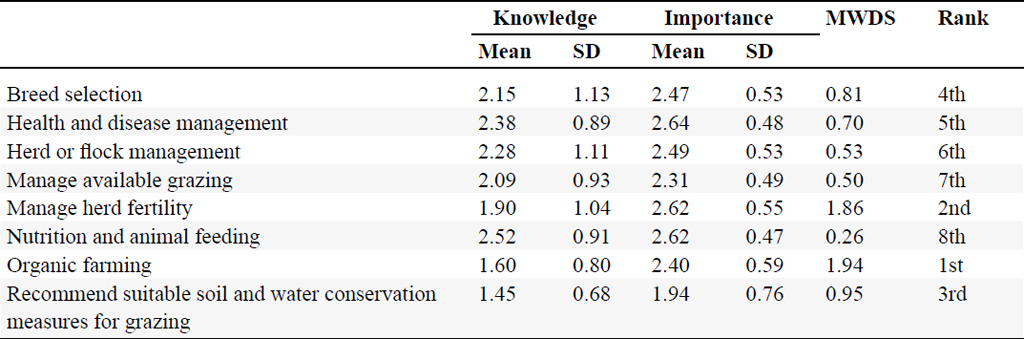
The five most important training needs for livestock farming were organic farming, managing herd fertility, recommending suitable soil and water conservation measures for grazing, breed selection, and health and disease management (Table 5). Earlier studies highlighted livestock health and disease management, water management (Paladan, 2021), carcass quality, ration formulation, and stock density (Chah et al., 2013).
Livestock-specific training needs of Zambian smallholder farmers.
Citation: International Food and Agribusiness Management Review 28, 1 (2025) ; 10.22434/ifamr1069
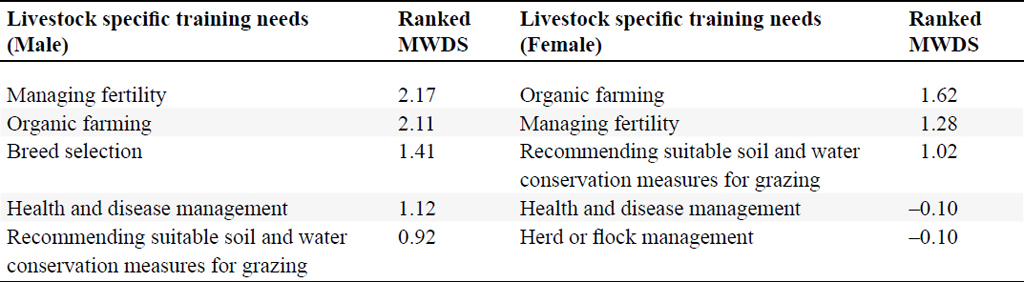
We disaggregated our livestock-specific training needs results by gender to explore potential gender-specific training needs. The livestock-specific training needs for male and female farmer respondents are also similar. For male farmers, managing fertility, organic farming, breed selection, health and disease management, and recommending suitable soil and water conservation measures for grazing are important. For female farmers, organic farming, managing fertility, and recommending suitable soil and water conservation measures for grazing are important. However, unlike the male farmers, the female farmers do not require health and disease management training. They also have no training needed for herd or flock management (Table 6).
Livestock-specific training needs of Zambian smallholder farmers by gender.
Citation: International Food and Agribusiness Management Review 28, 1 (2025) ; 10.22434/ifamr1069
After identifying the smallholder farmersâ training needs, the research further explored the respondentsâ preferences regarding the training format, the preferred organization to provide the training, and the organizations they trust most for technical, financial management, marketing, and business management training.
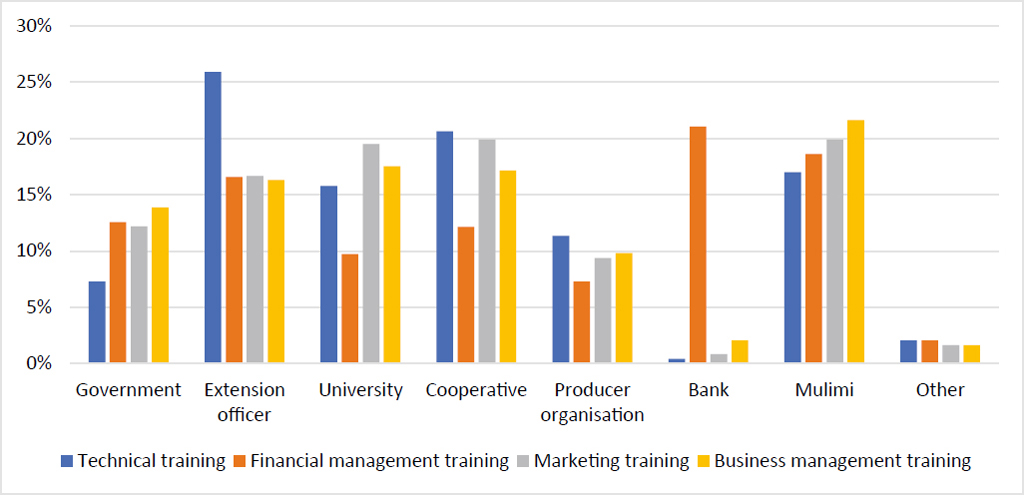
The majority of farmers (50%) expressed a preference for group training sessions at a facility, followed by group training on a farm (39%), individual training on the farm (9%), and online training (2%). Regarding the preferred organization to provide training, most farmers favored the Mulimi Farmersâ Scheme (69%), with government extension officers being the next preferred choice (19%). A smaller percentage of farmers indicated a preference for training provided by cooperatives (4%), any available sources (3%), the private sector (3%) and other entities (3%). Paladan (2021) also found that extension officers are a trusted source of training and information among smallholder farmers in the Philippines, but these farmers preferred training during community meetings. In the current study, 22% of the farmers expressed trust in Mulimi to provide business management training, while 21% trusted banks for financial management training. Extension officers were the preferred choice for technical training (26%). However, regarding marketing training, farmers seemed uncertain about the most trustworthy source, with universities, cooperatives, and Mulimi tied at 20% each (Figure 2).
Organisations trusted with specific areas of training.
Citation: International Food and Agribusiness Management Review 28, 1 (2025) ; 10.22434/ifamr1069
5. Conclusion and Recommendations
To our knowledge, this is one of the few studies that applied the Borich needs assessment model to measure smallholder training needs in Southern Africa (Dlamini and Huang, 2020; Mabuza and Ndoro, 2023; Tshwene, 2019). Notably, it is the first to do so in Zambia, specifically in the farm business management, financial management, and marketing management environments. The study identified several training needs in different areas. The five most important training needs for crop farming included determining row space, calibrating planters and seeders, organic farming, recommending suitable soil and water conservation measures for specific farmlands, and assessing the degree of crop damage. The five most important training needs for livestock farming included organic farming, managing herd fertility, recommending suitable soil and water conservation measures for grazing, breed selection, and health and disease management. The five most important training needs relating to general farm management were farm resource management, developing a business plan, maintaining farm records, knowledge of market information, and insurance. As a result, the study recommends a broad range of training needs beyond technical farming skills, such as business management, financial literacy and market access.
When examining gender-specific training needs, some differences emerged. Female farmers prioritized training in keeping farm records, service provider storage facilities, and pesticide management, while male farmers focused more on developing a business plan, insurance, and breed selection. Despite some differences, the training needs for both male and female farmers converged on several areas, such as organic farming, farm resource management, and soil and water conservation measures. The results underscore the importance of incorporating gender-sensitive approaches into training programs, ensuring that the specific needs of male and female farmers are addressed to enhance productivity and inclusivity.
Beyond the content of the training programs, it is also important to consider the parties most trusted by the farmers to provide the training and the preferred mode of training. In this study, most farmers preferred Mulimi to provide training. However, we need to acknowledge the bias related to the fact that the sample was selected from the population of farmers belonging to the Mulimi Farmersâ Scheme. The second most preferred party was the government extension officers. As for the mode of training, the majority of the farmers preferred group training at a facility or on a farm. We would also recommend that Mulimi facilitate the training in collaboration with the local Universities, commercial banks, and government extension officers.
Many of the smallholder farmers did not complete any form of formal education, which might pose difficulties when developing homogenous training programs. It is important to note smallholder farmersâ varying education and experience levels when developing training programs and when grouping smallholder farmers in group training programs. To overcome this problem, we recommend a pre-screening tool to determine the smallholder farmersâ prior knowledge to group them into different levels of training, allowing advancement from basic to more advanced levels over time. During training, we recommend using visual aids and practical demonstrations, adopting an interactive and participatory approach, providing flexible training modules, and offering continuous support and follow-up. These measures can help ensure that training programs are inclusive and effective for all participants, regardless of their educational background.
The study provides guidelines for universities, training centers and extension officers in developing training programs for Zambian smallholder farmers. These results acknowledge that smallholder farmers are heterogeneous and provide a good first step in developing more tailor-made training programs suited to smallholder crop and livestock farmers in Zambia and potentially other Southern African countries. The gender-disaggregated findings provide further evidence of this heterogeneity, highlighting the need for gender-sensitive policy interventions to address the unique training needs of male and female farmers. Existing frameworks, such as Zambiaâs National Agricultural Policy (NAP) and Second National Agricultural Policy (SNAP), could be strengthened to prioritize tailored training programs, particularly for female farmersâ specific challenges, such as market information and record-keeping. More importantly, the research addresses a notable gap in the existing skills needs literature of Zambian smallholder farmers by offering empirical insights into the specific training needs of these farmers.
Acknowledgements
The authors would like to thank the anonymous reviewers for their constructive comments and suggestions, which significantly improved the quality of this paper. Stellenbosch Universityâs Social Impact Fund funded this study under the project title SU and IFAMA collaboration for agricultural training in Zambia. We want to thank Zindaba Hanzala and her team of interns at Mulimi, who collected the data among the Zambian smallholder farmers. We also want to thank the International Food and Agribusiness Management Association (IFAMA) for supporting the research project.
References
Abraham, M. and P. Pingali. 2020. Transforming smallholder agriculture to achieve the SDGâs. In: S.G. Paloma, L. Riesgo and K. Louchichi (eds), The role of smallholder farms in food and nutrition security. Springer, Cham, pp. 173â209. https://doi.org/10.1007/978-3-030-42148-9_9
Adeogun, S.O., E.O. Fapojuwo, R.A. Oyeyinka, C.O. Adamu and B.J. Abiona. 2013. Training needs assessment of cocoa farmers association members on soil management techniques in cross river state of Nigeria. Ethiopian Journal of Environmental Studies and Management 6(5): 551â560. https://doi.org/10.4314/ejesm.v6i5.13
Alarima, C.I., A. Kolawole, E. Fabusoro, A.A. Ajulo, T. Masunaga and T. Wakatsuki. 2011. Knowledge and training needs of farmers adopting sawah rice production technology in Nigeria. Journal of Food, Agriculture and Environment 9(3â4): 183â188. https://doi.org/10.1234/4.2011.2248
Aliber, M. and R. Hall. 2012. Support for smallholder farmers in South Africa: Challenges of scale and strategy. Development Southern Africa 29(4): 548â562. https://doi.org/10.1080/0376835x.2012.715441
Altschuld, J.W. and T.L. Lepicki. 2010. Needs assessment in education. In P. Peterson, E. Baker and B. McGaw (eds). International Encyclopedia of Education. Elsevier, Oxford, pp. 786â791. https://doi.org/10.1002/9780470592663.ch51
Anderson, G. and L. Ford. 1994. Nominal group technique and the formulation of competency standards. Asia Pacific Journal of Human Resources 32(1): 61â73. https://doi.org/10.1177/103841119403200105
Becker, G.S. 1962. Investment in human capital: A theoretical analysis. Journal of Political Economy 70(5, Part 2): 9â49. https://doi.org/10.1086/258724
Borich, C.D. 1980. A needs assessment model for conducting follow-up studies. Journal of Teacher Education 31(3): 39â42. http://dx.doi.org/10.1177/002248718003100310
Chah, J.M., U.P. Obi and H. M. Ndofor-Foleng. 2013. Management practices and perceived training needs of small ruminant farmers in Anambra State, Nigeria. African Journal of Agricultural Research 8(22): 2713â2721. https://doi.org/10.5897/AJAR2013.7209
CIA. 2011. The world factbook: Zambia. Available online at www.cia.gov/library/publications/the-world-factbook/geos/za.html (accessed 12 January 2024).
Creswell, J.W. and C.N. Poth. 2016. Qualitative inquiry and research design: choosing among five approaches. Sage, Thousand Oaks, CA.
Daudu, A.K., F.O. Oladipo and A.O. Kayode. 2019. Gender capacity building needs on soil fertility management practices among smallholder arable crop farmers in Kwara State, Nigeria. Journal of the Saudi Society of Agricultural Sciences 18(3): 241â248. https://doi.org/10.1016/j.jssas.2017.06.003
Dorosh, P., S. Dradri and S. Haggblade. 2009. Regional trade, government policy and food security: Recent evidence from Zambia. Food Policy (34): 350â366. https://doi.org/10.1016/j.foodpol.2009.02.001
Dlamini, S.I. and W.C. Huang. 2020. Towards intensive co-operated agribusiness: a gender-based comparative Borich needs assessment model analysis of beef cattle farmers in Eswatini. Agriculture 10(4): 96. https://doi.org/10.3390/agriculture10040096
Fan, S. and C. Rue. 2020. The role of smallholder farms in a changing world. In Y. Gomez, S. Paloma, L. Riesgo and K. Louhichi (eds), The role of smallholder farms in food and nutrition security. Springer, Cham, pp. 13â28. https://doi.org/10.1007/978-3-030-42148-9_2
Fan, S., J. Brzeska, M. Keyzer and A. Halsema. 2013. From subsistence to profit: transforming smallholder farms. International Food Policy Research Institute, Washington, DC. https://doi.org/10.2499/9780896295582
Farinde, A.J. and A.O. Ajayi. 2005. Training needs of women farmers in livestock production: Implications for rural development in Oyo State of Nigeria. Journal of Social Sciences 10(3): 159â164. https://doi.org/10.1080/09718923.2005.11892475
FAO. 2012. Enduring farms: climate change, smallholders and traditional farming communities. Available online at www.fao.org/nr/water/docs/Enduring_Farms.pdf (accessed 18 June 2023).
FAO. 2015. The economic lives of smallholder farmers. An analysis based on household data from nine countries. Available online at https://doi.org/10.5296/rae.v6i4.6320 (accessed 5 May 2023).
FAO (Food and Agriculture Organization). 2023. Revealing the true cost of food to transform agrifood systems. Available online at https://www.fao.org/documents/card/en/c/cc7724en (accessed 4 January 2024).
Garavan, T.N., C. Hogan and A. Cahir-OâDonnell. 2003. Making training and development work: a âbest practiceâ guide. Oak Tree Press, Cork.
Giller, K.E., T. Delaune, J.V. Silva, K. Descheemaeker, G. van de Ven, A.G. Schut, M. van Wijk, J. Hammond, Z. Hochman, G. Taulya and R. Chikowo. 2021. The future of farming: Who will produce our food? Food Security 13(5): 1073â1099. https://doi.org/10.1007/s12571-021-01184-6
Glover, D. 2007. Monsanto and smallholder farmers: A case study in CSR. Third World Quarterly 28(4): 851-867. https://doi.org/10.1080/01436590701336739
Govereh, J., E. Malawo, T. Lungu, T. Jayne, K. Chinyama and P. Chilonda. 2009. Trends and spatial distribution of public agricultural spending in Zambia: implications for agricultural productivity growth. ReSAKSS Working Paper No. 26, International Crops Research Institute for the Semiarid Tropics (ICRISAT), International Food Policy Research Institute (IFPRI) and International Water Management Institute (IWMI). http://dx.doi.org/10.22004/ag.econ.54497
Hanagriff, R., M. Wallace and J. Elliot. 2020. Applying a needs assessment model for Improving Agricultural Education in Guinea. Journal of International Agricultural and Extension Education, 27(4): 79â93. https://doi.org/10.5191//jiaee.2020.27479
Harder, A., T.G. Roberts, N.L. Stedman, A. Thoron and B.E. Myers. 2009. An analysis of the teaching competencies of agricultural and life sciences faculty. North American Colleges and Teachers of Agriculture Journal 53(4): 49â55.
Hashemi, S.M., S.M. Hosseini and C.A. Damalas. 2009. Farmersâ competence and training needs on pest management practices: participation in extension workshops. Crop Protection 28(11): 934â939. https://doi.org/10.1016/j.cropro.2009.07.007
ITA. 2022. Zambia â country commercial guide: agriculture. Available online at https://www.trade.gov/country-commercial-guides/zambia-agriculture (accessed 14 December 2023).
Kaczan, D., A. Arslan and L. Lipper. 2013. Climate-smart agriculture? A review of current practice of agroforestry and conservation agriculture in Malawi and Zambia. ESA Working Paper No. 13-07. Agricultural Development Economics Division, FAO, Rome. http://dx.doi.org/10.22004/ag.econ.288985
Khoza, S., D. Van Niekerk and L.D. Nemakonde. 2022. Gendered vulnerability and inequality: understanding drivers of climate-smart agriculture dis- and nonadoption among smallholder farmers in Malawi and Zambia. Ecology and Society 27(4): 19. https://doi.org/10.5751/ES-13480-270419
Kissack, H.C. and J.L. Callahan. 2010. The reciprocal influence of organizational culture and training and development programs: Building the case for a culture analysis within program planning. Journal of European Industrial Training 34(4): 365â380. https://doi.org/10.1108/03090591011039090
Kithome, M., H.M. Rasugu, J.N. Mugwe and H.I. Nyarindo. 2022. Factors influencing adoption of irrigation technologies among smallholder farmers in Machakos County, Kenya. Journal of Agricultural Extension 26(3): 44â59. https://doi.org/10.4314/jae.v26i3.5
Latham, G.P. 1988. Human resource training and development. Annual Review of Psychology 39(1): 545â582.
Leonardo, W., G.W. van de Ven, A. Kanellopoulos and K.E. Giller. 2018. Can farming provide a way out of poverty for smallholder farmers in central Mozambique?. Agricultural Systems 165: 240â251. https://doi.org/10.1016/j.agsy.2018.06.006
Mabuza, M. and J. T. Ndoro. 2023. Borichâs Needs Model Analysis of smallholder farmersâ competence in irrigation water management: case study of Nkomazi Local Municipality, Mpumalanga Province in South Africa. Sustainability 15(6): 4935. https://doi.org/10.3390/su15064935
Makamane, A., J. Van Niekerk, O. Loki and L. Mdoda. 2023. Determinants of climate-smart agriculture (CSA) technologies adoption by smallholder food crop farmers in Mangaung Metropolitan Municipality, Free State. South African Journal of Agricultural Extension 51(4): 52â74.
McClelland, D.C. 1973. Testing for competence rather than for intelligence. American Psychologist 28(1): 1â14. https://doi.org/10.1037/h0034092
McGehee, W. and P.W. Thayer. 1961. Training in business and industry. Wiley, New York.
Mdoda, L. and L. Mdiya. 2022 Factors affecting the using information and communication technologies (ICTâs) by livestock farmers in the Eastern Cape province. Cogent Social Sciences 8(1): 2026017. https://doi.org/10.1080/23311886.2022.2026017
Narine, L. and A. Harder. 2021. Comparing the Borich model with the ranked discrepancy model for competency assessment: A novel approach. Advancements in Agricultural Development 2(3): 96â111. https://doi.org/10.37433/aad.v2i3.169
Oladele, I. 2015. Borich needs model analysis of professional competence among extension officers in North West Province, South Africa. Journal of Agricultural and Food Information 16(2): 151â162. https://doi.org/10.1080/10496505.2015.1013110
Olorunfemi, T.O., O.D. Olorunfemi and O.I. Oladele. 2020. Borich needs model analysis of extension agentsâ competence on climate smart agricultural initiatives in South West Nigeria. The Journal of Agricultural Education and Extension 26(1): 59â73. https://doi.org/10.1080/1389224x.2019.1693406
Paladan, N.N. 2021. Entrepreneurship capacity of farmers for community based entrepreneurship. The Asian Journal of Technology Management 14(3): 231â245. https://doi.org/10.12695/ajtm.2021.14.3.3
Ricciardi, V., N. Ramankutty, Z. Mehrabi, L. Jarvis and B. Chookolingo. 2018. How much of the worldâs food do smallholders produce? Global Food Security 17: 64â72. https://doi.org/10.1016/j.gfs.2018.05.002
Rosen, S. 1976. A theory of life earnings. Journal of Political Economy 84(4, Part 2): 45â67.
Sajeev, M.V., A.K. Singha and V. Venkatasubramanian. 2012. Training needs of farmers and rural youth: an analysis of Manipur State, India. Journal of Agricultural Sciences 3(2): 103â112. https://doi.org/10.1080/09766898.2012.11884691
Saunders, M.N.K. and K. Townsend. 2018. Choosing participants. In C. Cassell, A. Cunliffe and G. Grandy (eds), The Sage handbook of qualitative business and management research methods. Sage, London, pp. 480â494.
Stewart, R. L. Langer, N.R. Da Silva and E. Muchiri. 2016. Effects of training, innovation and new technology on African smallholder farmersâ economic outcomes and food security. International Initiative for Impact Evaluation. Systematic Review Summary 6: 10â15. https://doi.org/10.23846/srs006
Tshwene, S.C. 2019. Training needs analysis of women in irrigation farming in the North West Province, South Africa. PhD thesis, North-West University, Potchefstroom.
Umar, S., N. Man, N.M. Nawi, I.A. Latif and B.A. Samah. 2017. Core competency requirements among extension workers in peninsular Malaysia: Use of Borichâs needs assessment model. Evaluation and Program Planning 62 (2017): 9â14. https://doi.org/10.1016/j.evalprogplan.2017.02.001
WFP. 2020. Zambia â Annual Country Report (2020): Country Strategic Plan 2019â2024. Available online at https://docs.wfp.org/api/documents/WFP-0000125456/download/#:~:text=However%2C%20Zambiaâs%201.5%20million%20smallholder,exposing%20them%20to%20climate%20risks (accessed 14 December 2023).
Corresponding author
An exchange rate of 1 USD to 17.248 Zambian Kwacha was used, as published on 31 May 2022 on https://www.exchange-rates.org/exchange-rate-history/usd-zmw-2022-05-31.