Abstract
The application and selection of marketing channels in agricultural cooperatives significantly impact their operational efficiency. To verify the effectiveness of agricultural cooperatives in product distribution and to establish a more systematic and efficient channel network, this study first compares and analyzes the diversified marketing channels of cooperatives using two-stage survey data from China. Then, a static game model with complete information is constructed to explore the impact of marketing channel selection on the operational efficiency of agricultural cooperatives under different contractual relationships. The research surveyed and interviewed key leaders of 78 agricultural cooperatives and collected data on 449 marketing channels. The findings indicate that agricultural cooperatives in China can utilize at least nine marketing channels to sell their products. Compared to tightly structured market environments, agricultural cooperatives achieve greater operational returns in loosely contracted market structures. The simultaneous use of multiple channels enables agricultural cooperatives to capture a significant portion of the profits within the agricultural product value chain, thereby maintaining the effectiveness of the cooperative’s existence. The results provide strategic guidance for developing efficient marketing channel networks for agricultural cooperatives in developing countries and assist policymakers in adjusting and optimizing support policies for agricultural cooperatives.
1. Introduction
Agricultural cooperatives are the inevitable outcome of rural economic development and are a crucial organizational form in the process of agrarian modernization worldwide (Mhembwe and Dube, 2017; Ortiz-Miranda et al., 2010; Wang et al., 2021). In countries where smallholder farming prevails (such as China, India, Vietnam, Ethiopia, Bangladesh and Rwanda), agricultural cooperatives have emerged and evolved as a significant institutional framework to enhance farmer organization, address production and marketing challenges encountered by smallholders, and promote agricultural production and sustainable rural development (Ma and Abdulai, 2017; Sarkar et al., 2023; Wu et al., 2023; Pakawanich et al., 2022; Markelova et al., 2009).
Marketing channels, often referred to as “distribution channels” (Phillips, 2000), are the crucial link between production and consumption, enabling the realization of a product’s value and the success of marketing efforts (Dost, 2015; Hao et al., 2018). Within agricultural cooperatives, some member farmers opt to sell their goods through these cooperatives (Liu et al., 2019), which then function as intermediaries for distributing agricultural products and facilitating their transfer to other entities or individuals via various channels (such as direct sales to wholesalers, wholesale markets, supermarkets, e-commerce, etc.) (Zhang et al., 2019). This process not only positively impacts the economic well-being of member farmers and the agricultural community at large (Markelova et al., 2009; Wollni and Zeller, 2006; Abebaw and Haile, 2013), but also advances the integration of agriculture and modernizes the distribution of agricultural products (Wei et al., 2023). Therefore, the seamless flow of agricultural products through diverse channels is vital for agricultural cooperatives to achieve their value objectives. This makes the comparison and selection of marketing channels pivotal for their development.
In China, agricultural cooperatives engage in a variety of marketing channels, such as direct sales, farmer–wholesale docking, farmer–enterprise docking, farmer–supermarket docking, farmer–table docking, farmer–foreign docking, and farmer–logistics docking (Zhang et al., 2016). Currently, more agricultural cooperatives are utilizing e-commerce as a marketing channel to sell their products (Huang et al., 2021; Guo et al., 2023). To enhance the efficiency and profitability of product sales, producers must select suitable marketing channels based on their circumstances (Panda, 2012). However, each marketing channel has distinct operational conditions, mechanisms, and application requirements (Eyuboglu et al., 2017), leading to variations in transaction costs and profits for producers and distributors (Rosenbloom, 2007). It can be seen that the choice of marketing channels may affect the operational efficiency of agricultural cooperatives.
The existing literature indicates that marketing channels involving agricultural cooperatives have several advantages over traditional channels involving smallholder farmers. These advantages encompass improved access to modern input and output markets (Ma et al., 2018; Kaygisiz and Akdağ, 2021), reduced transaction costs (Hao et al., 2018), enhanced product quality (Narrod et al., 2009), and increased income for members (Hoken and Su, 2018; Neupane et al., 2023), among others. Concurrently, the literature examines the operational mechanisms of single or multiple marketing channels utilized by agricultural cooperatives (Agbo et al., 2015; Zhang et al., 2019), as well as the factors influencing their selection of various marketing channels (Hao et al., 2018; Zhang et al., 2016). Based on these analyses, strategies for channel optimization and selection are proposed. For instance, Agbo et al. (2015) constructed a theoretical model to investigate the market structure of direct marketing cooperatives, revealing that the decision to sell to cooperatives negatively impacts the direct marketing market’s competitiveness. Zhang et al. (2019) showed that cooperatives mainly choose large wholesalers, wholesale markets, supermarkets, and e-commerce as their vegetable sales channels. Additionally, Zhang et al. (2016) identified that cooperatives’ capacity to meet order quantities and methods of contacting buyers are the key factors influencing their choice of different marketing channels; the size, asset specificity, and trust level of transaction partners were found to have no significant impact on cooperatives’ channel mode selection. Together, these studies reveal the primary channel modes utilized by cooperatives in distributing agricultural products and the essential factors to consider when selecting a channel. However, the existing literature typically addresses only 1–3 types of marketing channels, lacks a systematic categorization and comparative analysis of the marketing channels used by cooperatives, and is less likely to investigate the mechanisms behind the systematic operation of multiple types of marketing channels and their effects on the operational efficiency of cooperatives.
Therefore, this study investigates in the field the use of marketing channels by agricultural cooperatives in China, and it explores the impact of marketing channel selection on the operational efficiency of agricultural cooperatives by categorizing and comparing channel modes. Compared with existing studies, this study demonstrates unique contributions and originality in the following aspects: First, this study systematically reveals the diversified characteristics of agricultural cooperatives in China for the first time by applying marketing channels through field surveys and data analysis. The study identifies at least nine different marketing channels and analyzes in depth the specific performance and effects of these channels in actual operations, providing a more comprehensive perspective for understanding the product distribution effects of agricultural cooperatives. Second, this study innovates in methodology by utilizing two-stage survey data to conduct a comparative analysis of the diversified marketing channels of cooperatives. By interviewing cooperative leaders, this study obtained rich first-hand information, which provided data support for an in-depth analysis of the characteristics and operational efficiency of different marketing channels. Third, based on a static game model with complete information, this study explores the strategies of agricultural cooperatives in marketing channel selection and their corresponding operational benefits under two different market structures, namely, tight and loose contractual relationships. The introduction of this research perspective not only enriches the theoretical basis of marketing channel selection in agricultural cooperatives but also provides valuable guidance for the actual operation of cooperatives. Finally, the study not only focuses on the effectiveness of individual marketing channels but also comprehensively considers the entire channel network constructed by agricultural cooperatives, and explores the strategies of different marketing channel combinations for solving the problems of agricultural product sales and promoting efficient development of the channel network, which provides more comprehensive and practical guidance for the optimization and selection of marketing channels for cooperatives, and provides valuable insights for policymakers in constructing distribution networks. At the same time, this study also advances the theoretical construction of multi-channel applications for new agricultural business entities and provides a useful reference for future research and practice.
The rest of this article is structured as follows. Section 2 provides a comparative analysis of different marketing channels of agricultural cooperatives through field research. Section 3 simulates the use of channels under various market structures through a game model. The results and discussion are given in Section 4. Conclusions and recommendations are presented in the final section.
2. Marketing channels for agricultural cooperatives in China
2.1 Diversification and comparative analysis of marketing channels for agricultural cooperatives
According to the Law of the People’s Republic of China (PRC) on Specialized Farmers’ Specialized Cooperatives (entered into force in July 2007 and revised in 2017), agricultural cooperatives refer to mutually beneficial economic organizations under democratic management that are voluntarily united by producers and operators of agricultural products or providers and users of agricultural production and operation services on the basis of rural household contract management.1 In China, agricultural cooperatives play a crucial role in advancing the industrialization of agriculture (Gao et al., 2018), enhancing agricultural technology efficiency (Li et al., 2024), cutting transaction costs (Fischer and Qaim, 2012; Wang et al., 2021), boosting farmers’ organization, and helping them increase income and prosperity (Yang et al., 2021; Zou and Wang, 2022). As of October 2023, there were 2 216 000 registered cooperatives in China, generating an annual operating income of CNY 630.92 billion. Members received a secondary return of CNY 1460.4 each from surpluses, with ordinary farmers (mainly smallholder farmers, hereinafter referred to as farmers) making up 95.5% of cooperative members nationwide; agricultural cooperatives offered services worth CNY 877.35 billion annually, providing members with CNY 15 000 each from unified purchasing and marketing services.2
The main bodies of agricultural marketing channels in China are more numerous, and the channels are mostly lengthy and diversified in operation (Hu, 2015). Agricultural cooperatives, as producers and suppliers of agricultural products, typically control the selection and operation of their marketing channels. At a micro level, many agricultural cooperatives opt to form trading relationships with multiple types of distributors, thereby establishing multiple marketing channels. However, there are variations in transaction costs, operational mechanisms, and applicable conditions among different trading relationships. Therefore, agricultural cooperatives must compare the channels corresponding to the various types of trading relationships when selecting marketing channels.
In order to gain a comprehensive understanding of the mechanisms used by agricultural cooperatives to utilize marketing channels, the Cooperatives and Agricultural Product Marketing Group conducted two phases of field research and interviews. The first phase, carried out from March 2013 to August 2014, primarily focused on the utilization of marketing channels for agricultural products by agricultural cooperatives. The research group surveyed the main leaders of 63 agricultural cooperatives from Zhejiang, Hubei, and Jiangsu provinces in China. The survey was completed through face-to-face interviews and questionnaires, collecting a total of 232 survey responses on the marketing channels of agricultural products. The second stage of the survey took place from July to August 2022, with the main purpose of capturing the changes in the results of the first stage survey. Telephone interviews were conducted with the heads of the agricultural cooperatives from the first phase to understand the changes in the use of marketing channels for agricultural products. However, 22 cooperatives could not be effectively interviewed. Additionally, interviews were conducted with the heads of 15 agricultural cooperatives in 6 cities in Hubei Province to supplement the callbacks and learn about the use of marketing channels for their products. The second phase of the survey collected data on 217 marketing channels from 66 cooperatives. The two phases of the survey focused on distributors of agricultural products, participants, operating conditions, operating mechanisms, advantages, and challenges faced in the marketing channels.
Relevant information statistics were collected from 78 sample cooperatives. The sample cooperatives are all comprehensive business entities that integrate production, processing, and sales, and 57 of them were established before 2010. In terms of product range, most cooperatives are engaged in two or more different types of agricultural products, with the largest number of cooperatives, totaling 28, mainly engaged in vegetable cultivation. There are 18 cooperatives engaged in fruit cultivation, 14 in animal husbandry, and 13 in grain production, respectively. The numbers of cooperatives engaging in aquaculture and flower seedling planting are both 8. Additionally, three cooperatives engage in mushroom production, while another three cooperatives are engaged in rice, straw, and silk processing and marketing services.
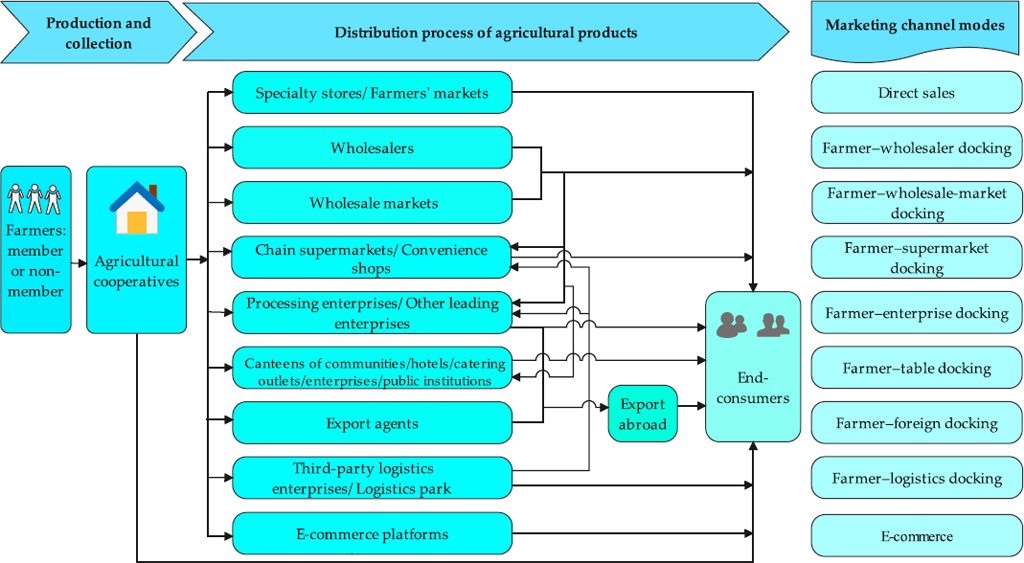
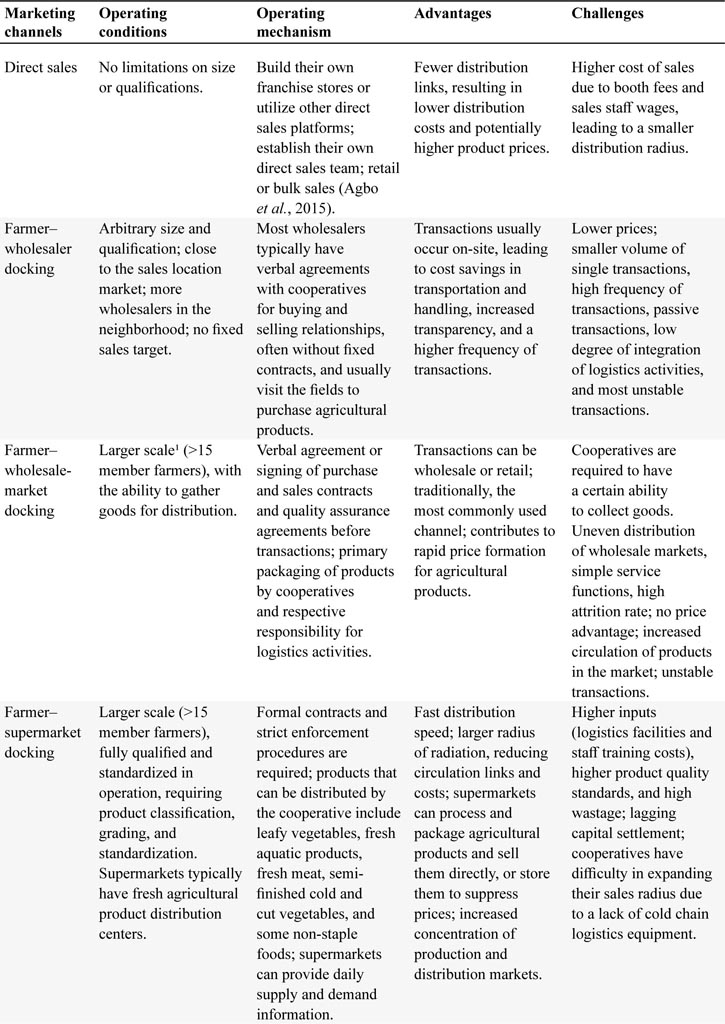
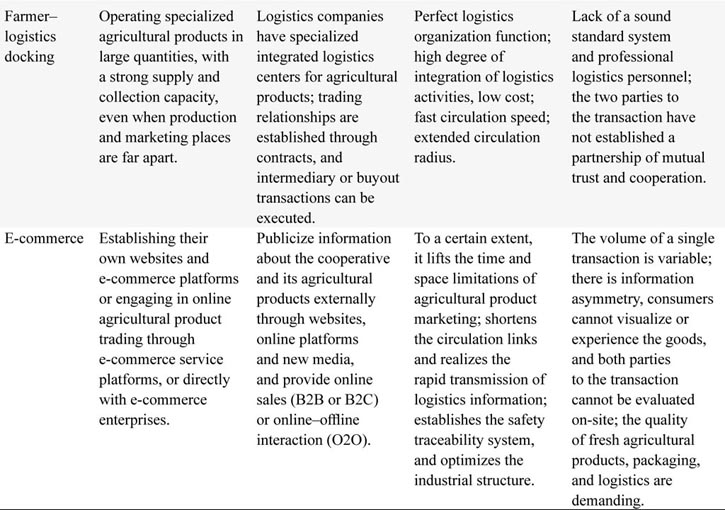
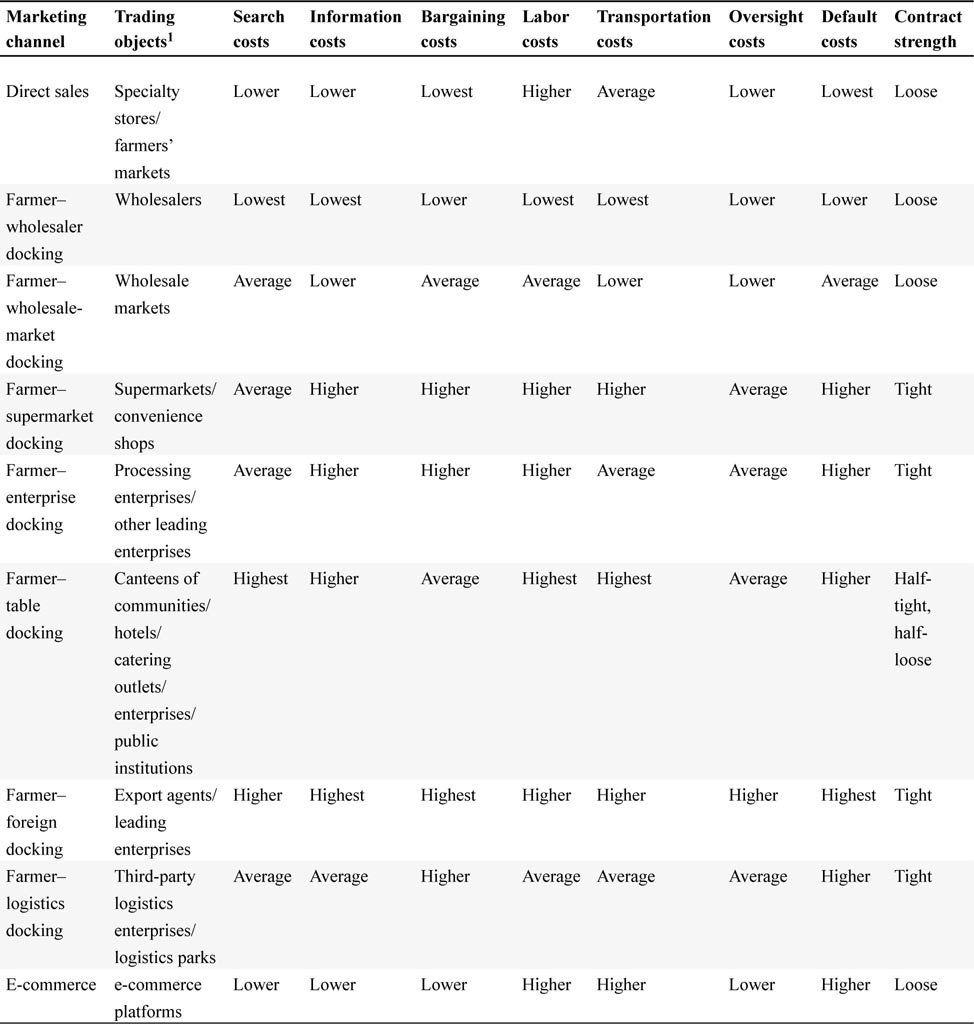
After analyzing the literature, survey data, and interview records, the study summarized the systematic utilization mechanism of marketing channels of agricultural products for the agricultural cooperatives in China, as shown in Figure 1, and conducted a comparative analysis of various marketing channels, as shown in Table 1. The first column of the table lists nine marketing channels commonly used by agricultural cooperatives, including direct sales, farmer–wholesaler docking, farmer–wholesale-market docking, farmer–supermarket docking, farmer–enterprise docking, farmer–table docking, farmer–foreign docking, farmer–logistics docking, and e-commerce. These channels correspond to distributors such as specialty stores, wholesalers, wholesale markets, chain supermarkets, processing enterprises, community or public institution canteens, export agents, third-party logistics enterprises, and e-commerce platforms, respectively. Furthermore, the analysis indicates significant differences among agricultural cooperatives in their development level, product types, operating conditions, and operational mechanisms, as well as their selection of marketing channels. They utilize multiple marketing channels to sell agricultural products simultaneously. The complementary advantages and coordinated use of multiple marketing channels by agricultural cooperatives are the result of their continuous adaptation and adjustment based on their development stage, product characteristics, the transportation and marketing conditions of their source markets, and the sales conditions of their destination markets.

Systematic utilization mechanism of marketing channels in agricultural cooperatives in China.
Citation: International Food and Agribusiness Management Review 28, 1 (2025) ; 10.22434/ifamr.1153
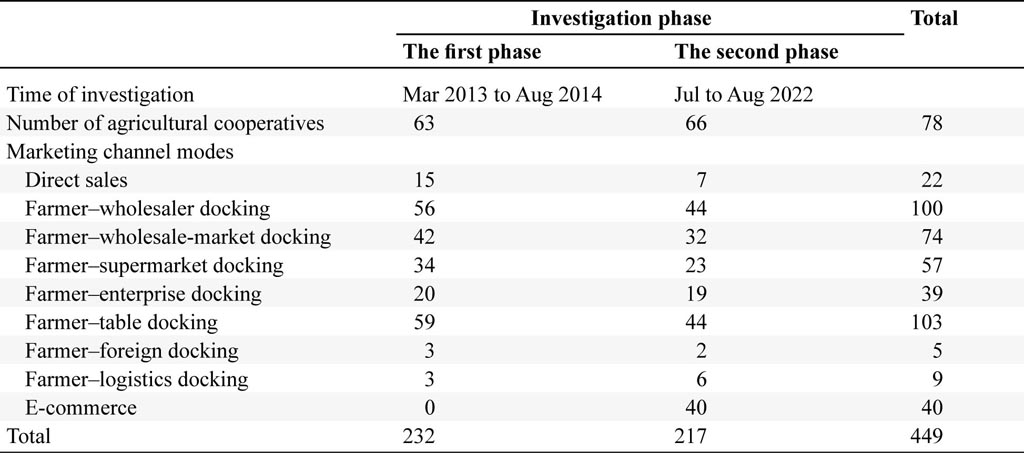
The data in Table 2 refers to the number of sample cooperatives that utilize the corresponding marketing channel model; the larger the number, the more widely such marketing channel modes are utilized. In the frequency of marketing channel utilization, prior to August 2014, the three types of marketing channels that were most used by agricultural cooperatives included farmer–table docking, farmer–wholesaler docking, farmer–wholesale-market docking, and the less utilized marketing channels included farmer–foreign docking, farmer–logistics docking, and e-commerce. In contrast, in the survey results of 2022, the most utilized marketing channels included farmer–wholesaler docking, farmer–table docking, and e-commerce, and the less utilized marketing channels included offline direct sales, farmer–logistics docking, and farmer–foreign docking. From this, it can be found that most agricultural cooperatives maintain a high order-gathering capacity, docking to wholesale markets to sell agricultural products. More and more agricultural cooperatives have begun to adapt to the current development of the information age by selling agricultural products through e-commerce platforms, thus reducing the frequency of offline direct sales and achieving the goal of saving sales time and costs. At the same time, it also notes that few cooperatives have implemented product exports, and breaking down barriers to export trade remains a problem that requires the long-term effort and persistence of the cooperatives to solve.
Comparative analysis of marketing channels for agricultural cooperatives in China.
Citation: International Food and Agribusiness Management Review 28, 1 (2025) ; 10.22434/ifamr.1153
The number of agricultural cooperatives adopting different marketing channel modes.
Citation: International Food and Agribusiness Management Review 28, 1 (2025) ; 10.22434/ifamr.1153
2.2 Transaction costs of different marketing channels for agricultural cooperatives
Different marketing channels have various benefit linkage mechanisms, outlets for agricultural cooperative products, target audiences, transaction costs, and selling prices. The efficiency of a marketing channel is determined by the service output and transaction cost (Mgale, 2020). When choosing multiple channels, agricultural cooperatives must consider the tradeoff between costs and benefits (Rosenbloom, 2007). Agricultural cooperatives aim to minimize transaction costs and increase revenue, while distributors seek to lower costs and transaction prices to maximize their profits. The decision-making process for agricultural cooperatives regarding which marketing channel to choose can be seen as a cost–benefit game. The selection of marketing channels is based on factors such as convenience, speed in completing sales tasks, maximizing revenue over time, and fostering long-term partnerships.
It is assumed that trading parties engage in a game revolving around transaction costs and prices. Transaction costs primarily include market transaction costs, where the transaction costs within agricultural cooperative organizations are relatively low when dealing with different transaction partners and are considered a fixed value not subject to discussion. Market transaction costs encompass search costs, information costs for locating and comparing transaction partners, negotiation costs, labor (loading and unloading) costs, transportation costs, supervision costs for completing transactions, and default costs resulting from post-transaction contract inadequacies (Dahlman, 1979; Hobbs, 1997). These external transaction costs restrict transactions to a specific geographical area. Beyond this limit, these costs will increase non-linearly with distance. The transaction price is determined through negotiation and strategic interactions between the parties. The benefits derived from costs and prices depend on the strategic choices made by agricultural cooperatives when selecting transaction channels (Kabadayi, 2011).
The factors influencing transaction costs are diverse. Firstly, human factors, such as limited rationality and opportunism, contribute to the complexity of transactions and subsequently increase transaction costs (Gorringe, 1987). Secondly, the three dimensions of transactions, i.e., asset specificity, uncertainty, and frequency of transactions, allow transactions to be differentiated from each other by organizing them in different ways (Gorringe, 1987). Additionally, the multidimensional attributes of products, information asymmetry, and the level of division of labor and specialization also play a role in determining the extent of transaction costs (North, 1994). Furthermore, the trust relationship is a significant determinant of transaction costs (Granovetter, 1985). In general, factors such as asset specialization, limited rationality, uncertainty, opportunism, multidimensional product attributes, and information asymmetry are positively correlated with the magnitude of transaction costs. Conversely, factors such as transaction frequency, degree of division of labor and specialization, and trust are negatively correlated with the magnitude of transaction costs.
Based on an analysis of the participating bodies, operational mechanisms, advantages, and challenges of various marketing channels, as well as an understanding of the determinants of transaction costs, this section presents a table comparing the transaction costs of different marketing channels for agricultural cooperatives. The table expresses the various types of transaction costs from lowest to highest, using the terms “lowest”, “lower”, “average”, “higher”, and “highest”. Additionally, the strength of the contractual relationship between agricultural cooperatives and different trading partners is categorized as either a loose or a close contractual relationship.
As shown in Table 3, the various channels of agricultural cooperatives exhibit significant variations in the magnitude of their transaction costs due to a range of influencing factors. In practice, agricultural cooperatives and various types of distributors encounter a supply and demand environment characterized by high levels of uncertainty. Cooperatives must address the diverse requirements of multiple distributors, with each customer having unique demands in terms of timing, quantity, location, product quality standards, and negotiated prices, which are subject to change. Consequently, when dealing with specific transaction scenarios involving different parties (cooperatives), products (target products), quantities, locations, and diverse distributors, the transaction costs can vary significantly.
Comparison of the transaction costs of different marketing channels for agricultural cooperatives.
Citation: International Food and Agribusiness Management Review 28, 1 (2025) ; 10.22434/ifamr.1153
3. Construction of the game model for marketing channel mode selection
This study utilized a combination of quantitative and qualitative research methods. Among them, the quantitative research method was mainly used to assess the use of various types of marketing channels by agricultural cooperatives and their operational mechanisms; the qualitative study was based on the results of the quantitative study and constructed a static game model with complete information to simulate the operational efficiency of cooperatives employing multiple marketing channels under two different market structures to explore the effects of channel diversification and contractual relationships on the operational efficiency of agricultural cooperatives. The assumptions, classification criteria, comparison of costs and benefits, and calculation logic in the game model all benefit from the previous discussion of the cooperative marketing channel system operation mechanism. The game model and estimation procedure are summarized below.
3.1 Participants (Gamers)
The choice of marketing channels by agricultural cooperatives can be self-driven, buyer-driven, or a combination of both. It is a transactional relationship focused on maximizing utility. From the survey and interviews in the previous section, smaller and weaker agricultural cooperatives may struggle to engage in tightly contracted channels. In contrast, larger and stronger agricultural cooperatives, with robust supply and aggregation capabilities, have established contacts over time and can effectively participate in stable, tightly contracted channels. This study aims to utilize static games of complete information to simulate the market structure of loosely and tightly contracted channels. It will calculate the profits made by agricultural cooperatives on behalf of farmers in their transactions with different trading partners to verify the impact of marketing channels on the operational efficiency of agricultural cooperatives and the importance of their choice of marketing channels.
Based on an analysis of the degree of the contractual relationship of the marketing channels in the last column of Table 3, the study chose to analyze direct sales, farmer–wholesaler docking, farmer–wholesale-market docking, and e-commerce in the market structure of the sparse type of contractual relationship. At this time, there are 5 game subjects in the agricultural market: 1 agricultural cooperative and 4 distributors, and the distributors are a self-operated shop, a wholesaler, a wholesale market, and an e-commerce platform. The agricultural products of the cooperative come from member farmers or self-built bases; the cooperative can choose any one among the four channels to sell their products. After that, the distributors in the different channels will sell the products to buyers downstream of the channels or keep them for their own use. It is worth emphasizing that, in practice, retailers, processors, and consumers are all downstream buyers. For the sake of simplicity, consumers are always used to represent downstream buyers in the model.
In the contractual degree of a tight market structure, the study chose farmer–supermarket docking, farmer–enterprise docking, and farmer–table docking to start the game simulation. At this time, there are 4 game subjects in the agricultural market, i.e., an agricultural cooperative, a chain supermarket, a processing enterprise, and the canteen of a public institution. Agricultural cooperatives’ products come from member farmers or self-built bases. First, the cooperative can choose any of the three channels to sell its products, and then, the distributors in different channels will sell the products to the downstream buyers in the channels or keep them for their own use. Again, for simplicity, the downstream buyers are represented by consumers in the model. It is worth emphasizing that this game simulates the initial transaction, and once an agricultural cooperative has signed a supply and sales contract with a chain supermarket or a processing enterprise, the transaction agreement reached cannot be changed for a certain period.
Assumptions: (1) Agricultural cooperatives and distributors are more flexible and not fixed in pricing power. (2) Agricultural cooperatives are risk-neutral and may not have other preferences in choosing distributors aside from economic returns. (3) Agricultural cooperatives can choose one or multiple distributors at the same time to sell their products. (4) The distributors in each channel can contact and communicate and trade. (5) The legal representatives of agricultural cooperatives and distributors are rational, and to maximize their own interests, both parties will choose their own favorable behavior patterns according to their respective external conditions and decide whether to proceed with the transaction based on their utility functions and relevant constraints.
The 7 distributors differ mainly in two aspects: Firstly, the pricing strategy varies, with agricultural product prices determined in different ways, including (1) based on the wholesale market or other buyer’s market; (2) by the final consumer market; (3) based on market conditions; (4) through negotiation between the two transaction parties; (5) by the agricultural cooperative or the farmers. Secondly, the profit distribution mechanism differs, where individual consumers view price as cost and product as revenue at the consumption end, while distributors focus on product sales where the selling price determines profit.
The study assumed that the agricultural cooperative produces only one type of agricultural product, categorized into low, medium, and high-quality grades, each with either 1 or 0 units of product, and the quality grade remains constant in the short term. The production cost of the product at different quality levels is denoted as ci (i = 1,2,3), with ci increasing as the product quality level rises.
3.2 Strategy choice
Seven distributors establish the purchase and sale prices of agricultural products.
 represents the purchase price paid by distributor d when it acquires agricultural product i from the cooperative, where d = 1, 2, …, 7 represents a self-operated shop, a wholesaler, a wholesale market, a chain supermarket, a processing enterprise, the canteen of a public institution, an e-commerce platform, and i = 1, 2, 3 corresponds to the low-quality, medium-quality, and high-quality agricultural products of the agricultural cooperative. The symbol b refers to the purchase of agricultural products by a distributor from the cooperative. Similarly,
  represents the selling price when distributors sell agricultural product i, where the symbols d and i have the same meaning as in
  . The symbol s represents the act of selling agricultural products by the distributors.
The study assumed that the total volume of product i from agricultural cooperatives is unit 1, and the volume of product i traded between the cooperative and distributor d is denoted as  , where d = 1, 2, …, 7, i = 1, 2, 3, 0 ≤
  ≤ 1.
≤ 1.
3.3 Earnings and payments
The distributor’s gain in the model is equal to the difference between his revenue from selling produce and the cost of purchasing produce. The gain of distributor d is
Citation: International Food and Agribusiness Management Review 28, 1 (2025) ; 10.22434/ifamr.1153
where  denotes the total revenue from the sale of each quality grade of agricultural products marketed by the distributor, and
  denotes the total cost incurred by the distributor in purchasing each quality grade of agricultural products.
Distributors are revenue-preferring, and when the study assumes that the distributor d is able to earn a profit of at least 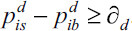 .
.
The agricultural cooperative receives a price  when it sells its agricultural product i to distributor d. Thus, the revenue received by the agricultural cooperative from the sale of agricultural production i through each distributor can be expressed as
Citation: International Food and Agribusiness Management Review 28, 1 (2025) ; 10.22434/ifamr.1153
If Ai ≤ 0, the agricultural cooperative will choose to abandon the production of the agricultural product i, i.e.,  .
.
3.4 Completeness of information
The study assumed that all information is complete in this game model. The players are not only fully aware of their opponents’ personal information but also fully aware of the quality and production cost of each unit of production. At the same time, all distributors’ price strategies (including the setting of the purchase price and selling price) and each player’s decisions and actions for each quality level of agricultural products are also complete information.
3.5 Sequence of decision-making
This game model involves successively simulating the pricing phase and the decision-making phase. Initially, in the pricing stage, distributors simultaneously set the purchase price and selling price for various quality levels of agricultural products. Subsequently, in the decision-making phase, the cooperative selects the marketing channels for the produce and makes production decisions based on the purchase prices established by the distributors. These prices are not ranked by the distributors and can be considered simultaneous. If the purchase prices of all 7 distributors are below the production costs of an agricultural cooperative, the cooperative will opt not to produce any units of agricultural product i; otherwise, it will choose to produce 1 unit of agricultural product i.
To simplify the process of game model derivation, the following assumptions are made for the prices of agricultural products:
(1) The production cost per unit of low-quality agricultural product is c1 = 0, the production cost per unit of medium-quality agricultural product is c2 = 1, and the production cost per unit of high-quality agricultural product is c3 = 2.
(2) Mi represents the consumer’s reservation price for the agricultural product i. The reservation price is the highest price acceptable to the buyer or seller. The consumer’s reserve price for each unit of low-quality agricultural product is specified as M1 = 1, the reserve price for each unit of medium-quality agricultural product is M2 = 3, and the reserve price for each unit of high-quality agricultural product is M3 = 6.
(3) The distributors earn at least
4. Results and discussion
4.1 Market structure with loose contractual relationship
In the market structure with loose contractual relationships, the main marketing channels include direct sales, farmer–wholesaler docking, farmer–wholesale-market docking, and e-commerce. There is one agricultural cooperative in this market, and this agricultural cooperative has at least four types of distributors to choose from in its transactions, namely,
F1 = {a specialty store, a wholesaler, a wholesale market, an e-commerce platform}.
In offline direct sales, agricultural cooperatives sell their products directly to end consumers through retail stalls or self-built franchised stores, acting as convenience store end-sellers. When agricultural cooperatives sell agricultural products through e-commerce platforms, the products are mailed directly to consumers, which is equivalent to an online direct sales mode.
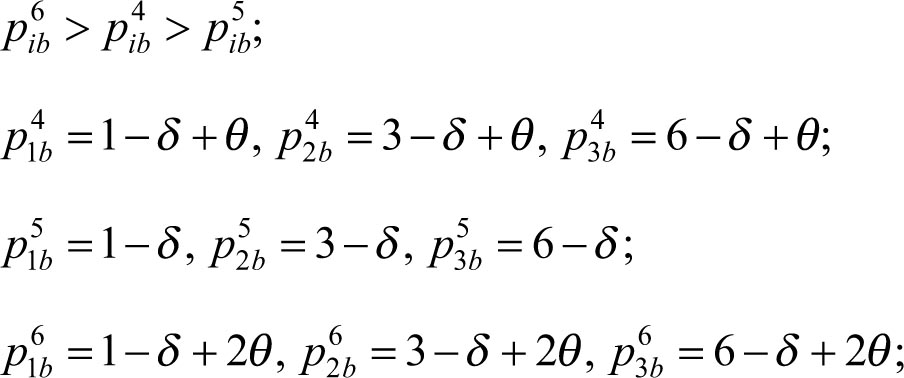
For agricultural cooperatives, the search costs, information costs, and bargaining costs of direct sales and e-commerce are very low. However, there are higher stall fees and selling costs for offline direct sales, as well as higher storage and transportation costs for online direct sales (e-commerce). In online direct sales, agricultural cooperatives generally sell their products at end-consumer market prices, which are generally higher than the retail prices of e-commerce. E-commerce offers several advantages that make it beneficial for users. Wholesalers usually visit the fields or warehouses of the cooperatives to purchase agricultural products. Their procurement volume is generally much smaller than the volume of transactions between the cooperatives and the wholesale market. As a result, the purchase price of wholesalers is slightly higher than the purchase price of the wholesale market. Thus, it can be obtained that
Citation: International Food and Agribusiness Management Review 28, 1 (2025) ; 10.22434/ifamr.1153
Here, 0 ≤  ,
,  ,
,  and
and  are all taken at their reservation prices Mi. The equilibrium strategies of each player in a market structure with loose contractual relationships are shown in Table 4, and the gains of the players are shown in Table 5.
Equilibrium strategies of each gamer in the market structure with loose contractual relationships.
Citation: International Food and Agribusiness Management Review 28, 1 (2025) ; 10.22434/ifamr.1153
Income of each gamer in the market structure with loose contractual relationships.
Citation: International Food and Agribusiness Management Review 28, 1 (2025) ; 10.22434/ifamr.1153
From the above two tables, it can be found that the income of agricultural cooperatives depends to a certain extent on the size of the minimum profit  among different distributors, it can be determined that the agricultural cooperative receives a large share of the profit in the value chain of the products. In contrast, the distributors receive only a meager profit. In addition, if the distributor of agricultural products on the e-commerce platform is the agricultural cooperative itself,
However, this equilibrium in this market structure is temporary and unstable. With the promotion and use of e-commerce and the consideration of time cost by the agricultural cooperative, the transaction ratio of offline direct sales gradually decreases, and high booth fees and selling costs further increase the cooperative’s transaction cost, leading to the gradual elimination of offline direct sales. Eventually, e-commerce and farmer–wholesale-market docking will become the main market docking mode, and the application of e-commerce and the development of digitalization will stimulate the vitality of the traditional wholesale industry (Yang et al., 2024). However, as the strength of the agricultural cooperative builds to a certain level, it will expand its production scale and participate in different marketing channels. This will prevent farmer–wholesale-market docking from monopolizing the market and squeezing the profits gained by the cooperative. The cooperative will still maintain its dominant position in the value chain.
4.2 Market structure with tight contractual relationship
In a market structure with tight contractual relationships, the main marketing channels are farmer–supermarket docking, farmer–enterprise docking, and farmer–table docking. In this type of market, there is an agricultural cooperative that has at least three types of distributors to choose from, namely,
F2 = {a supermarket, a processing enterprise, the canteen of a public institution}.
Among these options, the chain supermarket typically purchases the cooperative’s products for retailing and profits from the price difference. On the other hand, the processing enterprise uses agricultural products as raw materials for processing, with a demand generally higher than that of the chain supermarket. The processing enterprise does not need to distribute the products in separate packages, saving on labor costs and product losses. Consequently, the processing enterprise’s purchase price for the products is usually lower than that of the chain supermarket. When the agricultural cooperative supplies its products to the community, hotel kitchens, catering outlets, or the canteens of enterprises and public institutions, both sides of the transaction typically sign a purchase agreement for a specific period, ensuring transaction stability. Farmer–table docking involves higher search costs, information costs, and distribution costs related to labor and transportation. Therefore, the purchase price at the canteens of public institutions is generally higher than that of the chain supermarkets. Additionally, to compete for resource allocation, each party sets the reservation price as the selling price of their products; that is,
Citation: International Food and Agribusiness Management Review 28, 1 (2025) ; 10.22434/ifamr.1153
Here, 0 ≤  ,
,  and
and  are all taken at their reservation prices Mi. The study assumed that the cooperative trades more with the chain supermarket and the processing enterprise than the canteen of a public institution. The equilibrium strategies of each player in a market structure with tight contractual relationships are shown in Table 6, and the gains of the players are shown in Table 7.
Equilibrium strategies of each gamer in the market structure with tight contractual relationships.
Citation: International Food and Agribusiness Management Review 28, 1 (2025) ; 10.22434/ifamr.1153
Income of each gamer in the market structure with tight contractual relationships.
Citation: International Food and Agribusiness Management Review 28, 1 (2025) ; 10.22434/ifamr.1153
From the two tables above, it is evident that (1) in the market structure with tight contractual relationships, the total return to the agricultural cooperative is 7 − 3 among the different distributors, the agricultural cooperative receives most of the profit share in the product value chain and the profit share depends on the minimum profit amount
  and the difference between the purchase prices
  of agricultural products. For instance, the chain supermarket has a higher procurement volume and purchase prices compared to the processing enterprise. At the current procurement volume, the returns of the two depend on the price difference
The equilibrium in this market structure may seem unstable. However, due to the contractual relationships, this equilibrium will be maintained, at least for the agreed period, until the contract ends or is terminated prematurely. As distributors compete for subscriptions and other channels come into play, agricultural cooperatives will once again devise new equilibrium strategies in a fresh market structure.
4.3 Comparison of agricultural cooperatives’ income under two different market structures
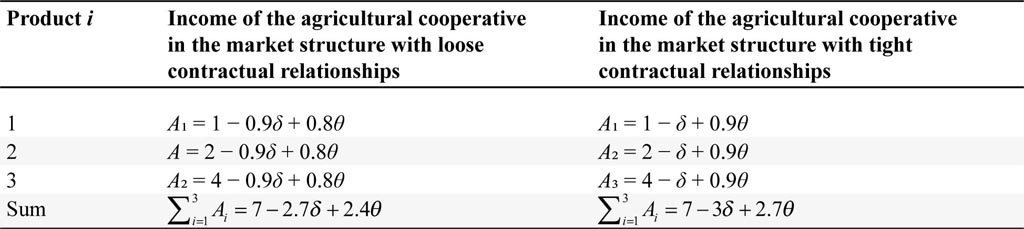
Based on the previous derivation and analysis, the proceeds from the sale of different quality levels of agricultural products by two agricultural cooperatives in different market structures are shown in Table 8.
Income of agricultural cooperatives in two different market structures.
Citation: International Food and Agribusiness Management Review 28, 1 (2025) ; 10.22434/ifamr.1153
Based on the above table, several conclusions can be drawn:
(1) In both loosely and tightly contracted market structures, agricultural cooperatives can acquire a significant portion of the profits in the agricultural products marketing channel compared to other distributors, and the share of the profits depends on the minimum profit
(2) When the total quantity of agricultural products sold at each quality level is the same, agricultural cooperatives tend to earn more in loosely contracted markets than in tightly contracted ones. This could be attributed to the direct sale of products by agricultural cooperatives to end consumers through online and offline channels, reducing intermediate links and minimizing losses and decay in product distribution (Tan and Ludwig, 2016). At the same time, E-commerce, as a contract-free online channel, has been demonstrated to have positive performance implications for physical sales (Johansson and Kask, 2017). However, tightly contracted markets generally witness larger one-time transactions, making it easier to achieve economies of scale. As a result, agricultural cooperatives are more likely to choose marketing channels with stable contractual relationships if they meet the necessary criteria in terms of qualification and capacity.
(3) Despite the significant profit share obtained by agricultural cooperatives in various market structures, the market lacks stability and efficient resource allocation. Real-world transactions are considerably more intricate, involving a variety of market participants and numerous unpredictable factors in the trading process.
5. Conclusions and recommendations
In the current development of agricultural cooperatives in China, they primarily function as intermediaries in the circulation process, but this diminishes their role as active participants in the circulation, thereby hindering their progress. As intermediary entities, agricultural cooperatives are rational, legal entities with relatively independent interests. They possess more comprehensive information about farmers and various types of distributors, which can lead to “rent-seeking” behavior during transactions, creating a complex game between agricultural cooperatives, farmers, and distributors. Under certain circumstances, agricultural cooperatives may employ the game strategy of “acting on opportunity”, further complicating the game and making it highly unstable. In light of this, this study examined the marketing channels utilized by agricultural cooperatives and simulated their decision-making process in the static games of complete information.
First, through surveys and interviews, it was found that there are at least nine marketing channel modes in which agricultural cooperatives participate in China. These include direct sales, farmer–wholesaler docking, farmer–wholesale-market docking, farmer–supermarket docking, farmer–enterprise docking, farmer–table docking, farmer–foreign docking, farmer–logistics docking, and e-commerce. The synergistic effects of multiple marketing channels require cooperatives to adapt and adjust to maximize profits continuously. Due to differences in development levels, product characteristics, operational conditions, distribution conditions, and channel operation mechanisms among various cooperatives, they should flexibly construct and optimize a diversified marketing channel mix based on their resource endowments, product features, and market demands. At the policy level, the government should encourage and support cooperatives in exploring emerging channels, including e-commerce, through specific measures such as tax reductions, financial subsidies, and technical support to lower the barriers and costs for cooperatives entering new markets. At the same time, it is important to strengthen information sharing and experience exchange among cooperatives to promote innovation and collaborative development of marketing channel models, thereby enhancing overall market competitiveness.
Secondly, through game analysis, it is understood that agricultural cooperatives can obtain a significant portion of product sales profits compared to other distributors across various marketing channels. However, the minimum profits of distributors constrain their profit share. This illustrates the effectiveness of agricultural cooperatives, the sustainability of their development in China, and the simultaneous existence of competition and cooperation between cooperatives and other distributors. Although cooperatives have achieved considerable profit shares in different market structures, the market lacks stability and effective resource allocation (Kirezieva et al., 2024). In light of the strategic behaviors that agricultural cooperatives may adopt during the game process, it is recommended that the internal governance mechanisms of cooperatives be strengthened to ensure transparency and fairness in decision-making processes, thereby reducing the occurrence of “rent-seeking” behaviors. Additionally, enhancing the cooperatives’ sensitivity to market dynamics and ability to respond quickly is crucial; this can be achieved through regular market research, data analysis, and forecasting to adjust marketing strategies in response to changes in different market structures.
Thirdly, comparative analysis reveals that market structure affects the earnings of cooperatives. Compared to market structures with tight contractual relationships, cooperatives can achieve higher operational returns in loose contractual relationships. Although the equilibrium in a loose market structure is temporary and unstable, the marketing channels typically involve fewer intermediaries, allowing cooperatives to sell directly to end consumers. This significantly reduces product loss and profit sharing during sales (Tan and Ludwig, 2016). In tight contractual relationships, cooperatives tend to have larger transaction volumes per product, which is more conducive to achieving economies of scale and stable development (Schmitt et al., 2001). When choosing marketing channels, cooperatives need to weigh the economies of scale brought by tight contractual relationships against the operational flexibility afforded by loose contractual relationships. The government can guide cooperatives to establish more robust partnerships with upstream and downstream enterprises, such as through legislation that protects the fulfillment of contract terms, reducing the risk of default while also encouraging cooperatives to develop mechanisms that combine long-term contracts with flexible orders to adapt to market demand fluctuations.
Furthermore, cooperatives should enhance their product quality and brand influence to ensure maximum benefit in contractual relationships through more substantial bargaining power. Additionally, it is recommended that the capacity building of cooperatives and the policy support system be strengthened. Through empirical analysis, Zhang et al. (2016) found that a cooperative’s ability to meet order quantities is one of the important factors influencing its choice of marketing channels. In the long run, cooperatives’ sustainable development and growth depend on improving their production and aggregation capabilities. The government should increase training for cooperatives to enhance their management levels and market operation capabilities, mainly providing guidance and support in information technology, brand building, and supply chain management. At the same time, a sound financing service system for cooperatives should be established to broaden financing channels and reduce financing costs, providing solid financial support for cooperatives to expand their scale and innovate technologically. Through these measures, the ability of cooperatives to build independent marketing channel networks can be strengthened, promoting deep integration and collaborative development along the agricultural industry chain.
Acknowledgements
This work was supported by the Philosophy and Social Science Project of Hubei Education Department in China (Grant No. 22Q107) and Research Funding of Wuhan Polytechnic University in China (Grant Nos 2021RZ084 and 2023Y51).
References
Abebaw, D. and M.G. Haile. 2013. The impact of cooperatives on agricultural technology adoption: empirical evidence from Ethiopia. Food Policy 38: 82–91. https://doi.org/10.1016/j.foodpol.2012.10.003
Agbo, M., D. Rousselière and J. Salanié. 2015. Agricultural marketing cooperatives with direct selling: A cooperative–non-cooperative game. Journal of Economic Behavior & Organization 109: 56–71. https://doi.org/10.1016/j.jebo.2014.11.003
Dahlman, C.J. 1979. The problem of externality. The Journal of Law and Economics 22: 141–162. https://doi.org/10.1086/466936
Dost, F. 2015. A non-linear causal network of marketing channel system structure. Journal of Retailing and Consumer Services 23: 49–57. https://doi.org/10.1016/j.jretconser.2014.11.005
Eyuboglu, N., S. Kabadayi and A. Buja. 2017. Multiple channel complexity: conceptualization and measurement. Industrial Marketing Management 65: 194–205. https://doi.org/10.1016/j.indmarman.2017.03.010
Fischer, E. and M. Qaim. 2012. Linking smallholders to markets: determinants and impacts of farmer collective action in Keny. World development 40: 1255–1268. https://doi.org/10.1016/j.worlddev.2011.11.018
Gao, Y., Z. Huang and Q. Liang. 2018. Service realization and determinants in agricultural cooperatives in china: evidence from zhejiang, sichuan and heilongjiang provinces. The Singapore Economic Review 63: 1205–1225. https://doi.org/10.1142/S0217590815501143
Gorringe, P. 1987. The economic institutions of capitalism: firms, markets and relational contracting by Oliver E. Williamson. Australian Journal of Management 12: 125–143. https://doi.org/10.1177/031289628701200109
Granovetter, M. 1985. Economic action and social structure: the problem of embeddedness. American Journal of Sociology 91: 481–510. https://doi.org/0002-9602/86/9103-0001
Guo, F., I.K.W. Lai, T. Zhang and Y. Zhong. 2023. Profit coordination and optimization of agricultural product brand promotion lead by farmer cooperative organizations. Complexity: 1–11. https://doi.org/10.1155/2023/1536341
Hao, J., J. Bijman, C. Gardebroek, N. Heerink, W. Heijman and X. Huo. 2018. Cooperative membership and farmers’ choice of marketing channels – Evidence from apple farmers in Shaanxi and Shandong Provinces, China. Food Policy 74: 53–64. https://doi.org/10.1016/j.foodpol.2017.11.004
Hobbs, J.E. 1997. Measuring the importance of transaction costs in cattle marketing. American Journal of Agricultural Economics 79: 1083–1095. https://doi.org/10.2307/1244266
Hoken, H. and Q. Su. 2018. Measuring the effect of agricultural cooperatives on household income: case study of a rice‐producing cooperative in China. Agribusiness 34: 831–846. https://doi.org/10.1002/agr.21554
Hu Chuang-Ye. 2015. Research on Building and Developing Trend of Agricultural Products Marketing Channel. Chinese Journal of Agricultural Resources and Regional Planning 36: 89–92. https://doi.org/10.7621/cjarrp.1005-9121.20150615
Huang, Y., X. Li and G. Zhang. 2021. The impact of technology perception and government support on e-commerce sales behavior of farmer cooperatives: evidence from liaoning province, China. SAGE Open 11: 215824402110156. https://doi.org/10.1177/21582440211015672
Johansson, T. and J. Kask. 2017. Configurations of business strategy and marketing channels for e-commerce and traditional retail formats: a Qualitative Comparison Analysis (QCA) in sporting goods retailing. Journal of Retailing and Consumer Services 34: 326–333. https://doi.org/10.1016/j.jretconser.2016.07.009
Kabadayi, S. 2011. Choosing the right multiple channel system to minimize transaction costs. Industrial Marketubg Management 40: 763–773. https://doi.org/10.1016/j.indmarman.2011.02.002
Kaygisiz, F. and F. Akdağ. 2021. The factors affecting the marketing channel selection in sheep farming: A Turkish case study. Mediterranean Journal of Economics, Agriculture and Environment 20: 73–82. https://doi.org/10.30682/nm2104f
Kirezieva, K., J. Bijman, L. Jacxsens and P.A. Luning. 2016. The role of cooperatives in food safety management of fresh produce chains: case studies in four strawberry cooperatives. Food Control 62, 299–308. https://doi.org/10.1016/j.foodcont.2015.10.038
Li, M., S. Zhang and N. Khan. 2024. Do farmers’ professional cooperatives improve agricultural technical efficiency? Evidence using a national-level dataset of China. Annals of Public and Cooperative Economics 95: 363–383. https://doi.org/10.1111/apce.12437
Liang, Q. and R. Bai. 2021. Exploring the relationship between organization size and performance of farmers cooperatives. Economists 8: 119–128. https://link.cnki.net/doi/10.16158/j.cnki.51-1312/f.2021.08.014
Liu, Y., A. Renwick and X. Fu. 2019. The role of agricultural cooperatives in serving as a marketing channel: evidence from low-income regions of Sichuan province in China. International Food and Agribusiness Management Review 22: 265–282. https://doi.org/10.22434/IFAMR2018.0058
Ma, W. and A. Abdulai. 2017. The economic impacts of agricultural cooperatives on smallholder farmers in rural China. Agribusiness 33: 537–551. https://doi.org/10.1002/agr.21522
Ma, W., A. Renwick, P. Yuan and N. Ratna. 2018. Agricultural cooperative membership and technical efficiency of apple farmers in China: An analysis accounting for selectivity bias. Food Policy 81: 122–132. https://doi.org/10.1016/j.foodpol.2018.10.009
Markelova, H., R. Meinzen-Dick, J. Hellin and S. Dohrn. 2009. Collective action for smallholder market access. Food Policy 34: 1–7. https://doi.org/10.1016/j.foodpol.2008.10.001
Mgale, J.Y.Y. 2020. Marketing efficiency and determinants of marketing channel choice by rice farmers in rural Tanzania: Evidence from Mbeya region, Tanzania. The Australian Journal of Agricultural and Resource Economics 64: 1239–1259. https://doi.org/10.1111/1467-8489.12380
Mhembwe, S. and E. Dube. 2017. The role of cooperatives in sustaining the livelihoods of rural communities: The case of rural cooperatives in Shurugwi District, Zimbabwe. Jamba-journal of Disaster Risk Studies 9: 341. https://doi.org/10.4102/jamba.v9i1.341
Narrod, C., D. Roy, J. Okello, B. Avendaño, K. Rich and A. Thorat. 2009. Public–Private partnerships and collective action in high value fruit and vegetable supply chains. Food Policy 34: 8–15. https://doi.org/10.1016/j.foodpol.2008.10.005
Neupane, H., K.P. Paudel and Q. He. 2023. Impact of cooperative membership on market performance of Nepali goat farmers. Annals of Public and Cooperative Economics 94: 805–830. https://doi.org/10.1111/apce.12445
North, D. 1994. Economic performance through time. American Economic Review 84: 359–368.
Ortiz-Miranda, D., O.M. Moreno-Pérez and A.M. Moragues-Faus. 2010. Innovative strategies of agricultural cooperatives in the framework of the new rural development paradigms: The Case of the Region of Valencia (Spain). Environment and Planning A 42: 661–677. https://doi.org/10.1068/a42168
Pakawanich, P., A. Udomsakdigool and C. Khompatraporn. 2022. Crop production scheduling for revenue inequality reduction among smallholder farmers in an agricultural cooperative. Journal of the Operational Research Society 73: 2614–2625. https://doi.org/10.1080/01605682.2021.2004946
Panda, R.K. and Sreekumar. 2012. Marketing channel choice and marketing efficiency assessment in agribusiness. Journal of International Food & Agribusiness Marketing 24: 213–230. https://doi.org/10.1080/08974438.2012.691812
Phillips, K. 2000. Marketing management, 10th edn. Tsinghua University Press, Beijing.
Rosenbloom, B. 2007. Multi-channel strategy in business-to-business markets: prospects and problems. Industrial Marketing Management 36: 4–9. https://doi.org/10.1016/j.indmarman.2006.06.010
Sarkar, S., T. Biswas, M. Curado Malta, D. Meira and A. Dutta. 2023. A coalition formation framework of smallholder farmers in an agricultural cooperative. Expert Systems with Applications 221: 119781. https://doi.org/10.1016/j.eswa.2023.119781
Schmitt, N. and Z. Yu. 2001. Economies of scale and the volume of intra-industry trade. Economics Letters 74, 127–132. https://doi.org/10.1016/S0165-1765(01)00519-5
Tan, J. and S. Ludwig. 2016. Regional adoption of Business-to-Business electronic commerce in China. International Journal of Electronic Commerce 20: 408–439. https://doi.org/10.1080/10864415.2016.1122438
Wang, L., J. Luo and Y. Liu. 2021. Agricultural cooperatives participating in vegetable supply chain integration: A case study of a trinity cooperative in China. PLOS ONE 16: 1–20. https://doi.org/10.1371/journal.pone.0253668
Wei, W., G. Yin, S. Xie, Q. Sun, Z. Zhang and G. Li. 2023. The spatio-temporal patterns and influencing factors of different new agricultural business entities in China — based on POI data from 2012 to 2021. Agriculture 13: 1–26. https://doi.org/10.3390/agriculture13081512
Wollni, M. and M. Zeller. 2007. Do farmers benefit from participating in specialty markets and cooperatives? The case of coffee marketing in Costa Rica. Agricultural Economiscs 37: 243–248. https://doi.org/10.1111/j.1574-0862.2007.00270.x
Wu, F., X. Guo and X. Guo. 2023. The impact of cooperative membership on family farms’ income: evidence from China. Applied Economics 55: 6520–6537. https://doi.org/10.1080/00036846.2022.2159009
Yang, D., H. Zhang, Z. Liu and Q. Zeng. 2021. Do cooperatives participation and technology adoption improve farmers’ welfare in China? A joint analysis accounting for selection bias. Journal of Integrative Agriculture 20: 1716–1726. https://doi.org/10.1016/S2095-3119(20)63325-1
Yang, R., J. Liu, S. Cao, W. Sun and F. Kong. 2024. Impacts of agri-food e-commerce on traditional wholesale industry: Evidence from China. Journal of Integrative Agriculture 23: 1409–1428. https://doi.org/10.1016/j.jia.2023.10.020
Zhang, C., J. Wang, B. Zhang, J. Ding, Z. Fu and L. Zhang. 2019. Factors influencing vegetable cooperatives’ selection of marketing channels in Beijing. British Food Journal. 121: 1655–1668. https://doi.org/10.1108/BFJ-06-2018-0403
Zhang, J., S.-Y. Zhang and C.-G. Li. 2016. Study on cooperatives’ selection of marketing channel modes and its influencing factors. Journal of Computational and Theoretical Nanoscience 13: 2780–2790. https://doi.org/10.1166/jctn.2016.4918
Zou, Y. and Q. Wang. 2022. Impacts of farmer cooperative membership on household income and inequality: Evidence from a household survey in China. Agricultural and Food Economics 10: 1–17. https://doi.org/10.1186/s40100-022-00222-x
Corresponding author
Data from the China Government Network, available online at https://www.gov.cn/xinwen/2017-12/28/content_5251064.htm (accessed 28 December 2017).
Data from the Ministry of Agriculture and Rural Affairs website, available online at https://www.moa.gov.cn/xw/zwdt/-202312/t20231219_6442997.htm (accessed 19 December 2023).