Abstract
Environmental impact reporting has become a lynchpin for global agri-food supply chain decision-making. This importance has become heightened as governing bodies such as the European Union pass traceability legislation in an effort to reduce Scope 3 emissions. Despite this heightened importance, few studies have explored the role of supply chain management software in achieving sustainability goals within the agribusiness sector. This article provides a current perspective on ongoing supply chain and logistics software issues that might restrict the effectiveness of sustainability reporting. We argue that agribusinesses may struggle to achieve sustainability targets effectively without proficiency in supply chain software. This research contributes to the field by offering a nuanced understanding of the technological competencies required for sustainability success in agribusiness. This article highlights the importance of developing and implementing advanced supply chain management software to address the need for enhanced sustainability practices within the agribusiness sector. Using interviews with pre-farmgate and post-farmgate agribusiness employees, we demonstrate how these software skills will likely impact sustainability reporting and governance. Managerial implications also include the need for targeted skill development to facilitate more sustainable agribusiness management practices, as mastering such technological competencies is critical for adhering to evolving global environmental standards.
1. Introduction
Efficient supply chain management (SCM) requires information technology (IT) to fully integrate into any sustainability solution, allowing a firm to maintain profitable agribusiness performance. Stated another way, SCM is âthe integrating function with responsibility for linking major business functions and business processes within and across companies.â (Stadtler, 2014). Positions in SCM can be related to procurement (purchasing), logistics (moving of products), and demand and supply planning (e.g. what is demand and supply at a given time?), to name a few. These tasks are accomplished using Enterprise Resource Planning (ERP) tools and other cutting-edge software along the agri-food supply chain system. Most, if not all, companies adopt these ERP tools to maintain a competitive edge and improve environmental reporting efficiency. Other aspects of SCM, such as procurement, demand planning, inventory management, and sales, range from 1980s-era IBM operating systems (AS/400 systems) to modern software that can simultaneously analyze and visualize data.
In an era where sustainability factors are redefining success in agribusiness, mastering supply chain management software skills has become more than a technical necessity; itâs a strategic imperative (Charlebois et al., 2024). The need for these software skills is likely to grow as reporting and disclosure requirements impose manageable data organization. This paper contends that without these critical skills, the ambitious sustainability goals of firms in the food and agribusiness sectors remain elusive. We argue that akin to the transformation by mechanization in agriculture, the next revolution in agribusiness sustainability hinges on the integration and adept use of advanced supply chain software. The use of advanced software can potentially address the fragmented data landscape in agri-food systems that help alleviate supply chain disruptions (e.g. COVID-19), ensuring a safe and efficient food system in the future. This paper suggests that these software skills are central to achieving sustainability milestones.
Despite this growing imperative, environmental impact reporting has not received much attention from agricultural economists (Deconinck et al., 2023). This inattention might be due to the lack of comprehensive datasets for economists to analyze, as some estimates suggest that agriculture is one of the least digitized sectors (Goedde et al., 2020; Neto et al., 2023). As such, the increased need for sustainability reporting motivates improved data efficiency and software adoption to improve outcome-based analysis for achieving sustainability and Scope 3 emissions targets. Technology-adopting firms must also focus on minimizing transaction costs, as efficiency gains represent a âwin-winâ for innovation throughout the agri-food system. To that end, there is a need to begin understanding available software and data accountability. Firms face increasing pressure to report these environmental impacts but lack universal reporting and data accounting systems, forcing a fragmented sector. Fragmentation of data collection within the agri-food system can potentially increase transaction costs along the supply chain. Therefore, this article focuses on the first critical step: to define what SCM software is being used by agribusiness management firms and to consider ways that the collected data might improve sustainability and resiliency within the food system as we navigate toward sustainability.
Minimizing transaction costs is imperative to the efficient operation and economic competitiveness of an SCM firm, with evidence from firms that consider transaction costs to be performing better than firms that do not consider them (Yousuf, 2007). Transaction costs and sustainability are usually two opposite views (e.g. a sustainable practice may introduce a transaction cost). However, to implement these practices, firms must consider the three main aspects of transaction costs: (1) information, (2) bargaining and (3) policy/enforcement. Information refers to better, real-time data, bargaining refers to the cost of purchasing/selling goods, and policy/enforcement refers to firms adhering to the cost of policy changes (Yousuf, 2007). We argue that transaction costs in terms of sustainability extend to all three major cost categories. Without adopting software to minimize these costs, transaction costs will remain high, and sustainable practices will remain an expensive endeavor.
Our methodology for this paper is to broadly address the entire agri-food system and hold formal conversations on the current state of software adoption within SCM. While recognizing the vastness of SCM, the research underscores diverse elements within the agri-food system, such as procurement, logistics, and demand planning. By adopting this systematic perspective, we aim to provide a broader understanding of SCM in agri-food systems.
The remainder of this article is organized as follows. Section 2 provides a background of SCM in the agri-food system. Within the well-documented need to increase digital accounting in the agricultural sector, we describe how supply chain traceability via SCM software is critical for sustainability and Scope 3 emissions reporting. We map the food supply chain to describe how technology reduces the inherent transaction costs, creating resiliency and sustainability issues across nodes in the system. Section 4 then describes our methods, which involve a series of semi-structured, qualitative interviews with agri-food supply chain professionals. Section 5 contains the results of these interviews, and Section 6 concludes with how these companies are adopting new software and technologies to improve data reporting and recommendations for agribusiness training programs.
2. Background
Managing a supply chain has become increasingly complex as agri-food systems globalize, creating traceability difficulties and providing added room for fraud (Abaidoo et al., 2021, 2023). Additionally, agri-food firms confront increasing pressure to systematically report their sustainability and Scope 3 emissions footprint. This section provides background on the historical context of SCM and how recent issues have influenced how companies manage their supply chains.
2.1 History of SCM
Supply chain management (SCM) has rapidly evolved to technological advances and modern market structures in recent years. Studies have evaluated the changes in SCM by providing historical context on key supply chain concepts (Hugos, 2018) and modern supply chain issues (Lambert and Cooper, 2000; Lambert and Enz, 2017). No matter the evolutionary status of supply chains, the concept is centered around production, inventory, location, transportation, and information decisions. The combination of these decisions is SCM in its most basic form and defines the effectiveness of a supply chain (Hugos, 2018).
Understanding the movement of goods across geographic locations has been a seminal focus of economists, with much of the basis for modern supply chains deriving from historical military strategies (Hugos, 2018). Blanchard (2021) discusses how the idea of a modern supply chain was born out of these military strategies and became a conventional discussion in the 1950s with the advent of studies on the âbullwhip effect,â where small information changes downstream the supply chain led to significant fluctuations upstream of the supply chain. This idea was related to supply chains that fluctuated more frequently as the delivery point was moved further away (Blanchard, 2021). Early supply chain professionals created powerful management software to trace these âbullwhipâ dynamics. The term âSupply Chain Managementâ was adopted in the 1980s to distinguish it from the conventional logistics management approach (Lambert and Cooper, 2000). In this case, SCM encompasses transportation, distribution, and material management in one term, whereas logistics merely describes the movement of goods from origin to consumption. Those definitions seem strikingly similar, but SCM is unique for including multiple business processes across the supply chain and other entities, while logistics only refers to internal material management decisions (Lambert and Cooper, 2000). Distinguishing SCM from logistics creates a competitive advantage by adopting the idea that organizations no longer compete autonomously but as a network of companies (Anderson et al.,1994).
Modern SCM has evolved rapidly over the last 23 years as companies increasingly work âbusiness-to-businessâ (Lambert and Enz, 2017). SCM has created an emphasis on relationships, where companies who best manage these relationships are the key players in the industry (Lambert and Enz, 2017). These relationships have quickly become as important as adopting effective software solutions. Despite this knowledge, there is still no standard approach to efficiently achieving the central goal of coordinating relationships with suppliers and buyers to cut transactional costs and add value (Vallet-Bellmunt et al., 2011).
2.2 SCM adapting to world crises and sustainability reporting
Implementing a companywide SCM protocol is only one step of the process, with a recent focus on supply chain resiliency that handles volatile markets and global disruptions (Ye et al., 2022; Montoya-Torres et al., 2021). Recent literature has consolidated these concerns using different research methodologies to cover disruptive events, the economic survivability of firms, and risk management (Sodhi et al., 2012). Recent literature has also discussed the trend of environmental impact reporting in food systems, emphasizing the need for agricultural firms to improve their data reporting (Deconinck et al., 2023; Neto et al., 2023).
The need for improved efficiency in data accountability has largely been motivated by increasing requirements for these firms to report sustainability and Scope 3 emissions. Generally speaking, sustainability can be considered a set of standards for a firm for their environmentally conscious activities, managing relationships within a supply chain, and how accurate and transparent the firm is with data accounting. Scope 3 emissions refers to carbon emissions upstream and downstream on the supply chain (Deconink et al., 2023). Neto et al. (2023) highlighted the need for agri-food systems to improve data reporting, with only 42.94% of firms in the agricultural sector collecting extensive data on their supply chains. In October 2022, the International Sustainability Standards Board (ISSB), which sets global accounting standards, began requiring Scope 3 emissions reporting (Deconink et al., 2023; IFRS, 2022). Ingram and Maye (2020) discussed how setting reporting standards may impact decision-making by agricultural firms since large amounts of data have little value without improved data accounting tools in the sector. Agri-food firms will have to pivot in understanding how to obtain, analyze, and report data while minimizing excessive transaction costs. Improving software and data analytics holds implications not only for sustainability reporting but also for supply chain resilience. For example, the deregulation of egg supply chains to allow more thorough price data transmission allowed egg markets to regain equilibrium during the COVID-19 pandemic (Malone et al., 2021).
During the pandemic and subsequent supply chain crisis, many international and domestic firms began exploring avenues for resilience within the global supply chain. Durugbo and Al-Balushi (2022) systematically reviewed 250 journal articles published between 1996 and 2021. They found that operation strategies during a crisis revolve around (1) critical supplies, (2) timely response with recovery, (3) safety with security and (4) agility and visibility. One cutting-edge tool for mitigating future crises is Industry 4.0 by Strategic Market Creation (SMC). Industry 4.0 is quickly transforming the concept of SCM into a completely digital platform, creating âsmartâ supply chains (Szozda, 2017; Zhang et al., 2022). The Internet of Things (IoT) is a new technology under Industry 4.0. It describes a network of objects embedded with sensors and software to connect and exchange big data with other system devices (Zhang et al., 2022). Zekhnini et al. (2021) also performed a systematic review of 176 papers published between 1994 and 2020 regarding smart, digital, intelligent, and other technology-focused concepts of supply chain management, noting the implementation framework to incorporate SCM 4.0 and the lack of knowledge on its use and effects on business, markets, and humans. Integration follows what is known as a âPyramid of Automationâ that highlights how Industry 4.0 technologies interrelate to merge at an integrated management system, or ERP (SMC, 2023). Transitioning to a digital supply chain requires significant up-front costs and long-term investments. But the payoffs to a firm can be worth the time and money since 1) humans are primarily removed from the minutia of a supply chain and instead focus on âexception management,â 2) all SCM data are uniform across a business, and 3) real-time visibility allows quick reactions (agility) to disruptions for risk minimization. Therefore, this paper describes how technological advancements are used and the unique challenges of agri-food supply chain professionals as they adapt to changing technology and government policies.
3. Technology solutions for sustainable agribusiness supply chain management
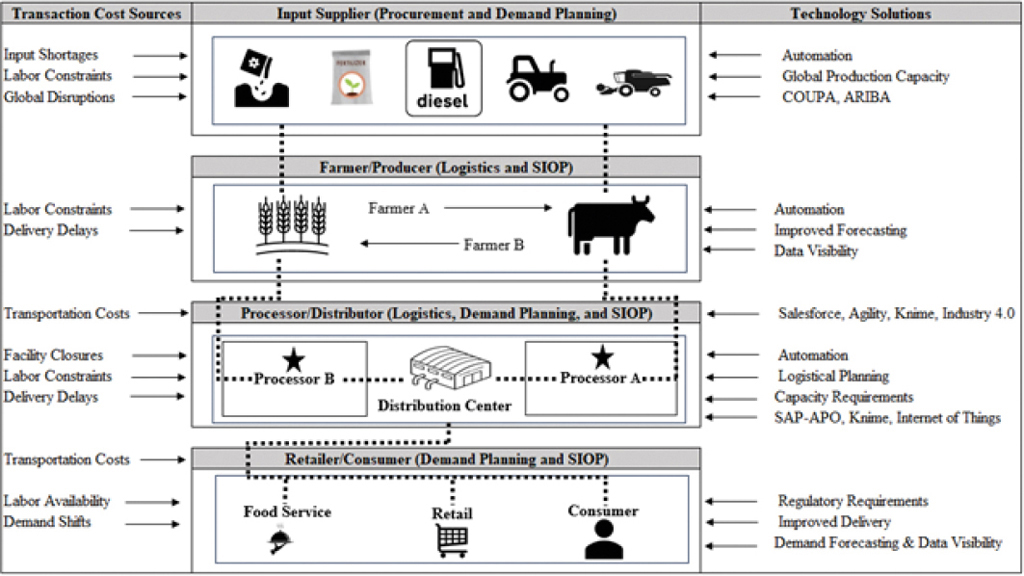
Minimizing transaction costs within a supply chain is imperative for improving overall resiliency, efficient data accounting, and visualization. Transaction costs have always been involved but have recently been more prevalent from increasing calls for sustainability reporting and the recent supply chain crisis. During the supply chain crisis, each node in the system faced unprecedented costs with disruptions/uncertainty, increased lead times, inventory management, safety measures, and technology adoption as the leading factors. Additionally, with increasing calls for sustainability reporting, such as sustainability or Scope 3 emissions, agri-food supply companies are positioned to adopt new technologies for improved agility and data accountability. Figure 1 maps an agri-food supply chain and describes sustainability and resiliency issues along each node.

Supply chain map of technology solutions within the agri-food system.
Citation: International Food and Agribusiness Management Review 27, 4 (2024) ; 10.22434/ifam.1085
The agri-food system has four primary nodes: input supplier, farmer/producer, processor/distributor, and retailer/consumer. Personnel within each node must confront many sources of transactional costs and employ technological solutions to alleviate issues along the supply chain. An input supplier (Node 1) is the buyer and seller of pre-farm gate inputs such as fertilizer, seed, diesel, and machinery. Sources of transactional costs within this node arose from global fertilizer, fuel, and machinery disruptions, resulting in product shortages that increased lead times, cost of goods, and complicated inventory management. Furthermore, an input supplier procures many chemicals and machinery that have an ecological impact, driving the need for improved software for sustainability reporting. Farmers (Node 2) produce cash crops or livestock at the farm gate as feed or food inputs in the supply chain. These farmers purchase fertilizer, seed, and machinery from input suppliers to be used in their enterprises. Planting, harvesting, and delivering commodities also has an ecological impact, such that software utilized in this node will help with post-farm-gate sustainability reporting. Contracting with a downstream supplier can help limit the transactional cost of software adoption, as is shown in the case of Italian wheat suppliers, who can manage better production and price risk from guaranteed contracts with millers (Vigano et al., 2022). Contracting may require strict cultivation practices, but these practices improve sustainability reporting for agri-food firms. The commodity is then delivered to âpost-farm-gateâ firms, such as processors/distributors (Node 3). A cash crop producer may deliver to a grain elevator (Processor B), while the livestock producer delivers to a feedlot or meat processing facility (Processor A). This node in the supply chain is plagued by labor constraints resulting from facility closures and COVID-19 infections, forcing an expensive and shallow labor pool â this constraint was felt at every node in the supply chain (Malone et al., 2021). Software adoption assists in limited labor as much of the processing can be handled through automation. The software also helps report the environmental impacts of processing goods. Lastly, the retailer and consumer (Node 4) also combat demand shifts and labor availability. Employing improved software can help ensure demand at the correct times. Consumers have also shown their willingness to pay for sustainable goods versus goods without sustainability reporting, with products making sustainability claims averaging a 28% growth over the last five years compared to 20% for products without sustainability reporting (Frey et al., 2023). The goal for these nodes within the agri-food system is to find synergy between what is being done for sustainability reporting and how it can be improved through innovative software. Minimizing the transaction costs in software adoption incentivizes investment and ensures an accountable supply chain.
These issues are not the only problems impacting supply chain resiliency; they are at the forefront of technological solutions. Recall Figure 1, where technological solutions are described for each node. One can see that most of the solutions come from automation. Automation is being adopted to substitute human capital when outside factors force facility closures and diminish labor availability. Additionally, automation has increased global production capacity (e.g. an automated machine can run with minimal human interaction). Better forecasting and data visibility improve efficiency along the supply chain, minimizing transaction costs and allowing for cheaper goods on the retailer side. Figure 1 also includes specific software that will be discussed later. The need to minimize transaction costs and improve the resiliency of the supply chain are the main drivers of technology adoption such that supply chains can handle future disruptions.
4. Methodology
This study used a qualitative research approach. Semi-structured interviews have been used to examine individual experiences and knowledge more deeply (Creswell and Poth, 2018). An interview guide was developed and reviewed by a supply chain professional. This study received approval from the respective universitiesâ Institutional Review Board. All participants received copies of the consent form. In addition, participant information is anonymous per the IRB protocols. Any identifiable information has been removed to protect confidentiality.
Potential participants were identified by examining major agribusiness that both originate and have offices in the United States. Only U.S. firms were considered due to geographic constraints and the differences in reporting requirements across countries. Contact was made with representatives at five firms, and twenty-six individuals consented to be interviewed across the contacted firms. Firms and individuals within the firms were selected to represent various segments of the agri-food supply chain, including production, manufacturing, processing, and retailing. To get a more detailed assessment of current supply chain functions, selection criteria were based on our interest in interviewing at least one professional from each segment in the food system. Interviews were conducted between August 2022 and May 2023. Interviews averaged about an hour and were conducted either in person or via Zoom. Each participant was asked the same set of questions.
5. Results
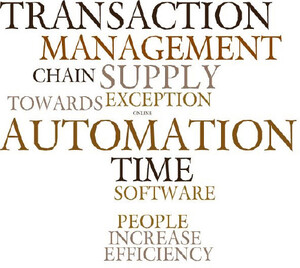
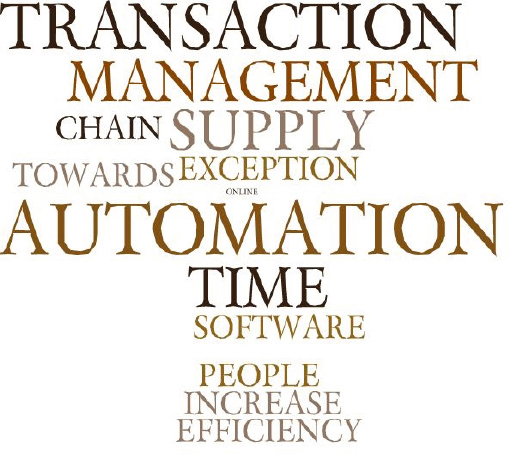
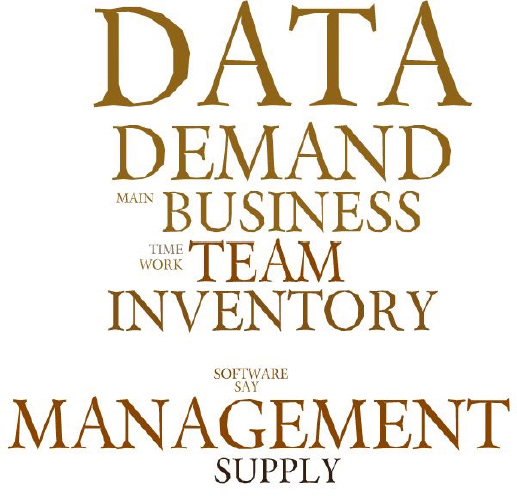
The interviewed supply chain companies are categorized as âpre-farm gateâ (e.g. input suppliers and farmers) or âpost-farm gateâ (e.g. processors, distributors, and retailers). Two of the contacted firms are considered âpre-farm gate,â and three are considered âpost-farm gate.â While the products they handle may differ significantly, the sources of transactional costs and technological solutions do not. Each SCM professional was asked about the role of software adoption in increasing system resiliency. Figures 2 and 3 are word clouds for responses to the question, âWhat is the role of software in reducing costs and increasing efficiency in your company?â The size of a word in the figures relates to how many times it was mentioned â the most significant words are the most important to a supply chain professional. Responses are divided between pre-farm gate companies and post-farm gate companies.
Pre-farm gate responses are displayed in Figure 2. These companies employ software to increase automation, efficiency, and inventory management. Automation is at the forefront for these companies when considering reporting on a sustainable supply chain. However, automation is not always the answer, as pre-farm gate firms heavily rely on relationships to build a sustainable food system. These relationships can bolster sustainability goals and incentivize firms in the supply system to work as a cohesive unit to minimize transactional costs of software procurement; furthermore, relationships assist with building added value along the supply chain, which is a welcome idea considering the upfront costs of software adoption and technical skill training (Filippi and Chapdaniel, 2021). Efficiency in this context relates to the transfer and storage of goods that minimize the transactional cost, with inventory management being a large part of this puzzle (e.g. improved inventory management allows for greater efficiency). A case study in Spain showed that sustainable agri-food systems must be innovative to be efficient in their reporting. The innovation of these firms is hindered by capacities and financial resources (e.g. small or medium agri-food firms do not have the capital to expand), but it is shown that most agri-food firms do not currently innovate based on sustainability and Scope 3 compliance alone (Martinez-Filgueira et al., 2021). This is an important notion as sustainability and Scope 3 reporting might eventually become some of the biggest barriers to entry into the future.
Word cloud describing the pre-farm gate role of supply chain software in decreasing transaction costs. Response to the question: âwhat is the role of software in reducing costs and increasing efficiency in your company?â
Citation: International Food and Agribusiness Management Review 27, 4 (2024) ; 10.22434/ifam.1085
Post-farm gate responses are displayed in Figure 3. Post-farm gate companies are concerned with managing data, inventory, forecasting, and demand planning to improve efficiency and minimize informational and bargaining transaction costs since these firms almost exclusively deal with suppliers and retailers. Improved data management also assists in data visibility and accounting, translating into better sustainability and Scope 3 reporting. Large commercial agri-food systems do not have a sustainable data management system, which allows alternative food networks to promote a better âsustainability promise.â Even with a less profitable agri-food system, as with alternative food networks, these systems can better report sustainability and Scope 3 emissions due to B2B relationships. Large commercial agri-food systems can use these small alternative food systems to leverage a better data management scheme (Hunter et al., 2021). Furthermore, managing data, inventory, and forecasting alleviates traceability issues along the food system. Zhou and Xu (2021) reviewed 278 articles to describe traceability gaps within the agri-food system. This research showed that large agri-food systems lack sustainability reporting and must improve their data accounting to integrate traceability and optimized resource allocation. Integrating traceability with resource allocation helps large firms manage data, inventory, forecasting, and demand planning.
Word cloud describing the post-farm gate role of supply chain software in decreasing transaction costs. Response to the question: âWhat is the role of software in reducing costs and increasing efficiency in your company?â
Citation: International Food and Agribusiness Management Review 27, 4 (2024) ; 10.22434/ifam.1085
5.1 Procurement
Most companies try to automate input purchases. For example, software like COUPA and Ariba create a network of regular suppliers for which an automated order and payment can occur when inventories reach a minimum level. Within this software are punchout catalogs, which make procurement as simple as shopping at Amazon. Some bots make automating tasks like emails as simple as recording a macro in Excel. Moreover, automation does not just increase the speed at which transactions occur but improves the data quality on historical purchases, allowing procurement managers to mine data better for improved decision-making and risk mitigation.
Such automation reduces human labor across all tasks but frees up labor for essential tasks. Procurement managers do not just spend their days automating purchases, payments, and compliance; much of their time is spent on exception management. An exception occurs when something that could be automated is diverted to an actual person for scrutiny. While small input purchases are often automated, larger, more infrequent purchases are flagged for procurement managers to ensure the purchase is truly needed and that that price is competitive. The idea is like calling a company that diverts the call to chatbots, but the chatbots decide it is not a query they can handle and forward you to a representative.
Procurement performance is handled in several different ways, using a variety of metrics. Companies hold monthly meetings where they evaluate metrics like (a) which suppliers are delivering on time, (b) how many times people have to âtouchâ a transaction, and (c) what type of purchases result in a suspension, meaning an invoice is not paid due to a price mismatch or confusion of delivery dates. Performance metrics are analyzed using software like Power BI, Tableau, SAS Visual Analytics, Knime and Alteryx, making it easy to import data and visualize results in a dashboard format. While many software packages are available to aid procurement, interviewees typically use software from major companies like Oracle (e.g. SAP) and choose software based on what they learn at conferences and online communities.
5.2 Logistics
While companies like UPS and Walmart will employ optimization software for logistics, many companies do not have such complicated transportation problems and thus never use optimization software. Their logistics problems instead require negotiating transportation rates, decisions on which warehouse and transportation companies to use, and the like. Other companies face a different problem since they only have one supply site, do not own any warehouses, outsource all their transportation, and have few delivery sites.
For such companies, their efficiency gains do not come through better optimization algorithms but (a) negotiating better shipment rates, (b) developing good relationships with warehouses and transportation companies, and (c) automating specific paperwork and transactions. Like procurement, automation is preferred when feasible, not just for its speed and absence of human labor but because manual handling of paperwork (referred to as âmanual touch pointsâ) creates errors, both in the execution of transactions and communication. Additionally, it was remarked that logistical software is less about costs and more about meeting customer needs efficiently. Valuable software for such tasks includes Salesforce and Agility, which involve IT technologies such as customer relationship management.
However, companies still perform a considerable amount of number crunching using spreadsheet software, where pivot tables, SUMIF statements and VLOOKUP functions are regularly used. Likewise, simpler data analysis functions like COUNTIF statements in spreadsheet software may not be cutting-edge technology but are still essential. Such tasks involve moving between dashboard software like Tableau and Power BI, where data is obtained, and Microsoft Excel, where data is analyzed.
It should be noted that some professionals use SCM software primarily for downloading data and conducting all their analyses in Excel. These tend to be more seasoned professionals who have developed extensive expertise in Excel and do not have to share their data with many people. As dashboard software becomes more sophisticated and can increasingly perform Excel routines like pivot tables, dashboard software alone might someday be sufficient for acquiring and analyzing data. Such software exists but is not commonplace. For example, the software Knime can also perform certain Excel routines. One SCM professional even remarked that if they were at the point where a pivot table was required, they would instead use Knime. Despite the prevalence of modern data analysis software, some companies still rely solely on SQL coding for managing huge datasets. In this case, a programmer might use SQL code in Microsoft Visual Studio to generate reports for managers.
Like procurement, specialized software and bots are used for automation. One company has specific computers referred to as runners that only run bots. Creating bots is conceptually like recording a macro in Excel, and software like UiPath is making the bot creation process increasingly convenient. However, their creation still involves a considerable learning curve. One company has an internal consulting group tasked explicitly with helping SCM professionals create bots in their department. Another company uses consultants of a technology start-up to seamlessly integrate bots and develop proprietary software to cater to their needs specifically.
Tracking shipments (referred to as âinventory controlâ) is imperative because of the perishable nature of agriculture products, with various software packages like Oracle, Pi and SAP used to ensure on-time delivery. Such software typically interacts with other software components that contain a master schedule, a timeline of what will be produced, and when it will be produced. This information is then used with a bill of material (BOM) to determine what inputs will be needed and which inventory requisition specialists are tasked to ensure they are available. In the case of an agri-food supply chain, many inventory requisition specialists deal with products on a first-in-first-out (FIFO) basis, where they must strictly adhere to a master schedule subject to the shelf life of inputs and outputs. Supply Chain Guru is another software package used to model and simulate shipments to analyze the supply chain. This software helps explore shipping alternatives and performance based on master schedules that have the potential to increase customer satisfaction and limit product losses.
5.3 Demand planning
To know how much of a product to produce in a master schedule, one must forecast demand, a practice referred to as âdemand planning.â This process usually involves obtaining data on historical sales of the product and using that as a baseline for what to expect in the future. Despite the importance of historical sales data, effective SCM data collection allows a firm to explore novel downstream opportunities (Staples et al., 2021). Multiple professionals commented that using historical data was not feasible since the data had no context on pandemic disruptions. Some demand planners might download data and create charts of past sales, while others will forecast with a sales team to fill orders. Dashboard software is increasingly used to create such charts to visualize demand quickly. The idea that âa picture is worth a thousand wordsâ is essential in demand planning. If an analysis is performed on past sales, it will often involve simple tools like weighted averages. Still, demand planning software has several âcannedâ tools that can be used, where the user can ask the âmodelâ to provide a forecast accounting for seasonality and trends. Still, the user might not know what model is used. SAP-IBP (an SAP tool for Integrated Business Management) is a dashboard software that can link with Excel to provide information on the model and where it might deviate from forecasts. In cases with extreme deviation (like COVID-19), demand planners will manually adjust forecasts since historical data lacks the context of outlier situations.
When companies were asked how they conduct forecasts, they listed three methods. One is âword of mouth,â where they ask their customers how much they plan to buy â or meet with a sales representative to discuss how demand will be met. Another is to use time-series statistical methods embedded in their SAP-APO software (this is an SAP tool that helps managers forecast demand, create the master schedule, manage available to promise, and the like). The third method uses machine learning, where demand is predicted partly based on external variables. When they evaluate different forecast tools, some companies tend to use the mean absolute prediction error as the accuracy measurement. In contrast, others remarked retroactively linking forecasts with wasted goods as a performance measure.
It is common for demand planning to tout the use of artificial intelligence (AI). Occasionally, one of the interviewees used a true AI tool like deep learning. Still, most interviewees who understand statistics and machine learning believe that most AI for forecasting uses relatively simple methods. Still, companies must use the phrase âAIâ to sound cutting-edge. Industry 4.0 and C3.ai are examples of true AI.
5.4 Sales, inventory and operations planning (SIOP)
Whether they use the acronym or not, most companies use SIOP, where after a master schedule has been created, SCM professionals must convene to determine if any changes to the schedule must be made. Some companies find the master plan (even if the plan is for the next five months) outdated after only a few daysâespecially during COVID-19 and the supply chain crisis.
SIOP is referred to as âintegrated business planningâ by some. âCapacity planningâ typically refers to determining whether the company can meet the master scheduling plan and involves determining factors like whether there will be enough labor, whether there will be enough factory floor space, and whether there are enough raw materials to produce the planned amount. This determination is increasingly referred to as supply-side SIOP instead of demand-side SIOP, which concerns how much they can sell.
Meetings for SIOP rely on software for data and computations but also require human judgment. One company indicated their SIOP meetings consist of 20 people or more. SCM professionals suggest that this is âtoo manyâ in one sense but is necessary because one of the SIOPâs main objectives is to plan and ensure all SCM professionals understand all the constraints involved in producing and selling the product. The idea is that a large company has dozens of SCM professionals involved in a product without one person understanding the whole supply chain. However, the different chain links must be coordinated for the supply chain to work efficiently. By having many people attend this meeting, they can better understand everything involved in the supply chain, allowing them to identify solutions to their constraints. For example, SIOP planners will meet with demand professionals on how current inventories plan to meet demand and adjust accordingly (i.e. there is not enough product in location âAâ and must adjust inventories and operations in another location to meet forecasted demand).
5.5 Supply chain innovation
Large companies with complex supply chains are likely to have internal consultants to help SCM professionals identify, adopt, and master specific types of software. These consultants are not just in the job of managing software, but people. A common phrase is âpeople, processes, data, and technologyâ (PPDT). You start with the people, where you identify their problems. Then, you assess the process, where you try to understand why this is a problem in the first place. The third step is understanding the data that are (as well as the data that should be) available to help solve the problem, and thenâonly thenâdo you explore the software technologies that can help the person overcome the problem. Much of this is âchange management,â where a change may be beneficial, but one also accounts for the obstacles to change. An example given by one company is how to implement new software without causing disruptions across the supply chain. A difficulty is finding software that seamlessly integrates into the companyâs established âdata lakeâ (extensive collection of data) while maintaining communication and insight across the supply chain.
Identifying and adopting the proper software is necessary for an effective ERP, and the cost of implementing an ERP can be hundreds of millions of dollars. It is essential to recognize that humans do all the actual planning. ERP software is mostly just a system that can bring data from every part of the business into a centralized, easy-to-access system. An ERP allows managers to accomplish the bare minimum needed to plan and access data. The fact that this âbare minimumâ for a company can cost over $100 million demonstrates how important identifying new technologies can be.
In identifying problem-solving technologies, SCM innovators with positions like âDirector of Supply Chain Innovationâ find consortiums of other SCM professionals helpful. An example is Gartner, a subscription-based service that allows one to attend conferences, access timely research, and trade information with peers. Gartner provides access to their Gartner Magic Quadrant (Figure 4), which evaluates vendors and their software based on their (a) completeness of vision and (b) ability to execute. Various types of software in a specific genre (e.g. procurement management) are plotted on a grid with four quadrants based on vision and execution. Those with greater vision are further to the right, and those with high execution abilities are further up, such that those in the upper right corner are considered leaders in that their software prepares the company for the future and can fulfill their promises.
Gartner magic quadrants.
Citation: International Food and Agribusiness Management Review 27, 4 (2024) ; 10.22434/ifam.1085
SCM software âaccumulatesâ in that companies rarely adopt one system. SCM professionals may need to exhibit âdigital dexterityâ in learning and using different software systems. One can never know which software will achieve most of the market share. Companies that rate high in their vision in the Gartner Magic Quadrant may seem to anticipate the future reasonably, but each of those companies will have a different vision, and only time will tell which âvisionâ is most accurate. As such, companies will need to adapt to a constant learning process and be able to pivot to the winning software when necessary. Typically, winning software will encompass (1) a user interface, (2) consistent app development, (3) data science tools, and (4) straightforward interpretation with seamless integration. The latter two points are especially important as they influence sustainability and Scope 3 reporting outcomes the most. Robust data science tools enable comprehensive analysis of emission sources along the supply chain while seamless integration streamlines the reporting processes, thereby enhancing the accuracy and transparency of an agribusiness firmâs reporting. Additionally, improved data science tools (e.g. data accounting/forecasting system) with seamless integration (e.g. every node in the chain works together in a companywide decision) allow for more data visibility within each node of the food system and improved B2B communication. Data visibility and B2B communication will directly impact the scale of sustainability and Scope 3 reporting by allowing for better data and communication if food system data within a node is unavailable.
6. Implications for agribusiness managers, scholars, and concluding remarks
This study explored and discussed several roles and perspectives of SCM agribusiness professionals, focusing on how software influences and enhances various functions, namely data collection, accounting, and visualization. The results of our interviews indicate that technology adoption is an integral part of an efficient supply chain. Technology is adopted to increase efficiency in every aspect, especially regarding sustainability reporting requirements. Industry 4.0, which encompasses IoT, digitizes the supply chain and removes much of the labor requirements from SCM. Adopting these types of software alleviates much of the transaction costs incurred in data collection for sustainability reporting. Still, the human aspect is essential for managing when technology fails. For the foreseeable future, the labor cannot be entirely removed. AI cannot design itself and lacks the necessary communication skills between buyers and sellers, but it does excel at data analytics. Therefore, the idea of modern SCM is how humans and technology work in tandem to improve data accounting and overall business performance. This collaboration between human expertise and technology holds implications for sustainability, as it enables firms to better assess their environmental footprint, implement better economic strategies, and drive improvement toward a resource-efficient food system.
Despite the importance of technology adoption for sustainability, technology is not a panacea for fostering more sustainable food systems. For example, novel technology cannot build relationships with community stakeholders, forge trust with producers, or make ethical decisions about resource usage (DeDecker et al., 2022; Newman and Briggeman, 2016). Technology solutions cannot design themselves, understand buyersâ needs, or tend to sensitive contract negotiations. In the same spirit, computers excel in storing and processing large amounts of data but cannot perform a SWOT analysis (Lagoudakis et al., 2020). As such, embedded within this push toward heightened technology adoption is the need for additional training.
The adoption of ERP systems as a visualizer for the supply chain from all entities within SCM has become a convention for large companies in the agriculture sector. Furthermore, integrating ERP systems and other supply chain technologies, such as SAP-IBP, Microsoft Excel, Altryx, Salesforce, COUPA and ARIBA, promotes visualization and agility. Integration enables B2B communication that assists in building and maintaining relationships required for successful performance and optimal institutional data reporting.
Technology and information policies have significantly encouraged technology adoption in various sectors, including agriculture. Governments worldwide have implemented funding initiatives and tax credits to promote research and development in digital solutions, which benefits supply chain management systems (Kweh et al., 2022). These tax credits have increased and motivated innovation quality participation within firms in the United States (Kao, 2018). These policies enhance firmsâ operational efficiency, decision-making, and competitiveness. Many governments have also begun requiring environmental reporting impacts that benefit a firmâs sustainability and public image. These initiatives have increased the need for improved data accounting and visibility within the agri-food sector. Understanding the common software these firms use will enhance the sectorâs accountability.
U.S. Congress has crafted legislative efforts to develop strategies to enhance economic competitiveness with the information and communication technology supply chain (e.g. H.R. 4028, H.R. 1354). To continue building resilience in the supply chain, economic incentives can be generated through policies focused on technological innovations (U.S. Department of Homeland Security, 2022). If implemented, these policies could help build resilience in the supply chain and enhance the United Statesâ ability to compete in the global economy. While environmental, social, and corporate governance scores have been a controversial topic on the path to a more sustainable supply chain, a higher level of adoption of software programs with the ability to track and record data in the supply chain may provide more objectivity for these measures. Policies must incentivize the adoption of information technology innovations to have a more resilient agri-food supply chain.
In agri-food systems, software adoption encounters notable barriers that impede its integration. These barriers encompass multifaceted challenges, prominently including (1) the complexity of technology, (2) limited access to educational resources (most agribusiness courses teach Excel, but is rarely used in agri-food systems), and (3) lack of practical experience (this point ties into the limited educational resources since most early career professionals have limited experience in dealing with complex software). To mitigate these barriers, experienced agri-food system managers possess the potential to alleviate these constraints by orchestrating structured learning paths through online platforms (e.g. Udemy). This strategic initiative aims to cultivate a comprehensive understanding and adeptness with contemporary and forthcoming software applications.
These managers can communicate with agribusiness faculty to harmonize the educational curriculum with practical industry requirements. In practical terms, agri-food firms can promote and facilitate hands-on projects to enhance early-career professionalsâ communication, teamwork, and software proficiency. Such endeavors within the firm serve a dual purpose, identifying and addressing knowledge gaps while bolstering the adeptness of individuals in software-driven data accounting. This proficiency, in turn, substantiates the efficacy of systems for reporting and meeting sustainability objectives within the agri-food sector.
While this qualitative study provides a deeper and richer understanding of softwareâs use and role in current SCM functions, the sample size provides a limited view of the magnitude and frequency of programs used within the industry due to the geographic scope. Further investigation should explore a broader range of firms, sizes, and countries to understand where the agricultural sector falls short in sustainability and Scope 3 emission reporting. Leveraging a larger sample size of firms in the future will allow for more focused and detailed descriptions of SCM functions unique to agri-food systems (e.g. animal agriculture). Future research also entails collaborating with industry and academics to develop an SCM curriculum, emphasizing technical skill development and communication for emerging management scholars.
References
Abaidoo, E., T. Malone and R.T. Melstrom. 2023. Fish demand in the U.S. Great Lakes Region in the face of seafood mislabeling. Aquaculture Economics and Management 27(4): 666â692. https://doi.org/10.1080/13657305.2023.2167019
Abaidoo, E., R.T. Melstrom and T. Malone. 2021. The growth of imports in U.S. seafood markets. Choices 36(4). https://doi.org/10.22004/ag.econ.316608
Anderson, J.C., H. HÃ¥kansson and J. Johanson. 1994. Dyadic business relationships within a business network context. Journal of Marketing 58(4): 1â15. https://doi.org/10.1177/002224299405800401
Blanchard, D. 2021. Supply Chain Management Best Practices. Wiley, Hoboken, NJ.
Caridi, M., A. Moretto, A. Perego and A. Tumino. 2014. The benefits of supply chain visibility: A value assessment model. International Journal of Production Economics 151: 1â19. https://doi.org/10.1016/j.ijpe.2013.12.025
Charlebois, S., N. Latif, I. llahi, B. Sarker, J. Music and J. Vezeau. 2024. Digital traceability in agri-food supply chains: a comparative analysis of OECD member countries. Foods 13(7): 1075. https://doi.org/10.3390/foods13071075
Craighead, C.W., D.J. Ketchen Jr and J.L. Darby. 2020. Pandemics and supply chain management research: toward a theoretical toolbox. Decision Sciences 51(4): 838â866. https://doi.org/10.1111/deci.12468
Creswell, J. W. and C.N. Poth. 2018. Qualitative inquiry and research design: Choosing among five approaches, 4th edn. Sage, Thousand Oaks, CA.
DeDecker, J., T. Malone, S. Snapp, M. Thelen, E. Anderson, C. Tollini and A. Davis. 2022. The relationship between farmer demographics, social identity and tillage behavior: evidence from Michigan soybean producers. Journal of Rural Studies 89: 378â386. https://doi.org/10.1016/j.jrurstud.2022.01.001
Durugbo, C.M. and Z. Al-Balushi. 2023. Supply chain management in times of crisis: a systematic review. Management Review Quarterly 73(3): 1179â1235. https://doi.org/10.1007/s11301-11022-00272-x
Deconinck, K., M. Jansen and C. Barisone. 2023. Fast and furious: the rise of environmental impact reporting in food systems. European Review of Agricultural Economics 50(4): 1310â1337. https://doi.org/10.1093/erae/jbad018
Filippi, M. and A. Chapdaniel. 2020. Sustainable demand-supply chain: an innovative approach for improving sustainability in agri-food chains. International Food and Agribusiness Management Review 24(2): 321â335. https://doi.org/10.22434/IFAMR2019.0195
Frey, S., J. Bar Am, V. Doshi, A. Malik and S. Noble. 2023. Consumers care about sustainability- and back it up with their wallets. McKinsey and Company, available online at https://www.mckinsey.com/industries/consumer-packaged-goods/our-insights/consumers-care-about-sustainability-and-back-it-up-with-their-wallets
Goedde, L., J. Katz, A. Ménard and J. Revellat. 2020. Agricultureâs connected future: How technology can yield new growth. McKinsey and Company, available online at https://www.mckinsey.com/industries/agriculture/our-insights/agricultures-connected-future-how-technology-can-yield-new-growth
Hugos, M.H. 2018. Essentials of Supply Chain Management. Wiley, Hoboken, NJ.
Hunter, E., A. Norman and E. Berg. 2021. Quantifying differences in alternative food network supply chain activities and their relationship with socio-economic outcomes. International Food and Agribusiness Management Review 25(1): 83â101. https://doi.org/10.22434/IFAMR2020.0193
Ingram, J. and D. Maye. 2020. What are the implications of digitalisation for agricultural knowledge? Frontiers of Sustainable Food Systems 4: 66. https://doi.org/10.3389/fsufs.2020.00066
Kao, W. 2018. Innovation quality of firms with the research and development tax credit. Review of Quantitative Finance and Accounting 51(1): 43â78. https://doi.org/10.1007/s11156-11017-0661-x
Kweh, Q.L., W. Lu, F. Lin and J. Deng. 2022. Impact of research and development tax credits on the innovation and operational efficiencies of Internet of things companies in Taiwan. Annals of Operations Research 315: 1217â1241. https://doi.org/10.1007/s10479-10020-03880-03886
Kent, P. and H. Haralambides. 2022. A perfect storm or an imperfect supply chain? The U.S. supply chain crisis. Maritime Economics and Logistics 24: 1â8. https://doi.org/10.1057/s41278-41022-00221-00221
Lagoudakis, A., M.G.S. McKendree, T. Malone and V. Caputo. 2020. incorporating producer perceptions into a SWOT analysis of the U.S. tart cherry industry. International Food and Agribusiness Review 23(4): 547â561. https://doi.org/10.22434/IFAMR2019.0120
Lambert, D.M. and M.C. Cooper. 2000. Issues in supply chain management. Industrial Marketing Management 29(1): 65â83. https://doi.org/10.1016/S0019-8501(99)00113-00113
Lambert, D.M. and M.G. Enz. 2017. Issues in supply chain management: Progress and potential. Industrial Marketing Management 62: 1â16. https://doi.org/10.1016/j.indmarman.2016.12.002
Malone, T., K.A. Schaefer and F. Wu. 2021. The razorâs edge of âessentialâ labor in food and agriculture. Applied Economic Perspectives and Policy 43(1): 368â381. https://doi.org/10.1002/aepp.13070
Martinez-Filgueira, X., D. Peon and E. Lopez-Iglesias. 2021. Determinants of innovation by agri-food firms in rural Spain: an MCA PLS-SEM analysis. International Food and Agribusiness Management Review 25(1): 103â119. https://doi.org/10.22434/IFAMR2021.0015
Montoya-Torres, J.R., A. Muñoz-Villamizar and C. Mejia-Argueta. 2023. Mapping research in logistics and supply chain management during COVID-19 pandemic. International Journal of Logistics Research and Applications 26(4): 421â441. https://doi.org/10.1080/13675567.2021.1958768
Newman, C. and B.C. Briggeman. 2016. Farmersâ perceptions of building trust. International Food and Agribusiness Management Review 19: 57â76. http://dx.doi.org/10.22004/ag.econ.244672
Neto, L., B.E. Brewer and A.W. Gray. 2023. Data on data: an analysis of data usage and analytics in the agriculture supply chain. Applied Economics Perspectives and Policy 45(3): 1577â1591. https://doi.org/10.1002/aepp.13348
SMC. 2023. Pyramid of Automation. Available online at https://www.smctraining.com/en/webpage/indexpage/312.
Stadtler, H. 2015. Supply chain management: an overview. In: Stadler, H., Kilger, C., Meyr, H. (eds) Supply Chain Management and Advanced Planning, pp. 3â28. Springer, Berlin.
Sodhi, M.S., B.G. Son and C.S. Tang. 2012. Researchersâ perspectives on supply chain risk management. Production and Operations Management 21(1): 1â13. https://doi.org/10.1111/j.1937-5956.2011.01251.x
Staples, A., T. Malone and J.R. Sirrine. 2021. Hopping on the localness craze: what brewers want from state-grown hops. Managerial and Decision Economics 42(2): 463â473. https://doi.org/10.1002/mde.3246
Szozda, N. 2017. Industry 4.0 and its impact on the functioning of supply chains. LogForum 13(4): 401â414. http://dx.doi.org/10.17270/J.LOG.2017.4.2
Tietze, F., P. Vimalnath, L. Aristodemou and J. Molloy. 2020. Crisis-critical intellectual property: findings from the COVID-19 pandemic. IEEE Transactions on Engineering Management 69(5): 2039â2056. https://doi.org/10.1109%2FTEM.2020.2996982
U.S. Department of Homeland Security. 2022. Assessment of the Critical Supply Chains Supporting the U.S. Information and Communications Technology Industry. Available online at https://www.dhs.gov/sites/default/files/2022-02/ICT%20Supply%20Chain%20Report_2.pdf
Vallet-Bellmunt, T., M.T. MartÃnez-Fernández and J. Capó-Vicedo. 2011. Supply chain management: A multidisciplinary content analysis of vertical relations between companies, 1997â2006. Industrial Marketing Management 40(8): 1347â1367. http://dx.doi.org/10.1016/j.indmarman.2011.03.002
Vigano, E., M. Maccaroni, and S. Righi. 2022. Finding the right price: supply chain contacts as a tool to guarantee sustainable economic viability of organic farms. International Food and Agribusiness Management Review 25(3): 411â426. https://doi.org/10.22434/IFAMR2021.0103
Ye, F., K. Liu, L. Li, K.H. Lai, Y. Zhan and A. Kumar. 2022. Digital supply chain management in the COVID-19 crisis: An asset orchestration perspective. International Journal of Production Economics 245: 108396. https://doi.org/10.1016/j.ijpe.2021.108396
Yousuf, A. 2017. Transaction costs: a conceptual framework. International Journal of Engineering and Management Sciences 2(3): 131â139. https://doi.org/10.21791/IJEMA.2017.3.13
Zekhnini, K., A. Cherrafi, I. Bouhaddou, Y. Benghabrit and J.A. Garza-Reyes. 2021. Supply chain management 4.0: a literature review and research framework. Benchmarking: an International Journal 28(2): 465â501. http://dx.doi.org/10.1108/BIJ-04-2020-0156
Zhang, G., Y. Yang and G. Yang. 2022. Smart supply chain management in Industry 4.0: the review, research agenda and strategies in North America. Annual of Operations Research 322: 1075â1117. https://doi.org/10.1007/s10479-10022-04689-04681
Zhou, X. and Z. Xu. 2021. Traceability in Food Supply Chains: A Systematic Literature Review and Future Research Directions. International Food and Agribusiness Management Review 25(2): 173â196. http://dx.doi.org/10.22434/IFAMR2020.0065
Corresponding author