Abstract
Digital technology holds significant potential for enhancing business efficiency in agricultural marketing. However, empirical research on the use of digital technology among smallholder farmers engaged in staple crop marketing in Sub-Saharan Africa remains limited. Recognizing the pivotal role of digital technology in agriculture, this study aims to analyse and synthesize existing knowledge regarding the impact of mobile phones on market participation among smallholder farmers. Through a comprehensive analysis, we seek to provide a robust understanding that can inform policies and programs aimed at enhancing smallholder market integration. To achieve this objective, we collected cross-sectional data from 360 farmers in southeast Nigeria and implemented a double hurdle model to analyse market participation decisions and the extent of farmersâ involvement in staple crop markets. In addition to traditional econometric methods, we employed propensity score matching to further investigate the impact of mobile phone ownership on market participation. Our analysis revealed that ICT tools, particularly mobile phones and radios, significantly influence both the decision and intensity of market participation among smallholder farmers. Specifically, mobile phones were found to play a crucial role in facilitating access to market pricing information and disseminating knowledge on improved production methods. Given the volatility of farm prices, the timely dissemination of market information through mobile phones is essential for farmers to make informed decisions. With a high percentage of mobile phone ownership and substantial investments in mobile networks in Nigeria, the digitalization of extension services and marketing information delivery systems could catalyse rapid improvements in agribusiness and marketing. This shift towards digital platforms has the potential to address information asymmetry, particularly among smallholder farmers, thereby fostering greater market integration and economic empowerment within rural communities.
1. Introduction
Due to the growing population in developing economies, mobile and internet service companies have invested extensively in many countries in sub-Saharan Africa. In Nigeria for instance, approximately 67% of the population is subscribed to one or more mobile network providers (Dulli et al., 2020) a figure that has increased to about 87% as of January 2021 (Mediascape, 2021). Studies in other sub-Saharan countries report similar upward trajectories in mobile phone ownership (See: Karakara and Osabuohien, 2019; Doyle et al., 2021; Kreniske et al., 2021). The application of digital technology for the promotion of agribusiness among farmers in this region, therefore, appears set for a pioneering revolution. In response to the increasing importance of applying digital technologies in food production and marketing, the Food and Agriculture Organization of the United Nations proposed the establishment of an International Digital Council for Food and Agriculture (FAO, 2020).
Thus far, several studies have offered nuanced insights into the importance of applying digital technology for Food and Agriculture both in developed and developing nations (Bolfe et al., 2020; Prause et al., 2021; Smidt and Jokonya, 2022). For instance, Prause et al. (2021) examined how digitalization is changing the organization of the food system in the context of the third food regime and submitted that the application of digital technologyhas been instrumental in improving precision in input use among farmers by offering information on weather and ecological conditions. Bolfe et al. (2020) suggested that digital technology has been able to reduce labour costs on the farm through the use of automated machines and robotics. National surveys and literature on digital agriculture in OECD countries indicate a broad adoption of digital technologies in staple crop farming, as well as ample evidence of adoption in livestock and specialty farming (McFadden et al., 2022). However, Prause (2021) opined that digitalization, especially in agrarian communities, might negatively constrain and influence agrarian labour conditions, consequently leading to job losses in the sector which might ultimately increase the rate of rural-urban migrations.
In contrast to the large literature on the importance of digital technology in agricultural production, research on how digital technology promotes market participation among smallholder farmers in developing nation context is sparse: our literature search identified three studies (Cai et al., 2022; Nedumaran et al., 2020; Okello et al., 2010). Nedumaran et al. (2020) found that the application of digital technology could enhance the inclusion and market efficiency of smallholder farmers in India. Using survey data from 855 litchi growers from southern China, Cai et al. (2022) found that smart phone users are more likely to engage in outsourcing technology-intensive tasks than non-smart phone users. Finally, Okello et al. (2010) investigated the awareness and the use of digital technology for market linkage by smallholder farmers in Kenya. This study identified socioeconomic characteristics such as the cost of mobile phones, the cost of airtime recharge vouchers, education, and lack of electricity for recharging phone batteries as the major obstacles to mobile phone ownership and use. The study also highlighted that male farmers are less constrained than females in terms of ownership and use of mobile phones. Furthermore, the study concluded that if the constraining challenges were effectively addressed, increasing smallholder farmersâ awareness of mobile phones would open up opportunities to strengthen their market connections. This present study uses a double hurdle model of market participation decision to understand the extent to which benefits of mobile phone ownership and use can be harnessed to improve farmersâ decision to participate in staple crop markets as well as the extent of participation.
Market participation in the context of this study represents the ability of farmers to participate in agricultural output markets efficiently and effectively (Haile et al., 2022) and it forms an indispensable route to catalysing economic growth and development of many developing economies (Tray et al., 2021). There is a growing consensus among policymakers and researchers on the importance of increased market participation among smallholder farmers in ensuring poverty eradication and food security in developing countries. Market participation can provide new revenue generation and increased income for farmers (Usman and Callo-Concha, 2021). Beyond income generation, Ume et al. (2020) showed that market participation among smallholder farmers can motivate them to increase production and efficiency. It also has an additional ripple effect on job creation in the local, regional, and potentially across the global economy (Food and Agriculture Organization of the United Nations (FAO), 2014).
Considerable research has investigated the factors facilitating market participation, however, empirical evidence on the underlying drivers has not been fully understood (Jamai et al, 2022). Recent research findings are suggesting that the drivers depend on location-specific factors and hence vary from place to place (Gebremedhin and Tegegne, 2012; FAO, 2017; Ume et al., 2020). Relatively, there is a variation in the level and manner of effect each driver of market participation can portend, which makes it difficult to generalize findings (Linderhof et al., 2019). As stated by Ume et al. (2020), the drivers of market participation are still contentious in literature, hence, for clarification of uncertainties and for establishing a coherent body of scholarship, further empirical research is essential. Recognizing the importance of digital technology in agriculture, it is therefore important to analyse and synthesize what is known about the benefits of mobile phones influencing market participation in order to provide a more robust knowledge base that will inform smallholder market integration programmes and policies. The goal of the research, therefore, is to ascertain if digital technology can promote market participation among smallholder farmers.
While existing literature has extensively explored the transformative potential of digital technology in agriculture, there remains a significant gap in understanding its impact on market participation among smallholder farmers in developing economies. Despite the upward trend in mobile phone ownership across sub-Saharan Africa, including Nigeria, research focusing specifically on how mobile phones influence farmersâ decisions to participate in staple crop markets is scarce. Previous studies have primarily examined the role of digital technology in agricultural production, overlooking its potential in enhancing farmersâ market integration. Our study aims to bridge this gap by systematically investigating the extent to which mobile phone ownership and usage contribute to smallholder farmersâ market participation in Nigeria, with a focus on staple crop markets.
In contrast to existing research, our study adopts a novel approach by employing a double hurdle model of market participation decision, allowing us to comprehensively analyse both the determinants of farmersâ decision to participate in markets and the intensity of their participation. By focusing on the benefits of mobile phones, specifically in receiving market price information and communication on effective marketing strategies, our research provides a nuanced understanding of how digital technology can facilitate farmersâ access to markets and optimize their profit margins. Moreover, while previous studies have largely overlooked the marketing of staple crops, our study fills this gap by examining the potential of mobile phones in enhancing the marketing of staple crops in Nigeria. Through empirical evidence and rigorous analysis, our study contributes valuable insights that can inform policy interventions aimed at harnessing the benefits of mobile phones in promoting market participation among smallholder farmers, ultimately advancing agricultural development and food security in Nigeria and similar contexts.
While existing literature has extensively explored the transformative potential of digital technology in agriculture ( Cai et al., 2022; Nedumaran et al., 2020; Okello et al., 2010). there remains a significant gap in understanding its impact on market participation among smallholder farmers in developing economies. Despite the upward trend in mobile phone ownership across sub-Saharan Africa, including Nigeria, research focusing specifically on how mobile phones influence farmersâ decisions to participate in staple crop markets is scarce. Previous studies have primarily examined the role of digital technology in agricultural production, overlooking its potential in enhancing farmersâ market integration. Our study aims to bridge this gap by systematically investigating the extent to which mobile phone ownership and usage contribute to smallholder farmersâ market participation in Nigeria, with a focus on staple crop markets. Studies have shown that Keeping competitive in markets with increasing volumes and price pressure requires the right pricing approach (Adeosun et al., 2019; Oberholtz et al., 2005). Prompt reception of market price information is essential in optimizing profit for farmers and assigning optimal value for products offered. On the other hand, receiving communication on good marketing strategies via mobile phones could provide entry points for farmers to access output market at lower transaction costs and fewer entry barriers (Zhang et al., 2021).
In contrast to existing research, our study adopts a novel approach by employing a double hurdle model of market participation decision, allowing us to comprehensively analyse both the determinants of farmersâ decision to participate in markets and the intensity of their participation. By focusing on the benefits of mobile phones, specifically in receiving market price information and communication on effective marketing strategies, our research provides a nuanced understanding of how digital technology can facilitate farmersâ access to markets and optimize their profit margins. Moreover, while previous studies have largely overlooked the marketing of staple crops, our study fills this gap by examining the potential of mobile phones in enhancing the marketing of staple crops in Nigeria. Through empirical evidence and rigorous analysis, our study contributes valuable insights that can inform policy interventions aimed at harnessing the benefits of mobile phones in promoting market participation among smallholder farmers, ultimately advancing agricultural development and food security in Nigeria and similar contexts.
2. Conceptual framework and theoretical model
Figure 1 illustrates how the adoption of information and communication technologies (ICT), including mobile phones, radio, and other tools, by smallholder farmers improves access to information regarding transaction costs and identifies suitable and profitable markets for staple crop marketing. Access to timely information such as input costs (e.g., fertilizer prices, manure, and improved seed varieties), output prices, transportation costs, and labour costs assists farmers in reducing transaction costs. This prompt access to information on transaction costs and profitable markets has the capacity to promote market participation among smallholder farmers.

Conceptual framework linking mobile phone use and increased market participation.
Citation: International Food and Agribusiness Management Review 27, 4 (2024) ; 10.22434/ifamr2023.0065
The theoretical model of this study is drawn from Zanello (2012) and Zant (2023). We incorporate the notions of fixed and proportional transaction costs to investigate how ICT influences market engagement. To more accurately capture the involvement of smallholder farmers in the market within the South-east geopolitical zone of Nigeria, we expand these models to incorporate whether household farmers have sold at least one staple crop in the first place and the volume of staple crops sold annually, this was done in the econometric estimation procedure section.
In this research, we characterize transaction costs as the variance between the prices of staple crops at destination markets and those at source markets (farm gates). These costs encompass expenses associated with all processes, actions, and obligations involved in transporting staple crops from source markets (farm gates) to destination markets. The spatial price differential is expressed by the following equation:
Citation: International Food and Agribusiness Management Review 27, 4 (2024) ; 10.22434/ifamr2023.0065
Here, p_j (p_k) represents the market price in market j(k),
Citation: International Food and Agribusiness Management Review 27, 4 (2024) ; 10.22434/ifamr2023.0065
The intermediary markup,
Similar to transaction costs, we define transport costs
3. Methodology
3.1 Study area
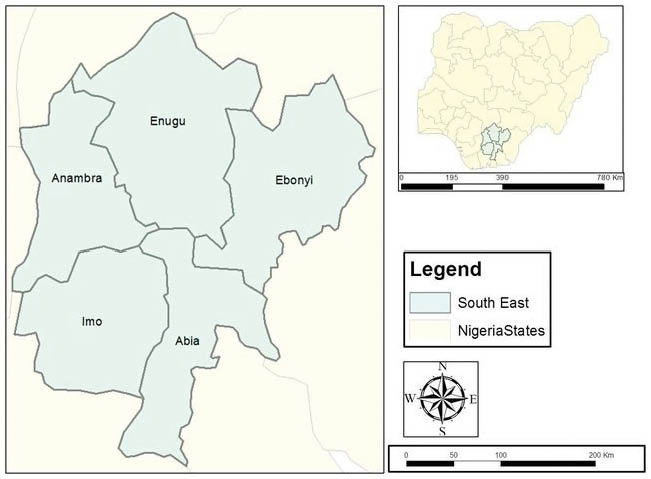
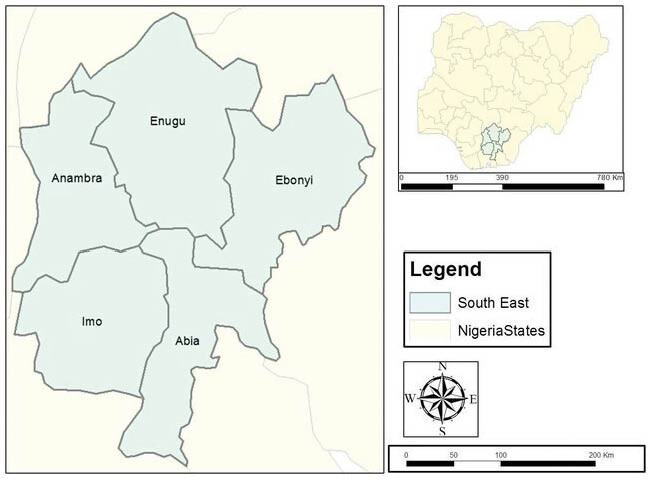
Our research area is the South-east geopolitical zone of Nigeria (Figure 2). Five states constitute this zone: Abia, Anambra, Ebonyi, Enugu and Imo, covering latitude 6°N and 8°N and longitude 4°30â²E and 7°30â²E. The zone spreads over a total area of 78,618 km2, representing 8.5% of the nationâs total land area. The area has a projected total population of 16 381 729 (World Meters, 2019).
South-east geopolitical zone of Nigeria (Source: Anejionu, 2013).
Citation: International Food and Agribusiness Management Review 27, 4 (2024) ; 10.22434/ifamr2023.0065
3.2 Sampling technique
A multistage sampling technique was used in this study to select the respondents. The first stage was the selection of states through random sampling techniques and this gave rise to two states Enugu and Abia. The second stage was the selection of Local Government Areas (LGAs), six LGAs areas were selected from each state to give a random sample of 12 LGAs. The third stage was the selection of communities. Two communities were randomly selected from each LGAs to give a sample of 24 communities while the fourth stage was the selection of respondents from the communities. A list of villages that make up each of the 24 communities was obtained from the Fadama desk office in Enugu and Abia states. These lists of registered farmers in the 24 communities comprise 23 000 in Abia state and 31 200 in Enugu state, and these served as the sampling frame. Equal ratios of farmers in each state were selected using a simple random sampling (SRS) technique. The numbers of farms and farmers sampled in each state are therefore specified through the use of an equal ratio for each registered farmer of the states. This was necessary to make the data self-weighted to enhance comparison (Opata et al., 2019).
Twelve and 18 farm households were randomly selected from a list of registered farmers in the selected communities from Abia state and Enugu state respectively. This gave a total of 144 farmers from Abia state and 216 farmers from Enugu state, respectively. The sampling percentages of 0.66% (of each state) were chosen because of the intensity of survey and resource constraints. On the whole, a total of 360 farm households were sampled from a list of 54 200 registered farming households in the Enugu and Abia states Fadama Co-coordinating Offices.
3.3 Data description
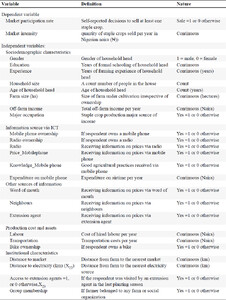
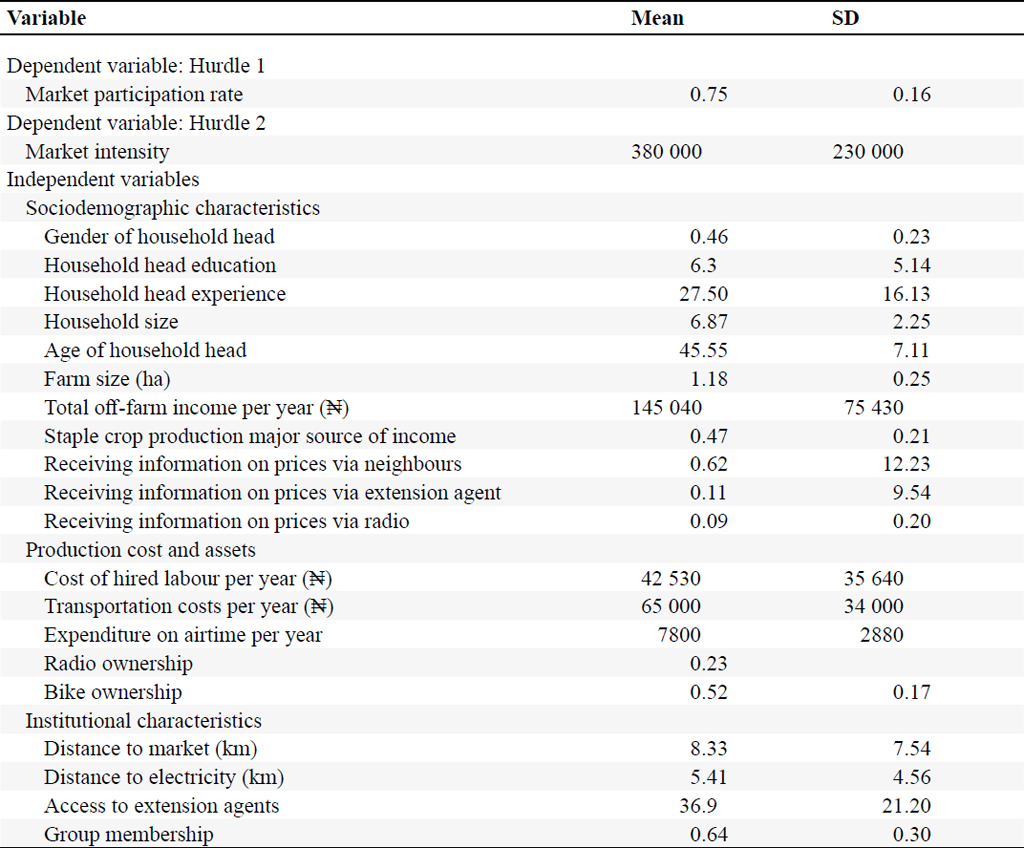
Primary data was collected using a well-structured and pre-tested questionnaire to achieve all the objectives of the study. To ensure the adequacy and relevancy of the instrument, content validity and reliability were rigorously tested through a structured expert review process and the test-retest method, respectively. The definition and description of variables are given in Table 1.
3.4 Content validity
Experts in the field, who provided critical feedback on its adequacy and relevancy in relation to the studyâs objectives, independently reviewed the questionnaire. Feedback from the experts was coordinated, and necessary corrections were made to the questionnaire to enhance its content validity. The Content Validity Index (CVI) was calculated to quantify the proportion of items deemed relevant by the experts:
Citation: International Food and Agribusiness Management Review 27, 4 (2024) ; 10.22434/ifamr2023.0065
A CVI greater than 0.80 indicated a high level of content validity.
3.5 Reliability testing
Reliability of t Glossesabhe instrument was tested using the test-retest method, which involved the following steps:
-
Pilot testing: The questionnaire was administered to a small sample of respondents twice, at two different points in time.
-
Correlation calculation: The responses from the two administrations were correlated to assess consistency. The Pearson correlation coefficient (r) was calculated to measure the stability of responses over time.
-
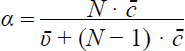
Cronbachâs Alpha: Internal consistency was evaluated using Cronbachâs alpha (α), which measures how closely related a set of items are as a group. The formula for Cronbachâs alpha is:
Citation: International Food and Agribusiness Management Review 27, 4 (2024) ; 10.22434/ifamr2023.0065
where:
-
N is the number of items,
-
cË is the average inter-item covariance among the items,
-
á¿¡ is the average variance.
A Cronbachâs alpha value of 0.731 was obtained, which is above the commonly accepted threshold of 0.7, indicating good reliability.
3.6 Econometric estimation procedure
Craggâs double hurdle model
This study adopted the double hurdle model introduced by Cragg (1971) to analyse the role of digital technology in promoting market participation and the extent of participation among smallholder farmers. This model is particularly suitable for our research as it allows us to separately model the decision to participate in the market and the quantity of crops sold, thus addressing potential issues of sample selection bias and incidental truncation. We chose Craggâs double-hurdle model over the other selection model to better suit the specific requirements of our study, which involves analysing both the decision to participate in the market and the intensity of market participation as separate processes. The Cragg model offers flexibility by allowing different factors to influence each stage independently, addressing zero outcomes due to non-participation without assuming a single underlying process for both decisions. This approach ensures a more nuanced understanding of the factors affecting market participation and intensity, providing more accurate parameter estimates and insights into the role of digital technology and other variables in market activities. In addition to choosing the Cragg double-hurdle model, it is crucial to recognize potential sources of error in our analysis, particularly selectivity bias and endogeneity. Selectivity bias may arise if the factors influencing a farmerâs decision to participate in the market are correlated with unobserved characteristics that also affect the intensity of market participation. Endogeneity can occur if independent variables are correlated with the error terms, potentially due to omitted variables, measurement errors, or simultaneity. To mitigate these issues, we incorporate instrumental variables (IVs) that are correlated with the endogenous regressors but uncorrelated with the error terms, ensuring more reliable and consistent parameter estimates. This approach helps address biases and enhances the robustness of our findings.
Definition and description of variables.
Citation: International Food and Agribusiness Management Review 27, 4 (2024) ; 10.22434/ifamr2023.0065
Participation equation (decision to sell or not to sell):
This stage models the binary decision of whether a farmer sells at least one staple crop. This decision is represented by a latent variable, which indicates the farmerâs propensity to participate in the market. The participation equation is specified as follows:
Citation: International Food and Agribusiness Management Review 27, 4 (2024) ; 10.22434/ifamr2023.0065
y*1i is a dummy dependent variable (1=farmer participating in market; 0=decision not to participate in market) showing the market participation status of the i-th farmer. xi is a vector of the explanatory variables measured for the i-th farmer;
The IV zi is chosen based on its relevance to market participation and its exogeneity with respect to the intensity of participation. Selecting an appropriate instrumental variable (IV) requires finding a variable that is correlated with the endogenous explanatory variable (in this case, mobile phone ownership or use) but uncorrelated with the error term in the outcome equation (market participation rate and market intensity). The IV must influence the decision to participate in the market through its effect on the endogenous variable but not directly influence the market participation intensity or decision. This study appeals to the âExpenditure on Mobile Phoneâ as an ideal IV as the variable is likely to be strongly correlated with mobile phone ownership and use (as higher expenditures may reflect greater use or reliance on mobile phones) but not directly affecting market participation intensity beyond its effect on mobile phone use.
We estimate the participation equation using a probit model to obtain the Inverse Mills Ratio (IMR). The IV zi is included to address potential endogeneity in the participation decision.
Citation: International Food and Agribusiness Management Review 27, 4 (2024) ; 10.22434/ifamr2023.0065
Inverse Mills Ratio (IMR)
To address potential selection bias due to the censoring mechanism, we incorporate the Inverse Mills Ratio (IMR). The IMR is derived from the first-stage probit model and included as an additional regressor in the second stage equation to correct for selection bias. The IMR is calculated as follows:
Glosses
Citation: International Food and Agribusiness Management Review 27, 4 (2024) ; 10.22434/ifamr2023.0065
where:
By including the IMR in the second-stage regression, we adjust for any bias that may arise due to the correlation between the error terms in the participation and intensity equations.
Second stage (intensity of market participation)
the second stage â intensity of market participation uses the obtained IMR from the first stage in the second hurdle equation to correct for selection bias, estimating the equation using an appropriate regression method (e.g., Tobit or truncated regression). The intensity of market participation was measured as quantity of staple crops sold per year in Nigerian naira. In cases where the farmer engaged in production of more than one crop, the intensity of market participation is measured by the amount of all crop produced by the i-th farmer that was sold to the market.
The determinant of the intensity of participation is given as
Citation: International Food and Agribusiness Management Review 27, 4 (2024) ; 10.22434/ifamr2023.0065
Here, yji = y*ji if y*1i > 0 and yji = 0 if y*1i = 0 if y* ⤠0 for j = 1,2.
Furthermore, the ordered pair (u1i, u2i) is taken from a bivariate normal distribution with mean zero and constant variances
By incorporating the instrumental variable in the first stage, we mitigate the endogeneity problem and ensure consistent parameter estimates. This approach allows us to isolate the role of digital technology in promoting and enhancing market participation while controlling for other influential factors.
Propensity Score Matching
In addition to the double hurdle model, we employed propensity score matching (PSM) to further investigate the mediating role of digital technology in the market participation of smallholder farmers. The PSM technique aims to balance the distribution of observed covariates between treated (farmers using digital technology) and control (farmers not using digital technology) groups, allowing for a more robust estimation of the treatment effect.
To incorporate PSM into our analysis, we first estimated the propensity scores, denoted as P(x), using a logistic regression model. The propensity score represents the probability of a farmer using digital technology given their observed characteristics x. Mathematically, the propensity score model can be expressed as:
Citation: International Food and Agribusiness Management Review 27, 4 (2024) ; 10.22434/ifamr2023.0065
where D is a binary variable indicating the use of digital technology (ownership of radio or handset), and x is a vector of observed covariates.
Next, we matched treated and control farmers based on their propensity scores. This matching process ensures that treated and control groups are comparable in terms of observed characteristics, reducing the potential for selection bias. Matching can be performed using various methods, such as nearest neighbor matching or kernel matching. Finally, after matching, we estimated the average treatment effect on the treated (ATT) using the matched sample. The ATT represents the average difference in market participation outcomes between farmers using digital technology and those not using it. The estimation of ATT allows us to assess the causal effect of digital technology on market participation while accounting for observable differences between treated and control groups. By incorporating propensity score matching into our analysis, we aim to provide a more rigorous examination of the relationship between digital technology use and market participation outcomes among smallholder farmers. This approach enhances the validity of our findings and contributes to a deeper understanding of the role of digital innovation in agricultural markets.
4. Results
4.1 Descriptive results
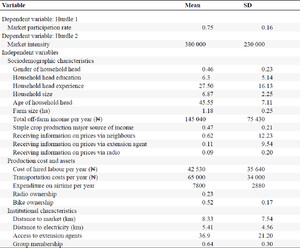
In Table 2 we describe the sociodemographic characteristics, institutional characteristics and production characteristics, and assets, which are used to explain the determinants of the likelihood and intensity of market participation. More than half (54%) of the farmersâ were female, and had on average, household heads aged 46years, 6 years of formal education, 28 years of farming experience, a household size of 7 persons, a farm size of 1.2 ha and an off-farm income of â¦145â 040 per year. About 47% of the farmers indicated that their major source of income was from staple crop production. The results also show that 62% of the farmers receive information on prices via neighbours, while only 11% receive information on prices from extension agents. This is reflective of the low access to extension services in the area as Table 1 also showed that only 36.9% of the farmers have access to extension agents. The use of radio as a source of information was also found below as only 9% of the farmers indicated haven received information through the radio.
Descriptive statistics of the sociodemographic characteristics of the farmers
Citation: International Food and Agribusiness Management Review 27, 4 (2024) ; 10.22434/ifamr2023.0065
In terms of production cost, transportation cost was found to be the most cost-intensive. An average farmer was found to spend â¦65â 000 ($135) on transportation in the last planting season. Labor cost was found to be â¦42â 530 ($87.5). Spending on airtime per year was â¦7800 ($16.25). Furthermore, the farmers live on average about 8.33km from the market. Only 37% of the farmers had access to extension service while more than half (64%) of them belonged to a farmer-based organization. The results also show that most (75%) of farmers reported that they participate in the market to sell at least one staple crop while the rest are produced exclusively for consumption. The average income from marketing of staple crops is â¦380â 000.
4.2 Econometric results
Information sources/mobile phone utilization
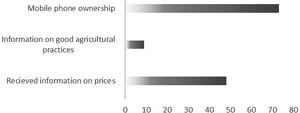
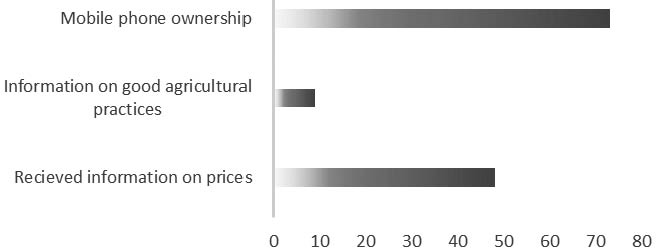
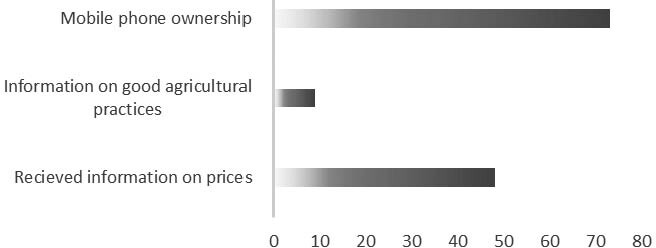
In Figure 3, we present the distribution of the respondents based on mobile phone ownership, as well as the utilization of mobile phones in sourcing information. Our result showed that close to half of the farmers surveyed (48%) received information on prices through the use of mobile phones. This performance demonstrated the importance of mobile phones in reducing information asymmetry. It also shows the potential of mobile in driving an efficient market. This is also important seeing that many of the farmers owned mobile phones (73%). As of early 2024, Nigeria has approximately 219.7 million mobile subscriptions. This figure marks a significant increase, reflecting a 14.6% growth over the previous year Odunewu (2024). Recent studies provide evidence supporting the finding that a significant portion of farmers receive price information through mobile phones. For instance, a study conducted in Zambia reported that farmers frequently use mobile phones to access agricultural information, including pricing, demonstrating the critical role of mobile phones in disseminating market information (Mwalupaso et al., 2019). Another study in Tanzania found that mobile phone ownership among smallholder farmers was substantial, and these devices were commonly used to obtain market prices and other agricultural information (Quandt et al., 2020). Figure 3 also shows that less than 10% received information on good agricultural practices through mobile phones. This suggests that the use of mobile phones in extension service delivery or peer-to-peer activities is not fully explored by farmers and extension agents in the area.
Information sources/mobile phone utilization.
Citation: International Food and Agribusiness Management Review 27, 4 (2024) ; 10.22434/ifamr2023.0065
4.3 Determinants of market participation decision by smallholder staple crop producers
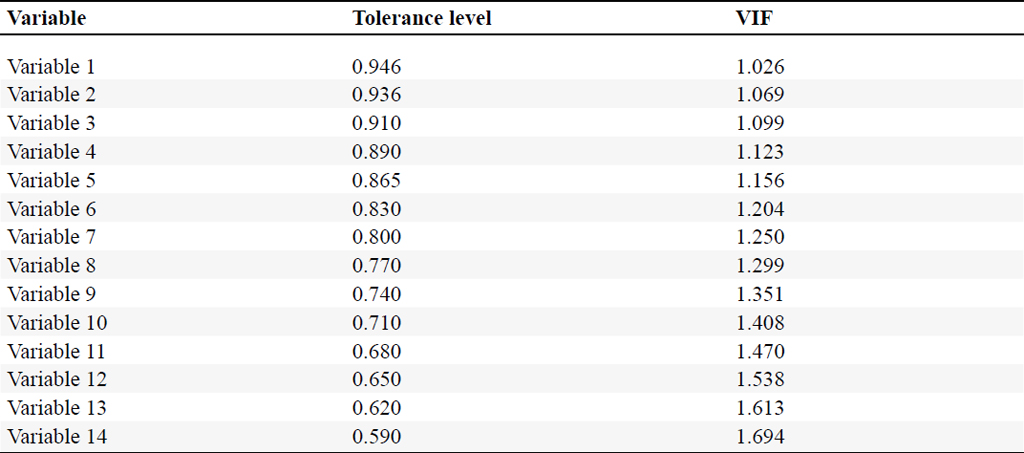
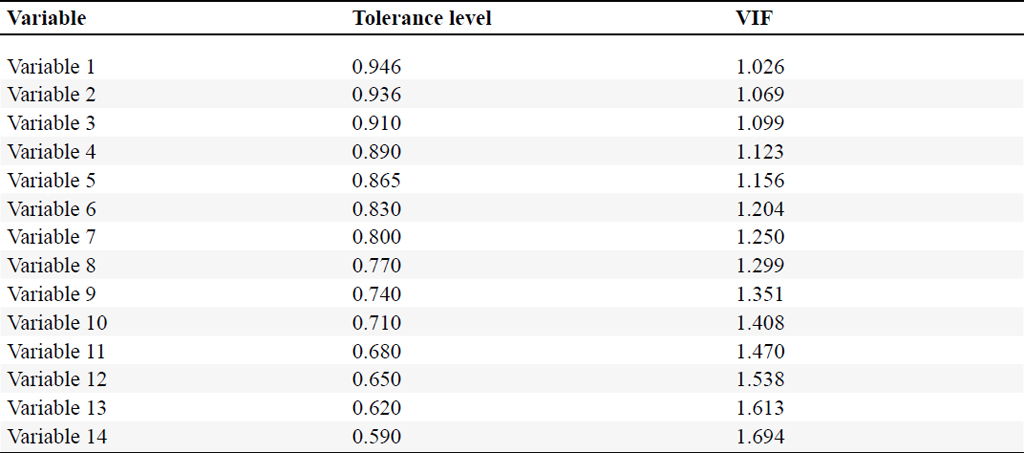
The double-hurdle model was used to evaluate the factors influencing smallholder farmersâ participation decisions and their intensity in the staple market. However, all preliminary tests were conducted before the final regression analysis. A diagnostic test for multicollinearity was conducted based on the Variance Inflation Factor. The estimated tolerance level of 0.590 and 0.946 was obtained and (VIF) falls between 1.026 and 1.524. In the probit model with 360 observations, 270 were selected while 90 were not selected in the model. Detailed results of the diagnostic test for multicollinearity have been included in the Appendix.
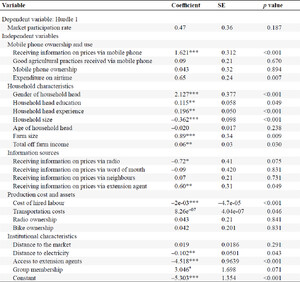
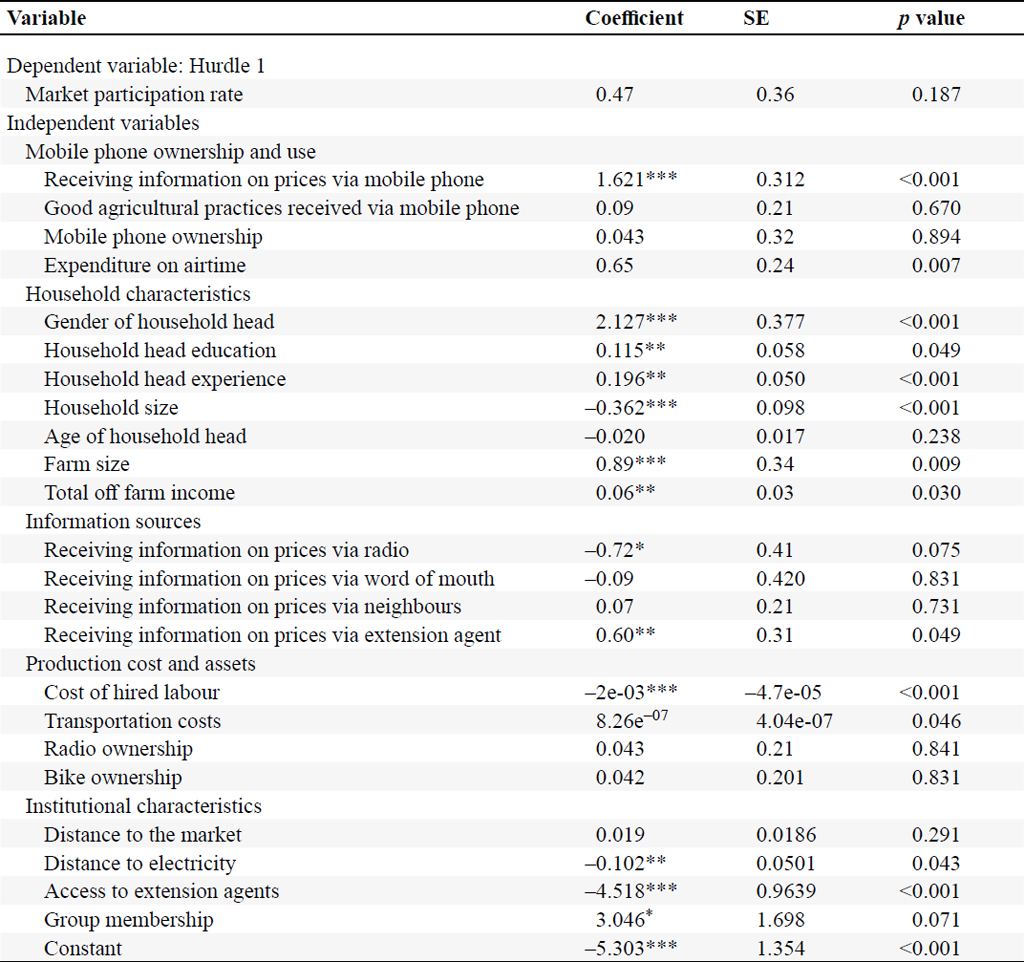
We present the result of the first stage probit results in Table 3. The result shows the factors that explain the staple producersâ market participation decision. The selection equation model employed Maximum Likelihood procedures. The estimated Prob> chi2of the probit model has a likelihood ratio that is significant at the 1% level of probability, indicating the combined significance of the explanatory variables included in the model. For the first stage equation, a positive and significant coefficient of the parameter indicates that an increase in the parameter will increase the likelihood of participating in the market, while a negative coefficient means that a decrease in the parameter will reduce the likelihood of participating in the market by the acceptable level of significance.
First stage probit results of the determinants of market participation in staples
Citation: International Food and Agribusiness Management Review 27, 4 (2024) ; 10.22434/ifamr2023.0065
Starting with the main variables of interest, the estimated coefficient of mobile phone ownership and its use was positive and significant at a 1% probability level in explaining the decision to participate in the market to sell outputs. The estimated coefficient of radio ownership and use was positive and significant at a 1% and 10% probability level in explaining decisions to participate in the market to sell his or her surplus agricultural output. Farmers who receive information on prices via mobile phone were 1.621% more likely to participate in market than farmers who do not receive information on prices using mobile phones. This relationship was also found to be statistically significant at a 1% level of significance. Receiving information on prices through mobile phones was also found to be more effective than through extension agents as the coefficient for extension information on price was found to be 0.60. Farmers who receive information on good agricultural practices via mobile phone were also found to participate more in market than their counterparts. However, the relationship was found to be statistically insignificant. This result is corroborated by the findings of Mwalupaso et al. (2019) who found that mobile phone use significantly influences farmersâ market participation by providing access to price information and facilitating better decision-making. The study by Chikuni and Kilima (2019) highlighted that mobile phones are essential tools for receiving market information, significantly affecting farmersâ decisions to engage in market activities. These sources confirm that mobile phone ownership enhances farmersâ market participation by reducing information asymmetry and providing timely market information.
Gender had a positive and significant influence on the staple farmersâ market participation decision at a 1% probability level. This means that male-headed households are more likely to participate in the market for staple crops than female headed households. This is in line with Hlatshwayo et al. (2022) in South Africa and Belete and Nigatu (2023) in Ethiopia who found that male-headed households participated more in the market. Also, the estimated coefficient of household size was negative and significant at 1% probability level in explaining the decision of farmers to participate in the market for selling surplus output. This indicates that an increase in the number of family members is inversely related to the likelihood of a farmer participating in the market. The estimated coefficient of level of education was found to be significant at 5% and had a positive relationship to the decision to participate in the market to sell surplus production. This shows that an increase in the level of education of farmers has the tendency of increasing their likelihood of market participation to sell surplus output of crops. Higher levels of education among farmers enhance their access to market information, business skills, technological adoption, networks, risk management abilities, understanding of policies, and income diversification opportunities, thereby positively influencing their decisions to participate in the market to sell surplus production. This finding aligns with Regasa et al. (2020) who found a positive and statistically significant relationship between education level and farmersâ decisions to engage in market activities for surplus production sales. However, it is contrary to Haile et al. (2022) and Gelana et al. (2020) who found a negative relationship highlighting that attending education may create other job opportunities to participate in non-agricultural activities as employee.
The finding indicates that farming experience, with statistical significance at the 1% level, positively influences farmersâ decisions to participate in the market for selling surplus production, suggesting that more experienced farmers are more likely to engage in market activities. This result is corroborated by Zakari et al. (2023) who found a significant positive effect of farming experience on farmersâ decisions to engage in market activities to sell surplus production. But contrary to Haile fixed and variable costs were significant in explaining market participation decisions as shown in Table 2. Farm size was positive and significant at 1% in explaining market participation decisions to sell surplus crop output. This result aligns with Belete and Nigatu (2023) who found a a significant positive effect of farm size on farmersâ decisions to engage in market activities to sell surplus production. The estimated coefficient of distance to electricity is negative and significant at a 5% probability level in explaining decisions to participate in the market to sell surplus production. This implies that participation in the market tend to decrease with an increase in distance to the nearest source of electricity. Farmers closer to sources where they can access electricity appear to participate more in market. The estimated coefficient of farm income was also positive and significant at 1% to surplus production.
4.4 Second hurdle truncated OLS regression results on factors affecting the intensity of market participation
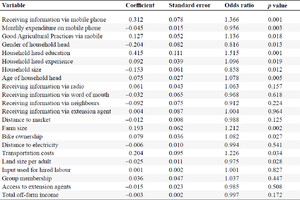
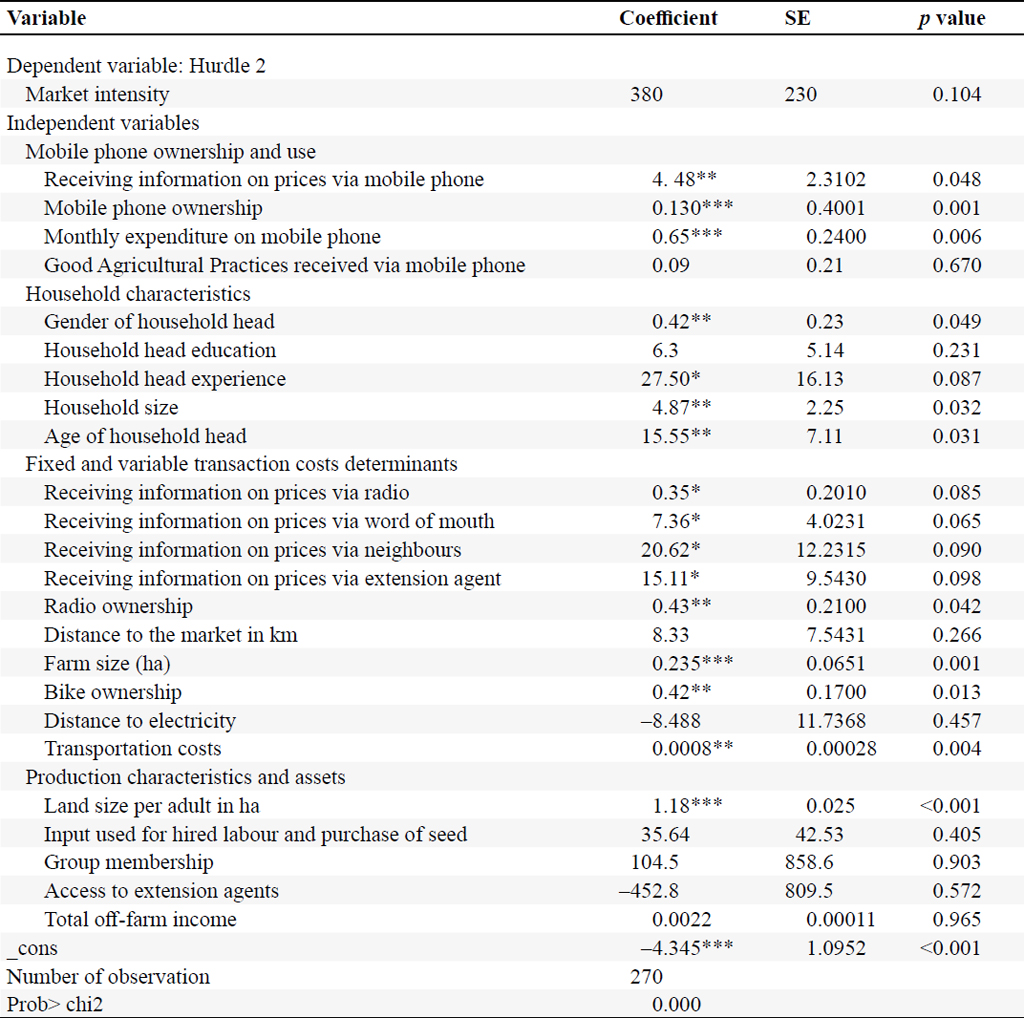
The extent of market participation is shown by the second stage equation. It shows the parameters that are significantly and positively related to an increase in the value of staple crops sold by the farmer, which is the dependent variable. There were some similarities and differences in the factors that explain the staple producers market participation decision and intensity. The estimated second hurdle of the model as presented in Table 4 shows that ICT (mobile phone) affects the intensity of the market participation. Receiving information on prices via mobile phone, mobile phone ownership, and monthly expenditure on mobile phones were all found to statistically and significantly explain the staple producersâ market participation intensity. This result differs from the first stage market participation decision as some of the factors that did not explain participation decision significantly affected the participation intensity. This includes mobile phone ownership, and monthly expenditure on mobile phone
Truncated OLS estimation results
Citation: International Food and Agribusiness Management Review 27, 4 (2024) ; 10.22434/ifamr2023.0065
Farm size, mobile phone ownership, transportation cost and farm income influence the intensity of market participation (quantity of staple crop sold) by smallholder farmers in the study area. The p-value is 0.00, which shows that the regression was statistically significant at 1% probability level. The result of the analysis shows that farm size, mobile phone ownership, transportation cost and farm income were positive and significant in explaining the likelihood of the intensity of market participation (quantity of crop sold or intensity of selling crops) at 1% probability level.
The estimated coefficient of farm size was positive and significant in explaining the intensity of market participation or the intensity of selling crops. This implies that an increase in farmersâ farmland increases the likelihood of the intensity of market participation as he produces more crops to sell. This result agrees with Gelana et al. (2020) and Belete and Nigatu (2023) who found a significant positive effect on the volume of output sold. The estimated coefficient of mobile phone ownership was also positive and significant in explaining the intensity of market participation resulting from the quantity of crops sold. This implies that the use of mobile phones to get information on input cost, new agronomical practices, transportation cost, price fluctuation, output price, and when to sell increased the likelihood of the quantity of agricultural crops being produced and sold. The coefficient of transportation cost had positive and significant effect on the quantity of crops sold. The estimated coefficient of farm income was also positive and significant in explaining the quantity of crops sold. This implies that an increase in farmersâ income increases the likelihood of intensity of market participation. This finding aligns with Zakari et al. (2023) who found a significant positive relationship between intensity of crops produced and household market participation.
4.5 Treatment effect of mobile phone ownership and use on market participation
In this study, we employ a propensity score matching (PSM) approach to evaluate the treatment effect of mobile phone ownership on farmersâ market participation. PSM allows us to compare the market participation outcomes of farmers who own mobile phones with those who do not, while controlling for potential confounding variables (Table 5). By matching farmers based on their propensity to own a mobile phone, we aim to isolate the causal effect of mobile phone ownership on market participation. The analysis includes a diverse set of covariates, such as demographic characteristics, household size, farming experience, access to agricultural extension services, and off-farm income. These covariates help capture the heterogeneity among farmers and improve the accuracy of the treatment effect estimation. By matching farmers based on their propensity to own a mobile phone, we aim to isolate the causal effect of mobile phone ownership on market participation.
Treatment effect of mobile phone ownership on market participation
Citation: International Food and Agribusiness Management Review 27, 4 (2024) ; 10.22434/ifamr2023.0065
The propensity score matching analysis revealed a significant treatment effect of mobile phone ownership on market participation among smallholder farmers. Table 5 summarizes the key findings of the analysis. The coefficient of mobile phone ownership (0.214) represents the average treatment effect of owning a mobile phone on market participation. This positive coefficient indicates that farmers who own mobile phones are, on average, 0.214 units more likely to participate in agricultural markets compared to those who do not own mobile phones. Importantly, this effect is statistically significant, with a p-value of less than 0.001, suggesting a strong association between mobile phone ownership and increased market participation among smallholder farmers. Furthermore, the standard error associated with the coefficient of mobile phone ownership (0.0436) indicates the precision of the estimated treatment effect. The small standard error suggests that the coefficient estimate is relatively stable and reliable, enhancing confidence in the significance of the treatment effect.
This finding aligns with previous studies that have highlighted the role of mobile phones in enhancing market access and participation in agricultural activities. For example, research by Camacho and Conover (2019) emphasizes the growing policy interest in leveraging digital innovations, such as mobile phones, to promote agricultural market participation. Similarly, Aker and Ksoll (2016) found that mobile phones play a significant role in facilitating market participation among farmers in Ghana. By enabling real-time communication and access to price information, mobile phones empower farmers to make informed decisions about when, where, and how to sell their produce. As a result, mobile phone ownership emerges as a critical enabler of market access and income generation for smallholder farmers, particularly in rural and remote areas where traditional market channels may be limited.
5. Discussion
With the huge population of Nigeria, mobile phone service providers have invested massively in the country thereby creating a huge potential for ICT in agriculture, especially among smallholder farmers. One area where ICT can be employed is in the area of market participation. The rapid advancement in Information and Communication Technologies (ICTs), and the use of digital innovations in agriculture, particularly in provision of production and market-related extension services, can help in encouraging farmers to participate in marketing activities. Our finding showed that the estimated coefficient of mobile phone ownership and its use was positive and significant in explaining the decision to participate in the market to sell outputs. This result is similar to the findings of Camacho and Conover (2019) who found that there has been growing policy interest in the use of digital innovation in agriculture. The positive and significant use of mobile phones and radio for market information also agreed with the result of Zanello (2012), who argued that the use of mobile phones and radio rather than ownership were significant factors explaining market participation in Ghana. the propensity score matching analysis provides robust evidence that mobile phone ownership significantly enhances market participation among smallholder farmers. These findings underscore the importance of promoting mobile phone adoption and improving digital connectivity in agricultural development strategies aimed at fostering inclusive and sustainable market access for rural communities.
Another important information communication tool used by the farmers is the radio. The estimated coefficient of radio ownership and use was positive and significant at 1% and 10% probability levels in explaining decisions to participate in the market to sell his or her surplus agricultural output. This implies that increase in access to radio increases the likelihood of decision to participate in the market as a seller of agricultural products. This finding is also in conformity with the result of Larochelle et al. (2019) who found that ICT platforms, such as radio, television, video, and telephone (for Short Messaging Services (SMS) and Interactive Voice Responses (IVR), are considered low-cost approaches for provision of extension messages to farmers and can facilitate wider extension coverage especially information on production and marketing of agricultural products.
Extension visits can be made effective when it engages these ICT mediums. The estimated coefficient of access to extension agents was negative and significant at 1% probability level in explaining decision to participate in the market as a seller of surplus production. This finding showed that extension agents who are supposed to be a bridge between farmers and research programmes are not doing so as a result of weak research-extension-farmer linkages in Nigeria. Therefore, farmers get more favourable information through ICT tools than the help of extension agents. The finding from this study is contrary to the findings of Zamasiya et al. (2014) who found a positive influence of extension agents in market participation of farm households. However, the study did not differentiate if the extension contacts were through physical means or not. The result of our study showed that extension agents can actually be effective in encouraging market participation when they engage through the ICT tools that are available to them.
Apart from the ICT such as mobile phones and radio, there are also various other factors that could influence market participation which was included in the study. Results show that some household characteristics have robust effects on market participation. For example, the estimated coefficients of the effects of gender were positive and significant at 1% probability level in explaining the decision of the farmers to participate in the market to sell surplus production. The finding suggested that education significantly improves the decision to participate and the intent of participation as educated farmers can process information more than uneducated farmers due to their improved capacities and managerial abilities. This suggests that households headed by males will enhance the likelihood of participating in the market as a seller of surplus output than households headed by female counterparts. Previous studies on positive and significant effects of gender argued that men are more likely to adopt the technology than women as they tend to have access and control over the household resources in Ghana (Abbeam et al., 2020).
In terms of household size of the farmers, previous studies have shown that the effect of household size on market participation could be negative or positive (Abdoulaye et al., 2015). On the negative relationship of this variable, increased consumption pressure is associated with large family size and may have resulted in a reduction in the ability to purchase inputs and thereby participate in the market. On the positive side, large family size is generally associated with a greater labour force being available to household for activities related to market participation. The negative influence of household size in this study disagreed with the work of Cazzuffi et al. (2020) who argued that household size had positive and significant relationship with the commercialization of rice in Viet Nam. It is also in conformity with the findings of Adeoye and Adegbite (2018) who found that household size had a negative effect on the decision to participate in the market.
Farm size on the other hand has a positive effect on both the decision and intensity of market participation. This implies that farmers with large farms are more likely to participate in the market compared to those with small farms as they can afford to devote part of their field to crop production to increase the output. This is because land is vital factor of production in agriculture, and farmers having large farm sizes are better endowed and can take risks in producing surplus for the market than poor farmers with small land assets who cannot afford the transaction costs needed to purchase improved seeds, fertilizers, tractors and other management practices for increasing yield and producing surplus that will enable farmersâ participation in the market. In accordance, Opata et al. (2018) found that farm size was a significant determinant of participating in the marketing channel that has been differentiated into more marketing functions in Southeast Nigeria.
Participation in the market tends to decrease with an increase in distance to electricity. This is because increase in distance implies more transaction costs to pay for transportation and other logistics needed to charge phones and to access digital technologies. This could place a high demand on the costs of participating in the market. The estimated coefficient of transportation cost was positive and significant at a 5% probability level in explaining the decision to participate in the market to sell the surplus production. This is against our a priori expectation that transportation cost has an inverse relationship with market participants to sell surplus production. This could be a result of bad roads and long distances to the market which showed that the more farmers were able to take the risk the more they participate in the market.
The estimated coefficient of farm income was also positive and significant at 1% to surplus production. This implies that an increase in farmersâ income from surplus production of agricultural outputs increases the likelihood of market participation. This is because farmers will have more income to purchase inputs such as agrochemicals, fertilizers, improved seeds, and management practices that will increase the yields and thereby produce more outputs and also will have income that will enable them to pay transaction costs and other logistics needed in the output for market participation.
6. Conclusion
This study set out to investigate whether digital technology (specifically we considered mobile phones and radio) can promote market participation among smallholder farmers. To determine both the decision to participate and the extent of participation among smallholder farmers, we employed a double-hurdle model approach. The result of our analysis showed that ICT tools such as radio and telephone are significant factors affecting the decision to participate in the market as a seller while the mobile phone influences the intensity of selling crops. This effectiveness of mobile phones in improving market participation was observed in the form of the benefits of accessing information on market pricing and information on better production methods. Since farm prices are volatile and are weather dependent, farmers need to be up-to-date on pricing, and this can be achieved through mobile phones. Having considered the effectiveness of different ICT tools (mobile phone, and radio), it was shown that most of the agricultural marketing information was gotten through mobile phones in a way that will reduce transaction costs. We, therefore, recommend that extension service delivery should leverage mobile phone technology in extending production and marketing information to the farmers. With the high percentage of mobile phone ownership and the massive investment of mobile networks in the country, digitalization of extension services, as well as marketing information, could provide a platform for rapid improvement of agribusiness and marketing in the country. This will bridge the information gap between extension agents and farmers.
Results of our analysis also showed that farm size and farm income also significantly affected both the decision to participate in the market as a seller of surplus production and the intensity of market participation measured from the quantity of crop sold. This showed the need for encouraging small farmers in maximizing the potential of ICT in marketing surplus, there is a need to create market linkages for small farmers in the area as this would increase market participation for this set of farmers. Government intervention should not only focus on large farms alone but effort should be directed at engendering even smaller farmers to actively engage with ICT in their farming activities.
One limitation of the study is its focus on specific region (southeast Nigeria) and may not be generalizable to other smallholder farmers in other parts of sub-Saharan Africa or beyond, where digital technology adoption rates, market structures, and access to information may differ significantly. Additionally, the study relies on cross-sectional data, which provides a snapshot at a particular point in time. This limits the ability to establish causality between the use of digital technology and market participation among smallholder farmers. Longitudinal data or experimental designs could provide stronger evidence of the casual relationship between digital technology adoption and market participation. Furthermore, while the study highlights the significance of digital technology tools such as radio and telephone in influencing market participation decisions, it may overlook other important factors that could affect farmers engagement in markets, such as infrastructure constraints, access to finance, or social networks. Future research could consider a more comprehensive analysis that includes a wider range of variables to better understand the complexities of market participation among smallholder farmers. Lastly, the study primarily focuses on the role of digital technology adoption in improving market participation and does not thoroughly explore the potential challenges or drawbacks associated with digital technology adoption, such as digital literacy barriers, cost implications, or the digital divide among farmers. Understanding these limitations could provide a more nuanced understanding of the feasibility and sustainability of digital interventions in agricultural marketing for smallholder farmers.
Finally, since male and female farmers have varying levels of access to technology such as ICT, there is a need for further study investigating the distributional effect of ICT adoption on market participation across gender. Such a study could benefit from gender disaggregated data that would investigate the potential, opportunities as well as constraints faced by women farmers as regards the use of ICT in agribusiness activities.
References
Aker, J.C. and C. Ksoll, 2016. Can mobile phones improve agricultural outcomes? Evidence from a randomized experiment in Niger. Food Policy 60, 44â51. https://doi.org/10.1016/j.foodpol.2015.03.006
Abbeam, G.D., L.J.S. Baiyegunhi and T.O. Ojo. 2020. Gender differentials in technical efficiency of Ghanaian cocoa farms. Heliyon 6: e04012. https://doi.org/10.1016/j.heliyon.2020.e04012
Abdoulaye, T., A.S. Bamire, O. Adewale and A.A. Akinola. 2015. Determinats of adoption of improved cassava varieties among farming households in Oyo, Benue, and Akwa Ibom State of Nigeria. Available online at https://ebrary.ifpri.org/cdm/ref/collection/p15738coll2/id/129797
Adeoye, I. and O. Adegbite. 2018. Determinant of smallholder plantain farmers participation in market. Journal of Innovation Agriculture 5(1): 5â12.
Adeosun, K.P., E.J. Ihemezie, C.O. Ume and L.U. Egu. 2019. The nexus between maize importation, local production and local prices: Empirical analysis from Nigeria. Alanya Akademik BakıŠ3(2): 201â213. https://doi.org/10.29023/alanyaakademik.481553
Anejionu, O.C.D., P.C. Nwilo and E.S. Ebinne. 2013. Long term assessment and mapping of erosion hotspots in south east Nigeria. Available online at https://www.yumpu.com/en/document/view/22033992/long-term-assessment-and-mapping-of-erosion-hotspots-in-fig
Bergquist, L.F. and M. Dinerstein. 2020. Competition and entry in agricultural markets: experimental evidence from kenya. American Economy Review 110(12): 3705â3747. https://doi.org/10.1257/aer.20171397
Belete A.A. and A.G. Nigatu. 2023. Determinants of market participation among smallholder teff farmers, empirical evidence from central Ethiopia. Environmental Development 48, 100929. https://doi.org/10.1016/j.envdev.2023.100929
Bolfe, Ã.L., L.A.C. Jorge, I. Sanches, A.L. Junior, C.C. Costa, D.C. Victoria, R.Y. Inamasu, C.R. Grego, V.R. Ferreira and A.R. Ramirez. 2020. Precision and digital agriculture: adoption of technologies and perception of Brazilian farmers. Agriculture 10(12): 653. https://doi.org/10.3390/agriculture10120653
Cai, Y. Y. Sun, W. Qi and F. Yi. 2022. Impact of smartphone use on production outsourcing: evidence from litchi farming in southern China. International Food and Agribusiness Management Review 25(4): 671â682. https://doi.org/10.22434/IFAMR2021.0155
Camacho, A. and E. Conover. 2019. The impact of receiving SMS price and weather information on small scale farmers in Colombia. World Development 123(3): 104596. https://doi.org/10.1016/j.worlddev.2019.06.020
Cazzuffi, C., A. McKay and E. Perge. 2020. The impact of agricultural commercialization on household welfare in rural Vienam. Food Policy 94: 101811. https://doi.org/10.1016/j.foodpol.2019.101811
Chikuni, T. and F.T.M. Kilima. 2019. Smallholder farmersâ market participation and mobile phoneâbased market information services in Lilongwe, Malawi. The Electronic Journal of Information Systems in Developing Countries 85(6): e12097. https://doi.org/10.1002/isd2.12097
Cragg, J.G. 1971. Some statistical models for limited dependent variables with application to the demand for durable goods. Econometrica 39: 829â844.
Doyle, A.M., T. Bandason, E. Dauya, G. McHugh, C. Grundy, S. Dringus, C.D. Chikwari and R.A. Ferrand. 2021. Mobile phone access and implications for digital health interventions among adolescents and young adults in Zimbabwe: cross-sectional survey. Jmir Mhealth and Uhealth 9(1): 1â15. https://doi.org/10.2196/21244
Dulli, L., K. Ridgeway, C Packer, K.R. Murray, T. Mumuni, K.F. Plourde, M. Chen, A. Olumide, O. Ojengbede and D.R. McCarraher. 2020. A social media--based support group for youth living with HIV in Nigeria (SMART Connections): randomized controlled trial. Journal of Medical Internet Research 22(6): e18343. https://doi.org/10.2196/18343
FAO. 2014. Understanding smallholder farmer attitudes to commercialization â the case of maize in Kenya. FAO, Rome.
FAO. 2017. Smallholder agriculture and market participation. FAO, Rome. Available online at http://www.fao.org/3/a-i7841e.pdf
FAO. 2020. International digital council for food and agriculture, e-agriculture. Available online at https://www.fao.org/e-agriculture/international-digital-council-food-and-agriculture
Gebremedhin, B. and A. Tegegne. 2012. Market orientation and market participation of smallholders in Ethiopia: implications for commercial transformation. Conference August 2012, Foz do Iguacu Brazil. Available online at http://ideas.repec.org/p/ags/iaae12/125847.html
Gelana O.M., C.S. Aweke and E.N. Okoyo. 2020. Determinants of farmersâ participation and intensity of participation in groundnut commercialization: evidence from Babile District, Oromia National Regional State, Ethiopia. International Journal of Advanced Research 8(3): 1065â1074.
Haile, K., E. Gebre and A. Workye. 2022. Determinants of market participation among smallholder farmers in Southwest Ethiopia: double-hurdle model approach. Agriculture and Food Security 11: 18. https://doi.org/10.1186/s40066-40022-00358-00355
Hlatshwayo, S.I.; Ojo, T.O.; Modi, A.T.; Mabhaudhi, T.; Slotow, R.; Ngidi, M.S.C. (2022). The Determinants of Market Participation and Its Effect on Food Security of the Rural Smallholder Farmers in Limpopo and Mpumalanga Provinces, South Africa. Agriculture 12(7): 1072. https://doi.org/10.3390/agriculture12071072
Jamai, K., X. Gellynck, A. Abidar and H.D. Steur. 2022. Organisational readiness to participate in a labelled product service cluster: A structural equation model analysis. International Food and Agribusiness Management Review 25(3): 509â529. https://doi.org/10.22434/IFAMR2021.0124
Karakara, A.A. and E.S. Osabuohien. 2019. Householdsâ ICT access and bank patronage in West Africa: empirical insights from Burkina Faso and Ghana. Technology in Society 56: 116â125. https://doi.org/10.1016/j.techsoc.2018.09.010
Kreniske, P., A. Basmajian, N. Nakyanjo, W.G. Ddaaki, D. Isabirye, C. Ssekyewa, R. Nakubulwa, J.S. Hirsch, A. Deisher, F. Nalugoda, L. Chang and J.S. Santelli. 2021. The promise and peril of mobile phones for youth in rural uganda: multimethod study of implications for health and HIV. Journal of Medical Internet Research 23(2): e17837. https://doi.org/10.2196/17837
Larochelle, C., J. Alwang, E. Travis, V.H. Barrera and J.M. Dominguez Andrade. 2019. Did you really get the message? Using text reminders to stimulate adoption of agricultural technologies. Journal of Development Studies 55(4): 548-564. https://doi.org/10.1080/00220388.2017.1393522
Linderhof, V., V. Janssen and T. Achterbosch. 2019. Does agricultural commercialization affect food security: the case of crop-producing households in the regions of post-reform Vietnam?. Sustainability 11(5): 1263. https://doi.org/10.3390/su11051263.
McFadden, J., F. Casalini, T. Griffin and J. Anton. 2022. The digitalisation of agriculture. OECD Food, Agriculture and Fisheries Papers 176. OECD, Paris. https://doi.org/10.1787/285cc27d-en
Mediascape. 2021. No TitleNigeria: State of the media. Available online at https://medialandscapes.org/country/nigeria/telecommunications/mobile-ownership
Mwalupaso, G.E., S. Wang, Z. Xu and X. Tian. 2019. Towards auspicious agricultural informatization â implication of farmersâ behavioral intention apropos of mobile phone use in agriculture. Sustainability 11(22): 6282. https://doi.org/10.3390/su11226282
Nedumaran, S., A. Selvaraj, R. Nandi, B. Suchiradipta, P. Jyosthnaa and D. Bose. 2020. Digital integration to enhance market efficiency and inclusion of smallholder farmers: a proposed model for fresh fruit and vegetable supply chain. International Food and Agribusiness Management Review 23(3): 319â337. https://doi.org/10.22434/IFAMR2019.0165
Oberholtz, L., C. Dimitri and C. Greene. 2005. Price premiums hold on as u.s. organic produce market expands. Outlook Report VGS30801. U.S. Department of Agriculture, Economic Research Service: Washington, DC.
Okello, J.J., R.M. Okello and E. Ofwona-Adera. 2010. E-Agriculture and e-government for global policy development: implications and future directions, in awareness and the use of mobile phones for market linkage by smallholder farmers in Kenya. In B. Maumbe (Ed.). IGI Global, Hershey, PA, pp. 1â18. https://doi.org/10.4018/978-971-60566-60820-8.ch001
Opata, P., N. Nweze, A. Ezeibe and M. Mallam. 2018. Efficiency of irrigated and rain - fedrice (oryza sativa) producers in fadama agriculture, Nigeria. Experimental Agriculture 55(4): 1â13. https://doi.org/10.1017/S0014479718000212
Odunewu, S. (2024, April 10). MTN, Airtelâs gains push Nigeriaâs mobile subscriptions to 219.7m. Blueprint Newspapers. Available online at Blueprint.ng
Prause, L. 2021. Digital agriculture and labor: A few challenges for social sustainability. Sustainability 13(11): 5980. https://doi.org/10.3390/su13115980
Prause, L., S. Hackfort and M. Lindgren. 2021. Digitalization and the third food regime. Agriculture and Human Values 38(3): 641â655. https://doi.org/10.1007/s10460-10020-10161-10162
Quandt A., J.D. Salerno, J.C. Neff, T.D. Baird, J.E. Herrick, J.T. McCabe, E. Xu and J. Harrter. 2020. Mobile phone use is associated with higher smallholder agricultural productivity in Tanzania, East Africa. PLoS ONE 15(8): e0237337. https://doi.org/10.1371/journal.pone.0237337
Regasa M.G., R. Negash, A.E. Bekele, D.B. Nemera and F. Yildiz. 2020. Smallholder market participation and its associated factors: Evidence from Ethiopian vegetable producers. Cogent Food and Agriculture 6(1): 1783173. https://doi.org/10.1080/23311932.2020.1783173
Smidt, H.J. and O. Jokonya. 2022. Factors affecting digital technology adoption by small-scale farmers in agriculture value chains (AVCs) in South Africa. Information Technology for Development 28(3): 558â584. https://doi.org/10.1080/02681102.2021.1975256
Tray, B., E. Garnevska and N. Shadbolt. 2021. Linking smallholder producers to high-value markets through vegetable producer cooperatives in Cambodia. International Food and Agribusiness Management Review 24(6): 905â920. https://doi.org/10.22434/IFAMR2020.0135
Ume, C.O., A.A. Enete, A.N. Onyekuru and P.I. Opata. 2020. Evaluation of agribusiness performance in Nigeria. Africa Journal of Management 6(4): 327â349. https://doi.org/10.1080/23322373.2020.1830690
Usman, M.A. and D. Callo-Concha. 2021. Does market access improve dietary diversity and food security? Evidence from Southwestern Ethiopian smallholder coffee producers. Agricultural and Food Economics 9(1): 18. https://doi.org/10.1186/s40100-40021-00190-00198
Zamasiya, B., N. Mango, K. Nyikahadzoi and S. Siziba. 2014. Determinants of soybean market participation by smallholder farmers in Zimbabwe. Journal of Development and Agricultural Economics 6(2): 49â58. https://doi.org/10.5897/jdae2013.0446
Zanello, G. 2012. Mobile phones and radios: effects on transactions costs and market participation for households in northern Ghana. Journal of Agricultural Economics 63(3): 694â714. https://doi.org/10.1111/j.1477-9552.2012.00352.x
Zhang, Y,. C. Li, Y. Xu and J. Li. 2021. An attribution analysis of soybean price volatility in China: global market connectedness or energy market transmission?. International Food and Agribusiness Management Review 24(1): 15â25. https://doi.org/10.22434/IFAMR2019.0144
Zant, W. (2023). Mobile Phones and Mozambique Traders: Size, Composition and Distribution of Reduced Transaction Costs. Food Policy 116 (102423) https://doi.org/10.1016/j.foodpol.2023.102423
Zakari S., Moussa B., Ibro G. and Abdoulaye T. (2023) Analyzing the drivers of smallholder farmerâs market participation in the Sahelian region of Niger, Cogent Food and Agriculture, 9,1, 2220178. https://doi.org/10.1080/23311932.2023.2220178.
Appendix
Diagnostic test for multicollinearity
Citation: International Food and Agribusiness Management Review 27, 4 (2024) ; 10.22434/ifamr2023.0065
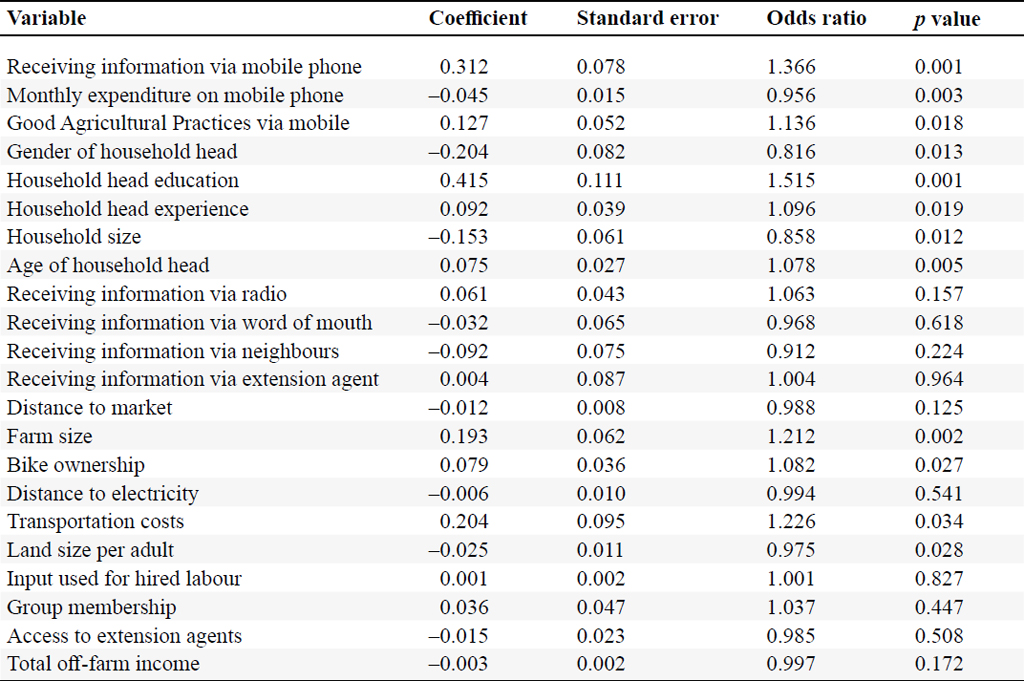
Logit model of the propensity score matching
Citation: International Food and Agribusiness Management Review 27, 4 (2024) ; 10.22434/ifamr2023.0065
Corresponding author