Abstract
Lactobacillus acidophilus (LA) ingestion has been previously shown to be beneficial for glycemic control and pain management, but not in diabetic neuropathy (DN). The present work was designed to evaluate the therapeutic potential of daily treatment with Lactobacillus acidophilus LA85 (LA85) strain in a model of streptozotocin (STZ)-induced painful DN in mice and characterize its mechanisms of action. Male C57BL/6 mice received a daily intraperitoneal administration of STZ (60 mg/kg, 3 days). After the establishment of sensory neuropathy, mice were daily treated with LA85 (1.0 à 107 or 1.0 à 109 CFU), vehicle, or gabapentin (isolated or associated with LA85) for 28 days. Nociceptive thresholds were assessed using von Frey and Hargreaves tests. Motor performance was evaluated in the rota-rod test. Glycaemic measurement was determined before and after induction in four different times. Gene expression profile, cytokine levels, and oxidative stress biomarkers in the spinal cord were evaluated by real-time PCR, ELISA, and biochemical assays, respectively. STZ-induced mice showed persistent hyperglycaemia and compatible behavioural signs of sensory neuropathy, such as mechanical allodynia and thermal hypoalgesia. Treatment with LA85, especially at 1.0 à 109 CFU, significantly reduced the neuropathy signs. No LA85-induced motor impairment was evidenced in the rota-rod test. LA85 treatment reduced levels of interleukin-1β, malondialdehyde, and nitrite, and modulated oxidative stress biomarkers in the spinal cord of diabetic mice. The long-lasting antinociceptive effect induced by Lactobacillus acidophilus LA85 during diabetic neuropathy may be associated with reestablishment of redox and immune homeostasis in the spinal cord.

Citation: Beneficial Microbes 16, 5 (2025) ; 10.1163/18762891-bja00069
1 Introduction
The global prevalence of diabetes reflects the number of individuals susceptible to developing chronic complications, including diabetic neuropathy (DN), the most frequent of them (Eid et al., 2023). Approximately half of patients with type 1 and type 2 diabetes (Ogurtsova et al., 2017) suffer from DN. Among the mainly clinical manifestations include spontaneous tingling, hyperalgesia and allodynia, and sensory loss. It is well established that persistent hyperglycaemia is the main risk factor for the development of DN, but other factors contribute to its worsening (Feldman et al., 2019). High glycaemic levels induce metabolic and enzymatic changes, which result in increased lipid peroxidation, release of pro-inflammatory cytokines, and neuroinflammation, in addition to altering the function of antioxidant enzymes such as glutathione reductase and superoxide dismutase (Quan et al., 2007). These events are probably responsible for maintaining sensory neuropathy even after adequate control of hyperglycaemia has been achieved (Yagihashi et al., 2011).
The treatment of DN represents an important global challenge, since current strategies aim at glycaemic control and pharmacological pain management, and the response to treatment has been shown to be limited or ineffective (Pop-Busui et al., 2022). Modulation of the intestinal microbiota, through the probiotics use, has emerged as a promising strategy, given the regulatory activity of the microbiota on signalling pathways involved in the pathogenesis of DN (Corriero et al., 2024; Guo et al., 2019; Tanase et al., 2020). Probiotic therapy can directly influence immune, neural, and endocrine responses and, therefore, reduce the progression of painful conditions (Franca et al., 2021; Lin et al., 2020). A recent study has explored the therapeutic benefits of promising probiotics in the control of DN (Santos et al., 2024). Lactobacillus strains were associated with important therapeutic effects on pain modulation through several mechanisms.
Strong crosstalk of the immune, neural, and endocrine systems has been experimentally demonstrated in painful and metabolic conditions in research with several strains of Lactobacillus acidophilus (LA), such as L. acidophilus KLDS1.0901 (Bordalo Tonucci et al., 2017; Yan et al., 2019). In chronic pain, formulations containing L. acidophilus strains DSM24735 and NCFM promoted pain relief in a chemotherapy-induced neuropathy model and analgesic effects in the gut, similar to the effects of morphine (Castelli et al., 2018; Rousseaux et al., 2007). Moreover, a set of preclinical and clinical trials suggests that treatment with L. acidophilus strains ZT-L1 and KLDS1.0901 and other strains of the same species can prevent or delay the onset of diabetes (Bordalo Tonucci et al., 2017; Mafi et al., 2018; Soleimani et al., 2017; Yan et al., 2019). These effects, in part, can be attributed to the hypoglycaemic potential and antioxidant and immunoregulatory properties at a systemic level, which represents a promising therapy in the treatment of DN.
Despite the biological properties described, which point to antidiabetic and analgesic potential, reports on the effects of LA in DN are lacking. The present work was designed to evaluate, for the first time, the antinociceptive effects of L. acidophilus LA85 strain in a preclinical setting, using the streptozotocin-induced DN model. Furthermore, putative mechanisms of action involved in the effects of LA, with an emphasis on spinal mechanisms, were investigated.
2 Material and methods
Animals
Experiments were performed on adult male C57BL/6 mice. Mice (25-30 g) were obtained from the Animal Facilities of the Gonçalo Moniz Institute, FIOCRUZ (Salvador, Brazil). They were housed in temperature-controlled rooms (22-25 °C), under a 12:12 h light-dark cycle, with access to water and food ad libitum. All behavioural tests were performed between 8:00 a.m. and 5:00 p.m. Animal care and handling procedures were in strict accordance with the recommendations of the Guides for the Care and Use of Laboratory Animals (Garber et al., 2011) and International Association for the Study of Pain for the use of laboratory animals (Zimmermann, 1983). All protocols were approved by the Institutional Animal Care and Use Committee of Federal University of Bahia (CEUA/UFBA, number: 012/2021). Efforts were made to minimize animal distress. Behavioral tests were performed by blind evaluators.
Probiotic preparation
Lactobacillus acidophilus LA85 strain (WeCare Probiotics; Jiangsu, P.R. China) were obtained in free-flowing lyophilized form. The lyophilized bacteria was suspended in skim milk 10% solution (cryoprotectant vehicle; Biolog®, Sao Paulo, Brazil) in autoclaved distilled water and aliquoted to 1.0 à 109 or 1.0 à 107 CFU, according to Yan et al. (2019) and Li et al. (2021).
Diabetic neuropathy model
Diabetes was induced in C57BL/6 mice as previously described by GuimaraÌes et al. (2013). Briefly, streptozotocin (STZ; Sigma-Aldrich®, 60 mg/kg in citrate buffer, pH 4.5) was administered intraperitoneally once daily for 3 consecutive days. Control mice received citrate buffer in the same volume, route, and schedule. Glycaemia was determined in blood samples from the tail vein using Accu-Check® glucose sticks. Measurements were taken before and after STZ induction, in addition to three assessments during L. acidophilus treatment. Mice with blood glucose levels above 250 mg/dL were considered diabetic. Pain-like behaviours were assessed throughout the experimental period to confirm the development of the DN.
Experimental design
Mice were divided into the following groups (
Assessment of diabetic sensorial neuropathy by behavioral assays
Sensorial parameters of DN were assessed throughout the experimental period by using the established behavioral assays that evaluate mechanical and thermal nociceptive thresholds (Chaplan et al., 1994; Hargreaves et al., 1988). Behavioral tests were performed in a blind fashion. Measurements of nociceptive thresholds were performed daily for 3 days before the experimental procedures, to determine the baseline, and throughout the experimental period after the induction of the neuropathy model (once every 4 days). Withdrawal threshold to mechanical stimulation was measured with von Frey filaments (Stoelting, Chicago, IL, USA). In a quiet room, mice were placed in acrylic cages (12Â Ã 10Â Ã 17Â cm) with wire grid floor, allowing full access to the ventral aspect of the hind paws, 40Â min before the beginning of the test. A logarithmic series of nine filaments were applied to the plantar surface of the ipsilateral hind paw to determine the threshold stiffness required for 50% paw withdrawal according to the non-parametric method of Dixon, as described by Chaplan et al. (1994). A positive response was characterized by the removal of the paw followed by clear flinching movements. The development of DN was characterized by mechanical allodynia, indicated by the reduction of the paw withdrawal threshold (in grams).
Withdrawal threshold to heat stimulation was determined using the Plantar Test (Hargreaves Apparatus, Ugo Basile Biological Instruments, Gemonio, Italy), as previously described (Hargreaves et al., 1988). Similar to the von Frey test, mice underwent an acclimatization period before the beginning of the test. An infrared light source was placed under the glass floor and positioned at the centre of the hind paw of mice. On paw withdrawal, a photo-cell automatically shut off the heat source and recorded the time to withdrawal. To avoid thermal injury, there was an upper cutoff limit of 15Â s, after which the heating was automatically terminated. The stimulation was applied three times with intervals of at least 5Â min. The averaged threshold from these three trials was recorded as the thermal nociception threshold. The development of DN was characterized by heat hypoalgesia, indicated by the increase of the paw withdrawal threshold (in seconds).
Motor function assay: rota-rod test
To evaluate the motor function, mice were submitted to the rota-rod test, as previously described (dos Santos et al., 2021). The rota-rod apparatus (Insight, RibeiraÌo Preto, Brazil) consists of a rotating bar of 3Â cm diameter, subdivided into five compartments. On the day of test, mice from different experimental groups were placed on the rotating rod (sixteen revolutions per min) and the falling avoidance was measured for up to 120 seconds. Mice treated with diazepam (10Â mg/kg; CristaÌlia, Itapira, Brazil), the test reference drug, were placed on a rotating rod 1 hour after treatment. The results were analysed as the average time (s) that the animals remained in rota-rod for each group. The Rota-rod was performed before (baseline, B), at the beginning (T0), and at the end of treatments (T28).
Quantification of cytokine levels by ELISA
For the measurement of cytokine levels, spinal cords samples (L4-L5 segments) of mice were collected 4 weeks after treatments (8 weeks after the neuropathy induction), as previously described (Evangelista et al., 2018). Tissue proteins were extracted from 100 mg tissue/ml phosphate-buffered saline (PBS) to which 0.4 M NaCl, 0.05% Tween-20 and protease inhibitors (0.1 mM PMSF, 0.1 mM benzethonium chloride, 10 mM EDTA and 20 KI aprotinin A/100 ml) were added. The samples were centrifuged for 15 min at 4400 rpm at 4 °C and the supernatant was frozen at â80 °C for later quantification. Interleukin-1β (IL-1β) levels were determined using commercially available immunoassay ELISA kits for mice (R&D Systems, Minneapolis, MN, USA), according to the manufacturerâs instructions. Results were expressed as picograms of IL-1β per milligram of protein.
Estimation of lipid peroxidation and nitrite in the spinal cord of diabetic mice
At the end of the experimental period, spinal cord segments (L4-L5) were collected. The samples were rinsed with ice-cold saline and homogenized in chilled phosphate buffer (pH 7.4), then used to determine lipid peroxidation and nitrite estimation. The malondialdehyde (MDA) content was assayed in the form of thiobarbituric acid-reactive substances (TBARS) (Tiwari et al., 2009). Briefly, 0.2 ml of homogenate and 0.29 ml of Tris-HCl (pH 6.4) were incubated at 37 °C for 2 h. After incubation, 0.4 ml of trichloroacetic acid at 10% was added and centrifuged at 1000 g for 10 min. To 0.7 ml of supernatant, 0.7 ml of 0.67% thiobarbituric acid was added and the tubes were kept in boiling water for 10 min. After cooling, 0.7 ml double distilled water was added and absorbance was measured at 532 nm. TBARS were quantified using an extinction coefficient of 1.56 à 105 Mâ1 cmâ1 and were expressed as nmol of malondialdehyde per mg of protein. Nitrite, an indicator of nitric oxide production, was estimated in spinal cord homogenates by the Griess method (Green et al., 1982). Briefly, 50 μl Griess reagent (1:1 solution of 1% sulphanilamide in 5% phosphoric acid and 0.1% napthaylamine diamine dihydrochloric acid in water) was added to 50 μl of homogenate, and absorbance was measured at 546 nm. Nitrite concentration in μg per ml of total protein was calculated using a standard curve for sodium nitrite.
Real-time PCR
The transcription of catalase (Cat), superoxide dismutase (Sod), glutathione peroxidase (Gpx) and nuclear factor erythroid 2-related factor 2 (Nrf2) genes was evaluated by real-time quantitative polymerase chain reaction (qRT-PCR) in mouse spinal cord at the conclusion of the experimental period (4 weeks after treatments), as previously described (Evangelista et al., 2018). Total RNA was extracted from L4-L5 spinal segments with Trizol reagent (Invitrogen, Carlsbad, CA, USA) and the concentration determined by photometric measurement. A High-Capacity cDNA Reverse Transcription Kit (Applied Biosystems, Foster City, CA, USA) was used to synthesize cDNA from 1 μg of RNA, according to the manufacturerâs recommendations. Synthesis of cDNA and RNA expression analysis was performed by real-time PCR using TaqMan Gene Expression Assay for Cat (Mm00437992_m1), Sod1 (Mm01344233_g1), Gpx1 (Mm00492427_m1), and Nrf2 (Mm00477784_m1). A no-template control (NTC) and no-reverse transcription controls (No-RT) were also included. All reactions were run in triplicate on an ABI7500 Sequence Detection System (Applied Biosystems) under standard thermal cycling conditions. The mean Ct (cycle threshold) values from triplicate measurements were used to calculate expression of the target gene, with normalization to an internal control Gapdh (Mm99999915_g1).
Statistical analysis
Data are presented as mean ± SD of measurements made on 6 animals in each group. Comparisons between three or more treatments were made using one-way ANOVA with Tukeyâs post hoc test or, for repeated measures, two-way ANOVA with Bonferroniâs post hoc test, as appropriate. All data were analysed using Prism 8 Computer Software (GraphPad, San Diego, CA, USA). Statistical differences were considered significant at
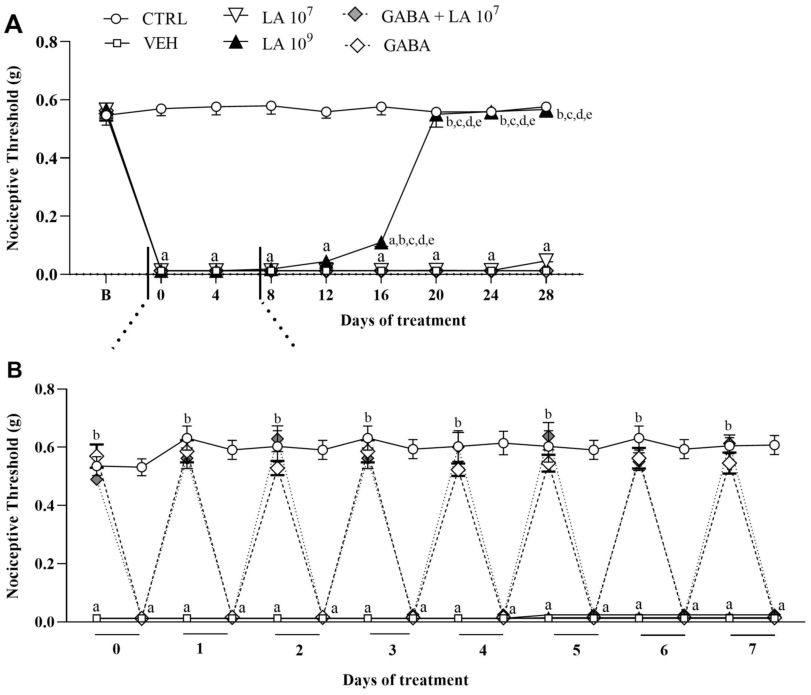
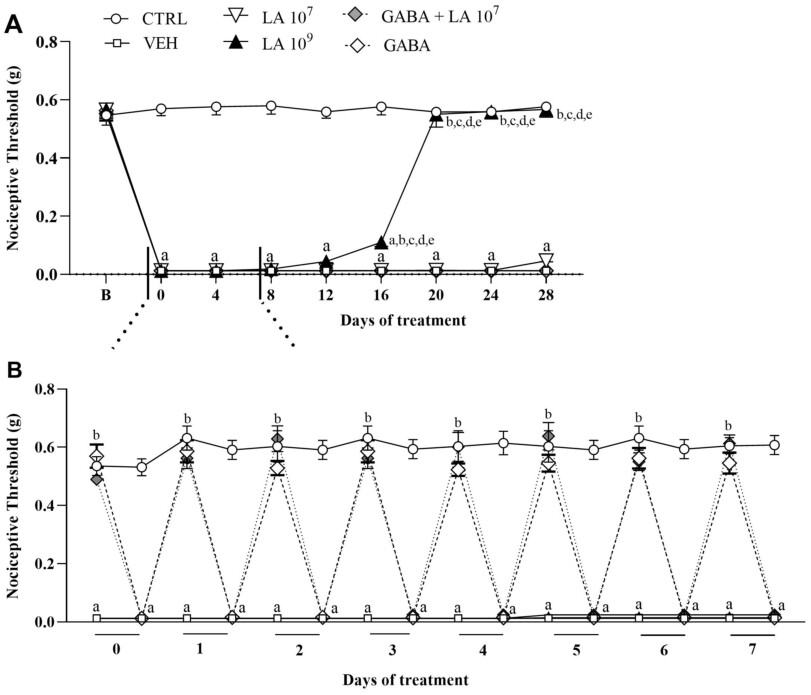
Effect of daily treatments with Lactobacillus acidophilus LA85 (LA85) on the mechanical nociceptive threshold of mice in the diabetic neuropathy model.
Citation: Beneficial Microbes 16, 5 (2025) ; 10.1163/18762891-bja00069
3 Results
Daily Lactobacillus acidophilus treatment reverses established painful diabetic neuropathy
Behavioural testing was performed at baseline and daily after the model induction, to evaluate the effects of LA85 treatment on measurable sensorial parameters of STZ-induced diabetic neuropathy. Mice from different experimental groups showed similar mechanical thresholds in baseline measurements (Figure 1A). After 4 weeks (T0 in Figure 1A), STZ-induced DN was associated with a severe decrease in mechanical nociceptive threshold (
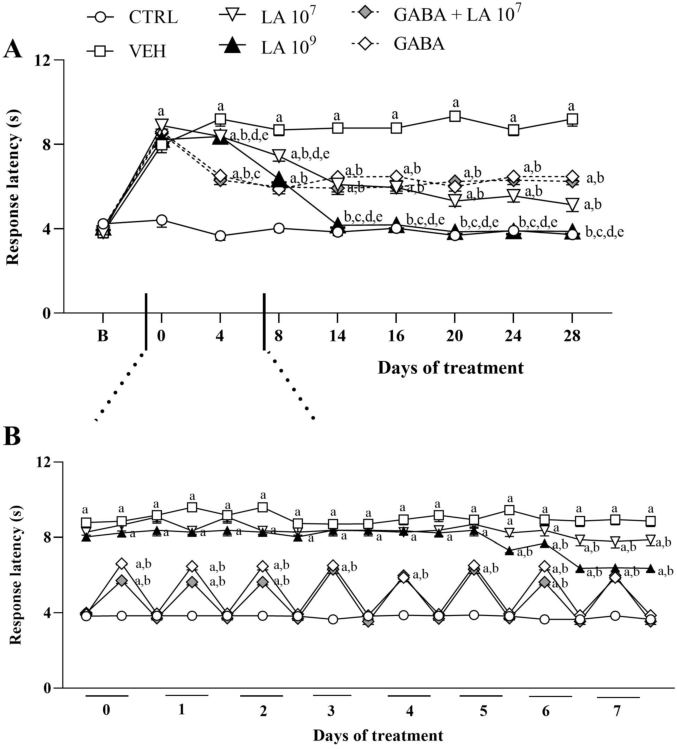
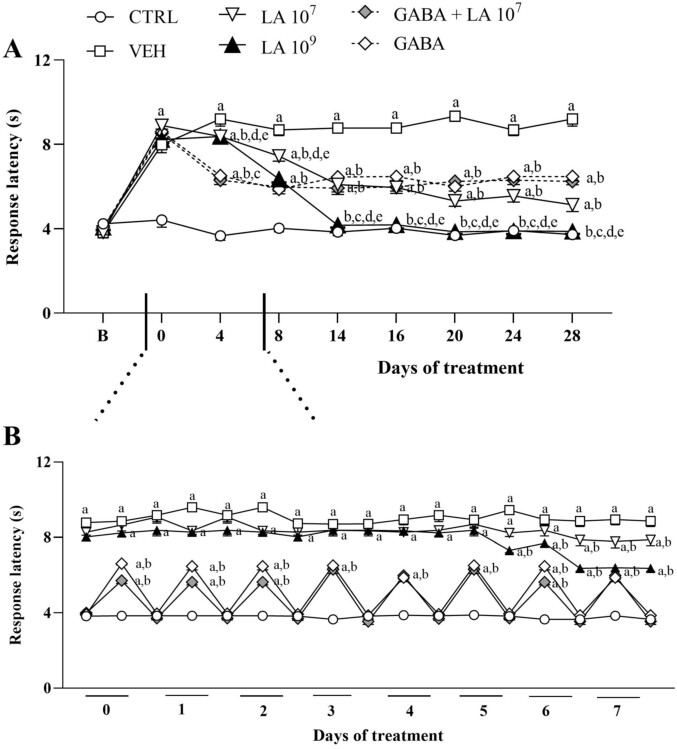
Effect of daily treatments with Lactobacillus acidophilus LA85 (LA85) on diabetic sensory neuropathy of mice, as assessed by the Hargreaves test.
Citation: Beneficial Microbes 16, 5 (2025) ; 10.1163/18762891-bja00069
Once the antinociceptive activity of LA85 in mechanical allodynia had been established, and considering that DN also involves changes in thermal sensitivity, the effect of LA85 treatment was next characterized by the Hargreaves test. Figure 2 shows the thermal nociceptive threshold before and after STZ-induced DN. There were no significant differences in baseline thermal threshold among groups. In STZ-treated mice, the evidence of DN was determined by the significant increase in thermal latency (
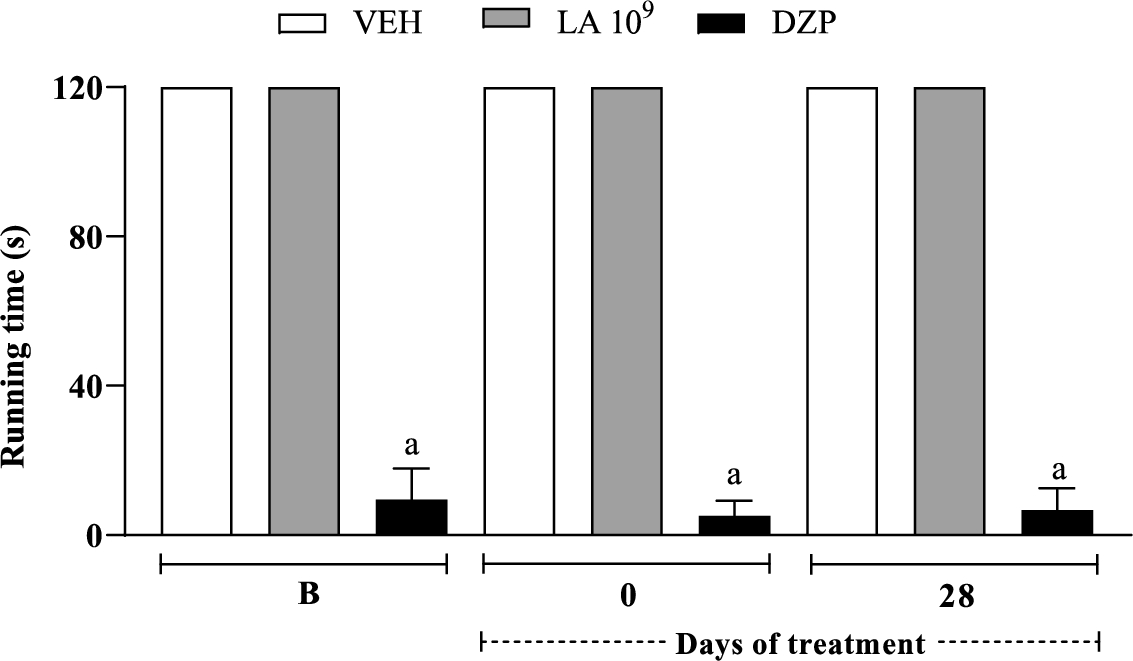
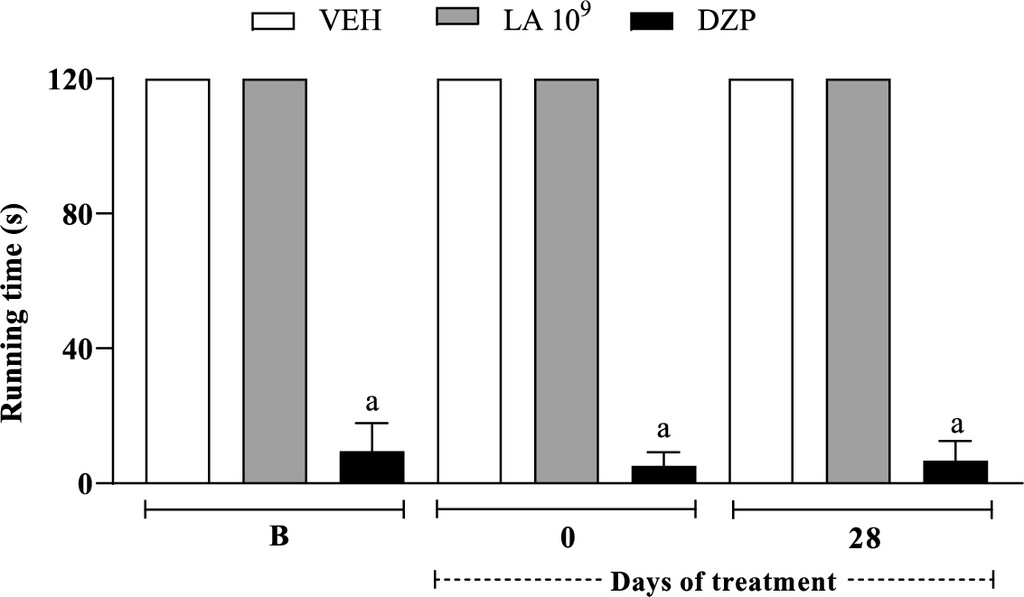
Furthermore, relaxing or motor deficit effects were discarded, because the administration of LA85 (1.0 à 109 CFU) did not affect the motor performance in mice in the rota-rod test (Figure A1 in the Appendix). As expected, diazepam (10 mg/kg, i.p.), a central nervous system depressant used as a drug standard, reduced the time mice spent on the rota-rod after 40 min of treatment with this standard drug (
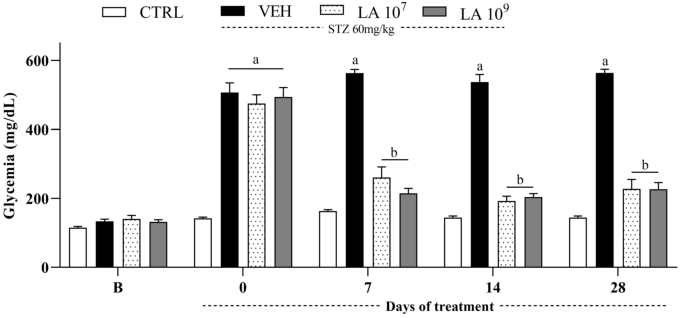
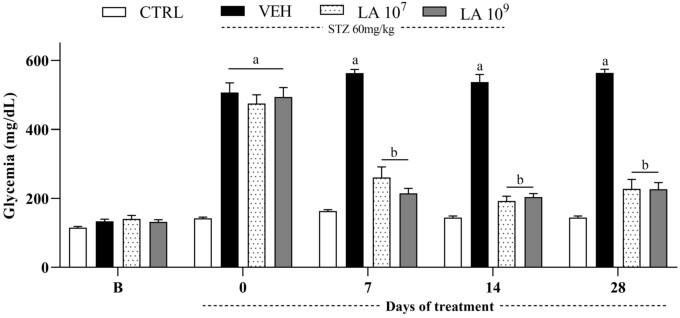
Influence of daily treatments with Lactobacillus acidophilus LA85 (LA85) on STZ-induced hyperglycaemia of mice.
Citation: Beneficial Microbes 16, 5 (2025) ; 10.1163/18762891-bja00069
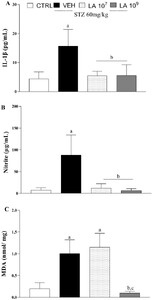
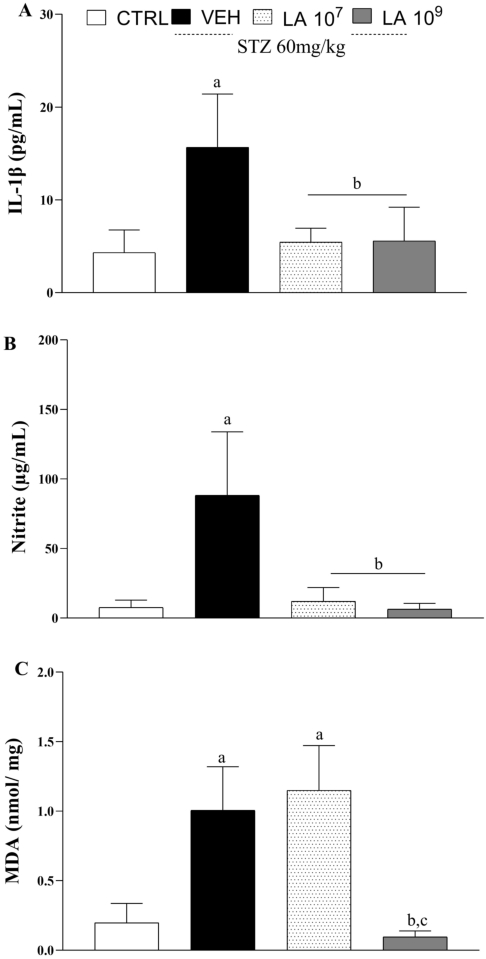
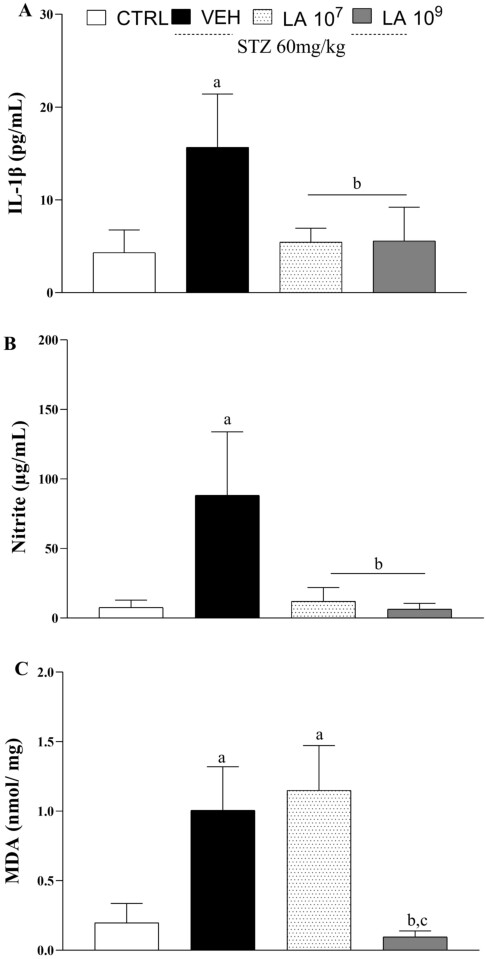
Lactobacillus acidophilus LA85 (LA85) treatments reduce interleukin-1β (IL-1β), nitrite, and malondialdehyde (MDA) levels in the spinal cord of mice with diabetic neuropathy.
Citation: Beneficial Microbes 16, 5 (2025) ; 10.1163/18762891-bja00069
Lactobacillus acidophilus LA85 treatment reduces glycaemic levels in diabetic mice
Glycaemic control is a strategic way to improve painful DN. Thus, the effects of L. acidophilus LA85 treatment on miceâs blood glucose levels were monitored throughout the experimental period (Figure 3). The animals started in normoglycaemic conditions (B, baseline; Figure 3). All groups of diabetic mice had an increase in glycaemia following the STZ-induction protocol (
Lactobacillus acidophilus LA85 reduces biomarkers of oxidative stress and pro-inflammatory mediators in the spinal cord of diabetic mice
Considering that peripheral nerve injury triggered by hyperglycaemia triggers sensitization in pain pathways, including the spinal cord, and that oxidative stress and neuroinflammation in the spinal cord are involved in the maintenance of pain, the effects of LA85 on lipid peroxidation and nitrosative stress, and on levels of a pro-inflammatory cytokine during DN, were assessed in vivo by measuring the spinal levels of MDA, nitrite, and IL-1β, respectively. IL-1β (Figure 4A), nitrite (Figure 4B), and MDA (Figure 4C) levels were significantly elevated in the spinal cord of diabetic mice when compared to the control non-diabetic group (
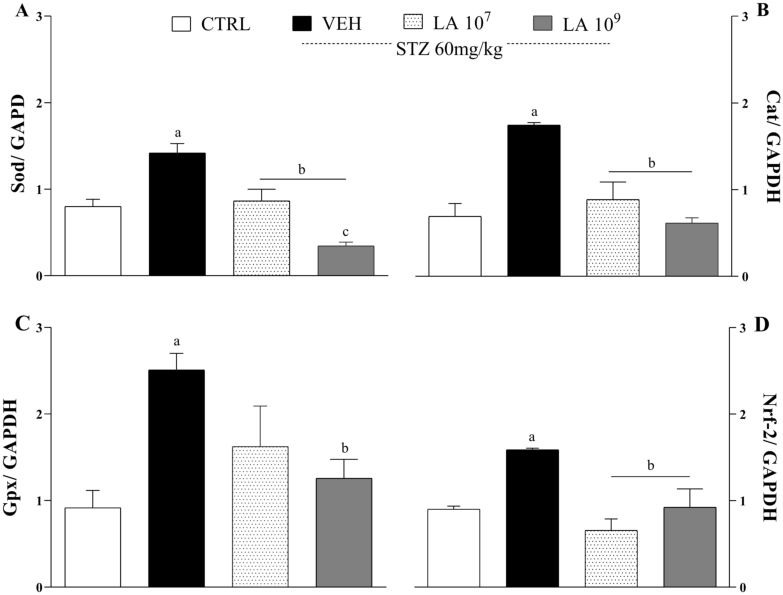
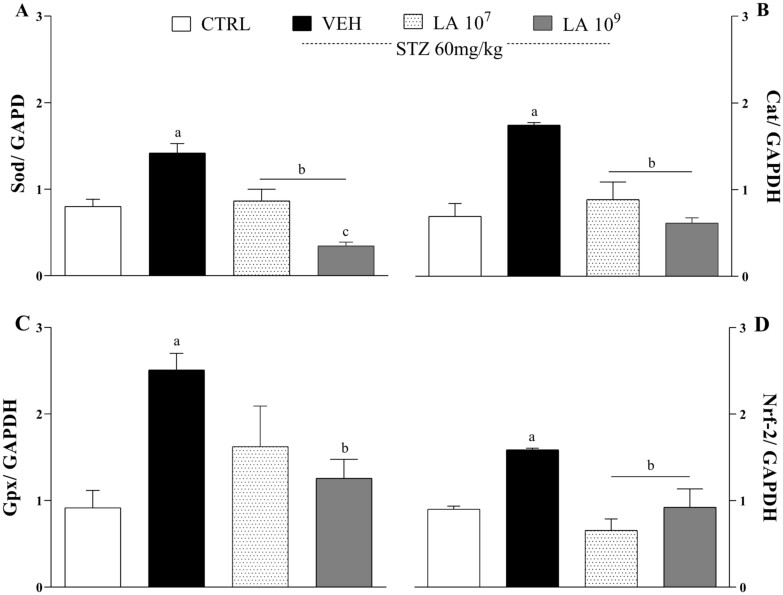
Effect of Lactobacillus acidophilus LA85 (LA85) treatments on the expression of antioxidant genes in the spinal cord of mice with diabetic neuropathy.
Citation: Beneficial Microbes 16, 5 (2025) ; 10.1163/18762891-bja00069
Lactobacillus acidophilus LA85 modulates the antioxidant profile in the central nervous system of mice with painful DN
After confirming that Lactobacillus acidophilus LA85 administration could promote glycaemic control, reduce IL-1β levels, and oxidative/nitrosative stress in the spinal cord during chronic DN, the next protocol was designed to investigate whether the LA85 is able to modulate antioxidant pathways in the nervous system. Data obtained by RT-qPCR analysis showed that diabetic mice presented higher levels of superoxide dismutase (Figure 5A), catalase (Figure 5B), glutathione peroxidase (Figure 5C), and Nrf2 (Figure 5D) mRNA in the spinal cord compared to non-diabetic mice (
4 Discussion
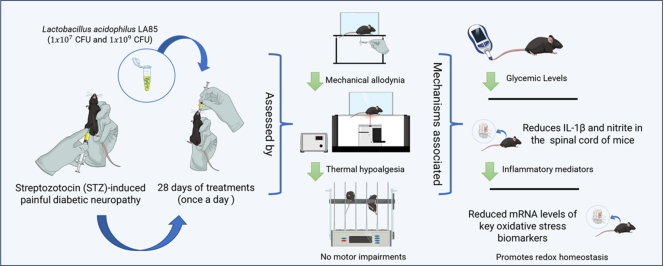
The therapeutic potential of Lactobacillus acidophilus LA85 strain in the treatment of diabetes (Yan et al., 2019; Vemuri et al., 2018; Soleimani et al., 2017) and in pain management (Santos et al., 2023; Rousseaux et al., 2007) has already been suggested, though its effect in diabetic neuropathy has not yet been investigated. In the current study, diabetic mice treated with Lactobacillus acidophilus LA85 showed a dose-dependent reduction of the behavioural signs of experimental DN. This effect was accompanied by a decrease in glycaemic levels and inflammatory mediators, and by the reestablishment of redox homeostasis in the spinal cord, an important site of pain transmission and modulation. Considering the involvement of hyperglycaemia, neuroinflammation, and oxidative stress in the pathophysiology of diabetic neuropathy, the data presented here highlight the therapeutic potential of probiotic therapy with Lactobacillus acidophilus LA85 for DN treatment.
The establishment of sensory neuropathy was determined by behavioural assays, which detected the mechanical allodynia and heat hypoalgesia, characteristics observed in DN in mice (Waterman et al., 2012). These signals are similar to those manifested in humans with painful diabetic neuropathy (Akter, 2019). In the present work, mechanical allodynia and heat hypoalgesia were completely present in mice 4 weeks after STZ administration and remained for the entire 28-day experimental period. Daily LA85 administration promoted a sustained effect in experimental DN, completely reversing the signs of sensory neuropathy. The antinociceptive effect was dose-dependent and increased over time, showing a better pharmacological profile than gabapentin, the gold standard drug, which had a short-lasting effect. The response of mice in the behavioural tests can be affected by other factors, such as motor function impairment (Tjølsen et al., 1992). To avoid misinterpretations of data, the motor performance of mice was evaluated using the rota-rod test. There were no signs of motor impairment in mice orally treated with LA85 at 1.0 à 109 CFU, corroborating the antinociception suggested by the von Frey test.
In line with the present data, a recent review supported the use of Lactobacillus strains in the management of DN (Santos et al., 2023). The antinociceptive effect of Lactobacillus strains may be associated with the crosstalk among microbiota, nervous, immune, and endocrine systems which has been experimentally demonstrated for some conditions, including neuropathic pain (Guo et al., 2019; Shabani et al., 2023). Based on this concept and the long-lasting antinociceptive effect profile demonstrated here, it is possible that LA85 exerts a disease-modifying action during DN rather than an analgesic effect. Moreover, considering that the LA85 administration was able to reverse the established sensory neuropathy, this treatment should regulate events involved in maintaining neuropathic pain. To investigate this hypothesis, the effects of LA85 treatment on pathophysiological events commonly involved in the maintenance of painful neuropathies were next evaluated.
Firstly, the hypoglycaemic potential of LA85 was assessed. LA85 consistently reduced blood glucose levels of STZ-induced diabetic mice within the first week of daily treatment. STZ has been frequently used in preclinical diabetes trials to induce murine models of insulin-dependent type 1 diabetes since its diabetogenic properties were first described (Rakieten et al., 1963). It is well established that STZ induces toxic effects on insulin-producing pancreatic β-cells, affecting glucose metabolism. This results in a hyperglycaemic state and associated complications, such as damage and dysfunction in nociceptive neurons, contributing to the establishment of diabetic neuropathy (Lenzen, 2008). Corroborating the present results, Yan and collaborators (2019) used the STZ model and observed, in a screening study with Lactobacillus, that L. acidophilus strain KLDS1.0901 demonstrated a better hypoglycaemic profile. The authors attributed this effect to the inhibition of the DPP-IV, an enzyme responsible for inactivating glucagon-like peptide 1 (GLP-1). DPP-IV inhibition stops pancreatic β-cell apoptosis and increases its mass, which results in greater insulin production. DPP-IV inhibitors from non-synthetic sources, such as probiotics, seem to be safer and more attractive, and some authors have suggested them as potential novel inhibitors (Zeng et al., 2016). Literature data also shows that LA85 treatment or its preparations modulate the gut microbiota and improve the glycaemic and metabolic profiles of animals and humans (Vemuri et al., 2018; Soleimani et al., 2017; Mafi et al., 2018). Thus, the hypoglycaemic property here described suggests that LA85 is a potential antidiabetic strain that may be useful in the glycaemic control of DN.
The maintenance of blood glucose at physiological levels is a key component for DN prevention and control (Dewanjee et al., 2018; Santos et al., 2023). This hyperglycaemic state induces metabolic and enzymatic abnormalities leading to inflammation, oxidative stress, and mitochondrial dysfunction (RomaÌn-Pintos et al., 2016). Among them, the release of pro-inflammatory cytokines, particularly IL-1β, has been experimentally associated with a high risk of developing DN (Zheng et al., 2020). Furthermore, it has been suggested that reducing IL-1β levels may be effective in diabetes treatment (Gabay et al., 2010). In line with this concept, in the present work, diabetic mice presented enhanced levels of IL-1β in the spinal cord, while LA85 treatment inhibited this upregulation in parallel with the reversion of behavioural sensory neuropathy. These results are in line with previous reports that LA85 decreases cytokine release under different inflammatory conditions (Hu et al., 2020; Park et al., 2018). During neuropathic states, IL-1β is directly implicated in the excitability pattern change of spinal neurons and sensory neuropathy (Noh et al., 2019), this action is completely reversed with IL-1β receptor (IL-1R) antagonist treatment, which leads to the protection of nerve fibres and appropriate action potential generation (Zheng et al., 2020). Therefore, the control of neuroinflammation should be considered in the treatment of DN. This can be achieved by inhibiting pro-inflammatory cytokines and other mediators, such as nitric oxide, which also contributes to the development of pain and oxidative states (Schmidtko, 2015).
Other key features to DN development are the mitochondrial damage (Premkumar and Pabbidi, 2013; Wang et al., 2014) and the state of oxidative stress caused by the activation of several oxidative pathways (RomaÌn-Pintos et al., 2016). These pathological processes lead to the overproduction of reactive oxygen/nitrogen species (ROS/RNS), which are intimately associated with the DN development (RomaÌn-Pintos et al., 2016).
Several markers of oxidative stress were found to be increased in DN-induced rodents (Ismail et al., 2018; Kiasalari et al., 2017; Villarreal et al., 2020; Zhao et al., 2014) and in patients with DN (Almogbel and Rasheed, 2017; Perkins et al., 2001). Because ROS leads to lipid peroxidation and converts cell membrane phospholipids into malondialdehyde (MDA), it can indicate the presence of oxidative stress and lipid damage (Li et al., 2023). Nitric oxide (NO), which can be measured using nitrite as a surrogate, is an important molecule during homeostasis at low levels (Cinelli et al., 2020). However, increased NO levels trigger pathological events, such as the ones involved in DN pathogenesis (RomaÌn-Pintos et al., 2016). Under inflammatory conditions, NO is usually formed by inducible nitric oxide synthase (iNOS) and is one of the free radicals that contribute to DN oxidative stress (RomaÌn-Pintos et al., 2016).
Indeed, higher tissue levels of nitrite or MDA are associated with oxidative stress outcomes, including on the spinal cordâs microenvironment, such as activation of glial cells (Wang et al., 2014), and ROS-induced synaptic plasticity caused by altered functions of α-aminohydroxymethoxazole propionic acid (AMPA) receptors, lesser synaptic γ-aminobutyric acid release and decreased inhibitory transmission (Li et al., 2023). Given the relevance of nitrosative-oxidative stress in the nervous system for DN progression, the effects of LA85 administration on redox homeostasis in the spinal cord was then investigated.
Nitrosative stress and lipid peroxidation, indicated by high levels of nitrite and MDA in the spinal cord, were demonstrated here in diabetic mice. Data obtained by biochemical analysis revealed reduced spinal levels of MDA and nitrite by daily LA85 administration. In line with these findings, raised nerve and spinal cord levels of MDA and nitrite were identified in STZ-induced rodent models of DN, whereas treatments that reduced these markers were related to the improvement of DN (Ismail et al., 2018; Villarreal et al., 2020; Zhao et al., 2014). It has also been reported that diabetic patients have elevated levels of total nitric oxide (nitrite + nitrate) compared to non-diabetic patients (Adela et al., 2015). The same study demonstrated in a preclinical set that STZ-induced diabetic rats had also elevated levels of total nitric oxide. The increase was attributed to increased genic expression of iNOS under hyperglycaemic conditions, for which LA85 has previously been shown to reduce levels (Chen et al., 2013a; Patel et al., 2016).
MDA can also be a marker of ferroptosis, a type of cell death caused by an iron-dependent phospholipid peroxidation that has been associated with painful neuropathic states (Li et al., 2023). Likewise, the ability to reduce MDA in the nervous system reinforces the therapeutic potential of LA85 in DN. Inhibition of lipid peroxidation by L. acidophilus was initially proposed in 1999 (Lin and Yen, 1999). To date, the species has been implicated in the reduction of MDA in various tissues or fluids (Chen et al., 2013b; Sheikh Hosseini et al., 2019; Zhang et al., 2021). Importantly, the effect of LA85 in reducing MDA as well as nitrite levels in the spinal cord was here described for the first time. One hypothesis raised so far is that the effect of LA85 in reducing both nitrite and MDA is a consequence of the strainâs capacity of epigenetic modulation, inhibiting the expression of inflammatory genes and metabolic and oxidative stress pathways implicated in the genesis of DN (Chen et al., 2013a; Deol et al., 2018; Lin and Chang, 2000; Patel et al., 2016; Shin et al., 2023).
To corroborate this hypothesis, the expression of genes that constitute endogenous antioxidant defences were also evaluated. The data consistently indicated that STZ-induced sensory neuropathy is associated with enhanced spinal levels of SOD, CAT, GPX, and Nrf-2, pointing to the presence of oxidative stress in the spinal cord microenvironment of neuropathic mice. Gene expression analysis revealed that LA85 treatment reduced both ROS/RNS levels and the activation of the antioxidant defence system in the spinal cord of diabetic mice, suggesting that daily administration of LA85 is capable of promoting the reestablishment of redox homeostasis in the spinal cord. In fact, the activity of LA85 in cellular antioxidant defence systems that control oxidative stress has been previously described by in vitro (Ahotupa et al., 1996; Baghbani-Arani et al., 2020) and in vivo (Amdekar and Singh, 2016; Chen et al., 2013b; Sheikh Hosseini et al., 2019; Zhang et al., 2021) studies and can contribute to its therapeutic uses.
Oxidative stress is believed to be the common denominator of all diabetic complications, with hyperglycaemia leading to the formation of ROS and increase of inflammatory mediators (Albers and Pop-Busui, 2014; Villarreal et al., 2020), as observed in the present work. In fact, lactic acid probiotics, such as Lactobacillus acidophilus, have been proposed as a potential antioxidant, anti-inflammatory, and antidiabetic agent that may delay the onset of diabetes as previously discussed. However, the correlation of these effects with the progression of diabetic sensory neuropathy has not yet been investigated, nor has any mechanistic hypothesis yet been proposed. Data presented here support the hypothesis that probiotic LA85 therapy induces therapeutic effects through neuroimmunoendocrine crosstalk. Furthermore, it provides evidence, for the first time, of a correlation between the ability of Lactobacillus acidophilus to reduce blood glucose, inflammation, and oxidative stress in nervous tissue, and its antinociceptive effect during experimental diabetic neuropathy.
5 Conclusion
Taken together, the data are consistent for the therapeutic effects of Lactobacillus acidophilus LA85 in painful DN. Daily administration of L. acidophilus LA85 induced a sustained therapeutic effect that reveals its potential to induce long-lasting analgesia, associated with the reduction of glycaemia and inflammatory mediators, in addition to the control of oxidative stress, favouring the reestablishment of redox homeostasis in the microenvironment of the nervous system of diabetic mice. Importantly, the present study showed that treatment with L. acidophilus LA85 was more effective than gabapentin in the DN model, the current treatment for relieving neuropathic pain in humans. These findings demonstrate the potential of L. acidophilus LA85 as a novel strategy for the treatment of sensory DN, which has been little reported in probiotic therapy. To our knowledge, this is the first report of the pharmacological properties of L. acidophilus LA85 in painful DN and it that may support new studies on probiotic therapy for pain control.
Corresponding author; e-mail:Â max.viana@ufba.br
Acknowledgements
The authors would like to thank the collaborators of the Laboratory of Pharmacology and Experimental Therapeutics (LAFTE) of the Faculty of Pharmacy of the Federal University of Bahia (UFBA), in particular Paulo JoseÌ Lima Juiz and JoaÌo Pedro dos Santos Correia for conceptual assistance. This work was supported by: Universal CNPq: Conselho Nacional de Desenvolvimento CientıÌfico e TecnoloÌgico (grant number CNPq 402270/2021-5); INCITE: FundaçaÌo de Amparo aÌ Pesquisa do Estado da Bahia (FAPESB, grant number PIE0009/2022); UFBA/PRPPG: Universidade Federal da Bahia (grant numbers 007/2022; 02/2025) and CNPq for the scholarships. The funders had no role in the design of the study; in the collection, analyses, or interpretation of data; in the writing of the manuscript, or in the decision to publish the results. Animal care and handling procedures were in accordance with the National Institutes of Health Guide for the Care and Use of Laboratory Animals, the Brazilian College of Animal Experimentation, International Association for the Study of Pain for the use of laboratory animals, and the Institutional Animal Care and Use Committee of Federal University of Bahia (CEUA/UFBA 012/2021).
Authorsâ contribution
M.D.M.V.: conceptualization, supervision, writing-original draft, funding acquisition, project administration; S.S.S: investigation, methodology, formal analysis, data curation; M.B.S.: investigation, methodology; L.C.F.O.: investigation, formal analysis; D.L.L.: investigation, formal analysis; M.B.P.S.: conceptualization, writing, review and editing, funding acquisition; C.F.V.: conceptualization, supervision, writing, review and editing, funding acquisition. All authors have read and agreed to the published version of the manuscript.
Conflict of interest
The authors declare that there are no conflicts of interest.
References
Adela, R., Nethi, S.K., Bagul, P.K., Barui, A.K., Mattapally, S., Kuncha, M., Patra, C.R., Reddy, P.N.C. and Banerjee, S.K., 2015. Hyperglycaemia enhances nitric oxide production in diabetes: a study from South Indian patients. PLoS ONE 10: e0125270.
Ahotupa, M., Saxelin, M. and Korpela, R., 1996. Antioxidative properties of Lactobacillus GG. Nutrition Today 31: 51S.
Akter, N., 2019. Diabetic peripheral neuropathy: epidemiology, physiopathology, diagnosis and treatment. Delta Medical College Journal 7: 35-48.
Albers, J.W. and Pop-Busui, R., 2014. Diabetic neuropathy: mechanisms, emerging treatments, and subtypes. Current Neurology and Neuroscience Reports 14: 473.
Almogbel, E. and Rasheed, N., 2017. Protein mediated oxidative stress in patients with diabetes and its associated neuropathy: correlation with protein carbonylation and disease activity markers. Journal of Clinical and Diagnostic Research 11: BC21.
Amdekar, S. and Singh, V., 2016. Lactobacillus acidophilus maintained oxidative stress from reproductive organs in collagen-induced arthritic rats. Journal of Human Reproductive Sciences 9: 41.
Baghbani-Arani, F., Asgary, V. and Hashemi, A., 2020. Cell-free extracts of Lactobacillus acidophilus and Lactobacillus delbrueckii display antiproliferative and antioxidant activities against HT-29 cell line. Nutrition and Cancer 72: 1390-1399.
Bordalo Tonucci, L., Dos Santos, K.M.O., De Luces Fortes Ferreira, C.L., Ribeiro, S.M.R., De Oliveira, L.L. and Martino, H.S.D., 2017. Gut microbiota and probiotics: Focus on diabetes mellitus. Critical Reviews in Food Science and Nutrition 57: 2296-2309.
Castelli, V., Palumbo, P., dâAngelo, M., Moorthy, N.K., Antonosante, A., Catanesi, M., Lombardi, F., Iannotta, D., Cinque, B., Benedetti, E., Ippoliti, R., Cifone, M.G. and Cimini, A., 2018. Probiotic DSF counteracts chemotherapy induced neuropathic pain. Oncotarget 9: 27998-28008.
Chaplan, S.R., Bach, F.W., Pogrel, J.W., Chung, J.M. and Yaksh, T.L., 1994. Quantitative assessment of tactile allodynia in the rat paw. Journal of Neuroscience Methods 53: 55-63.
Chen, K., Liang, N., Luo, X. and Zhang, T.-C., 2013a. Lactobacillus acidophilus strain suppresses the transcription of proinflammatory-related factors in human HT-29 cells. Journal of Microbiology and Biotechnology 23: 64-68.
Chen, L., Liu, W., Li, Y., Luo, S., Liu, Q., Zhong, Y., Jian, Z. and Bao, M., 2013b. Lactobacillus acidophilus ATCC 4356 attenuates the atherosclerotic progression through modulation of oxidative stress and inflammatory process. International Immunopharmacology 17: 108-115.
Cinelli, M.A., Do, H.T., Miley, G.P. and Silverman, R.B., 2020. Inducible nitric oxide synthase: Regulation, structure, and inhibition. Medicinal Research Reviews 40: 158-189.
Corriero, A., Giglio, M., Inchingolo, F., Moschetta, A., Varrassi, G. and Puntillo, F., 2024. Gut microbiota modulation and its implications on neuropathic pain: a comprehensive literature review. Pain and Therapy 13: 33-51.
Deol, P.K., Khare, P., Bishnoi, M., Kondepudi, K.K. and Kaur, I.P., 2018. Coadministration of ginger extract-Lactobacillus acidophilus (cobiotic) reduces gut inflammation and oxidative stress via downregulation of COX-2, i-NOS, and c-Myc. Phytotherapy Research 32: 1950-1956.
Dewanjee, S., Das, S., Das, A.K., Bhattacharjee, N., Dihingia, A., Dua, T.K., Kalita, J. and Manna, P., 2018. Molecular mechanism of diabetic neuropathy and its pharmacotherapeutic targets. European Journal of Pharmacology 833: 472-523.
dos Santos, G.G.L., Oliveira, A.L.L., Santos, D.S., do EspıÌrito Santo, R.F., Silva, D.N., Juiz, P.J.L., Soares, M.B.P. and Villarreal, C.F., 2021. Mesenchymal stem cells reduce the oxaliplatin-induced sensory neuropathy through the reestablishment of redox homeostasis in the spinal cord. Life Sciences 265: 118755.
Eid, S.A., Rumora, A.E., Beirowski, B., Bennett, D.L., Hur, J., Savelieff, M.G. and Feldman, E.L., 2023. New perspectives in diabetic neuropathy. Neuron 111: 2623-2641.
Evangelista, A.F., Vannier-Santos, M.A., de Assis Silva, G.S., Silva, D.N., Juiz, P.J.L., Nonaka, C.K.V., dos Santos, R.R., Soares, M.B.P. and Villarreal, C.F., 2018. Bone marrow-derived mesenchymal stem/stromal cells reverse the sensorial diabetic neuropathy via modulation of spinal neuroinflammatory cascades. Journal of Neuroinflammation 15: 189.
Feldman, E.L., Callaghan, B.C., Pop-Busui, R., Zochodne, D.W., Wright, D.E., Bennett, D.L., Bril, V., Russell, J.W. and Viswanathan, V., 2019. Diabetic neuropathy. Nature Reviews Disease Primers 5: 1-18.
Franca, G.M., da Cruz, G.S., Morais, R.P., Dias, A.K.C., da Araujo, M.E.S., Moreira, L.M. and Soares, A.L.F., 2021. O efeito imunomodulador da microbiota intestinal, as consequeÌncias de seu desequilıÌbrio e a profilaxia probioÌtica. Revista Ibero-Americana de Humanidades, CieÌncias e EducaçaÌo 7: 151-175.
Gabay, C., Lamacchia, C. and Palmer, G., 2010. IL-1 pathways in inflammation and human diseases. Nature Reviews Rheumatology 6: 232-241.
Garber, J., Barbee, R.W., Bielitzki, J., Clayton, L., Donovan, J., Hendriksen, C., Kohn, D., Lipman, N., Locke, P., Melcher, J., Quimby, F., Turner, P., Wood, G. and Würbel, H., 2011. Guide for the care and use of laboratory animals. National Academies Press, Washington, DC.
Green, L.C., Wagner, D.A., Glogowski, J., Skipper, P.L., Wishnok, J.S. and Tannenbaum, S.R., 1982. Analysis of nitrate, nitrite, and [15N]nitrate in biological fluids. Analytical Biochemistry 126: 131-138.
GuimaraÌes, E.T., da Cruz, G.S., de Almeida, T.F., de Souza, B.S.F., Kaneto, C.M., Vasconcelos, J.F., dos Santos, W.L.C., Santos, R.R., Villarreal, C.F. and Soares, M.B.P., 2013. Transplantation of stem cells obtained from murine dental pulp improves pancreatic damage, renal function, and painful diabetic neuropathy in diabetic type 1 mouse model. Cell Transplantation 22: 2345-2354.
Guo, R., Chen, L.-H., Xing, C. and Liu, T., 2019. Pain regulation by gut microbiota: molecular mechanisms and therapeutic potential. British Journal of Anaesthesia 123: 637-654.
Hargreaves, K., Dubner, R., Brown, F., Flores, C. and Joris, J., 1988. A new and sensitive method for measuring thermal nociception in cutaneous hyperalgesia. Pain 32: 77-88.
Hu, T., Wang, H., Xiang, C., Mu, J. and Zhao, X., 2020. Preventive effect of Lactobacillus acidophilus XY27 on DSS-induced ulcerative colitis in mice. Drug Design Development and Therapy 14: 5645-5657.
Ismail, C.A.N., Aziz, C.B.A., Suppian, R. and Long, I., 2018. Imbalanced oxidative stress and pro-inflammatory markers differentiate the development of diabetic neuropathy variants in streptozotocin-induced diabetic rats. Journal of Diabetes and Metabolic Disorders 17: 129-136.
Kiasalari, Z., Rahmani, T., Mahmoudi, N., Baluchnejadmojarad, T. and Roghani, M., 2017. Diosgenin ameliorates development of neuropathic pain in diabetic rats: Involvement of oxidative stress and inflammation. Biomedicine & Pharmacotherapy 86: 654-661.
Lenzen, S., 2008. The mechanisms of alloxan- and streptozotocin-induced diabetes. Diabetologia 51: 216-226.
Li, H., Shi, J., Zhao, L., Guan, J., Liu, F., Huo, G. and Li, B., 2021. Lactobacillus plantarum KLDS1.0344 and Lactobacillus acidophilus KLDS1.0901 mixture prevents chronic alcoholic liver injury in mice by protecting the intestinal barrier and regulating gut microbiota and liver-related pathways. Journal of Agricultural and Food Chemistry 69: 183-197.
Li, L., Guo, L., Gao, R., Yao, M., Qu, X., Sun, G., Fu, Q., Hu, C. and Han, G., 2023. Ferroptosis: a new regulatory mechanism in neuropathic pain. Frontiers in Aging Neuroscience 15: 1206851.
Lin, B., Wang, Y., Zhang, P., Yuan, Y., Zhang, Y. and Chen, G., 2020. Gut microbiota regulates neuropathic pain: potential mechanisms and therapeutic strategy. Journal of Headache and Pain 21: 103.
Lin, M.-Y. and Chang, F.-J., 2000. Antioxidative effect of intestinal bacteria Bifidobacterium longum ATCC 15708 and Lactobacillus acidophilus ATCC 4356. Digestive Diseases and Sciences 45.
Lin, M.Y. and Yen, C.L., 1999. Inhibition of lipid peroxidation by Lactobacillus acidophilus and Bifidobacterium longum. Journal of Agricultural and Food Chemistry 47: 3661-3664.
Mafi, A., Namazi, G., Soleimani, A., Bahmani, F., Aghadavod, E. and Asemi, Z., 2018. Metabolic and genetic response to probiotics supplementation in patients with diabetic nephropathy: a randomized, double-blind, placebo-controlled trial. Food & Function 9: 4763-4770.
Noh, M.-C., Stemkowski, P.L. and Smith, P.A., 2019. Long-term actions of interleukin-1β on K+, Na+ and Ca2+ channel currents in small, IB4-positive dorsal root ganglion neurons; possible relevance to the etiology of neuropathic pain. Journal of Neuroimmunology 332: 198-211.
Ogurtsova, K., da Rocha Fernandes, J.D., Huang, Y., Linnenkamp, U., Guariguata, L., Cho, N.H., Cavan, D., Shaw, J.E. and Makaroff, L.E., 2017. IDF diabetes atlas: global estimates for the prevalence of diabetes for 2015 and 2040. Diabetes Research and Clinical Practice 128: 40-50.
Park, J.-S., Choi, J.W., Jhun, J., Kwon, J.Y., Lee, B.-I., Yang, C.W., Park, S.-H. and Cho, M.-L., 2018. Lactobacillus acidophilus improves intestinal inflammation in an acute colitis mouse model by regulation of Th17 and Treg cell balance and fibrosis development. Journal of Medicinal Food 21: 215-224.
Patel, B., Kumar, P., Banerjee, R., Basu, M., Pal, A., Samanta, M. and Das, S., 2016. Lactobacillus acidophilus attenuates Aeromonas hydrophila induced cytotoxicity in catla thymus macrophages by modulating oxidative stress and inflammation. Molecular Immunology 75: 69-83.
Perkins, B.A., Olaleye, D., Zinman, B. and Bril, V., 2001. Simple screening tests for peripheral neuropathy in the diabetes clinic. Diabetes Care 24: 250-256.
Pop-Busui, R., Ang, L., Boulton, A.J.M., Feldman, E.L., Marcus, R.L., Mizokami-Stout, K., Singleton, J.R. and Ziegler, D., 2022. Diagnosis and treatment of painful diabetic peripheral neuropathy. Compendia: 1-32.
Premkumar, L.S. and Pabbidi, R.M., 2013. Diabetic peripheral neuropathy: role of reactive oxygen and nitrogen species. Cell Biochemistry and Biophysics 67: 373-383.
Quan, Y., Du, J. and Wang, X., 2007. High glucose stimulates GRO secretion from rat microglia via ROS, PKC, and NF-kappaB pathways. Journal of Neuroscience Research 85: 3150-3159.
Rakieten, N., Rakieten, M.L. and Nadkarni, M.V., 1963. Studies on the diabetogenic action of streptozotocin (NSC-37917). Cancer Chemotherapy Reports 29: 91-98.
RomaÌn-Pintos, L.M., Villegas-Rivera, G., RodrıÌguez-Carrizalez, A.D., Miranda-DıÌaz, A.G. and Cardona-MunÌoz, E.G., 2016. Diabetic polyneuropathy in type 2 diabetes mellitus: inflammation, oxidative stress, and mitochondrial function. Journal of Diabetes Research: e3425617.
Rousseaux, C., Thuru, X., Gelot, A., Barnich, N., Neut, C., Dubuquoy, L., Dubuquoy, C., Merour, E., Geboes, K., Chamaillard, M., Ouwehand, A., Leyer, G., Carcano, D., Colombel, J.-F., Ardid, D. and Desreumaux, P., 2007. Lactobacillus acidophilus modulates intestinal pain and induces opioid and cannabinoid receptors. Nature Medicine 13: 35-37.
Santos, S.S., de Souza, M.B., Lauria, P.S.S., Juiz, P.J.L., Villarreal, C.F. and Viana, M.D.M., 2024. Technological trends involving probiotics in the treatment of diabetic neuropathy: a patent review (2009-2022). Current Diabetes Reviews 20: e220523217168.
Schmidtko, A., 2015. Nitric oxide-mediated pain processing in the spinal cord. Handbook of Experimental Pharmacology 227: 103-117.
Shabani, M., Hasanpour, E., Mohammadifar, M., Bahmani, F., Talaei, S.A. and Aghighi, F., 2023. Evaluating the effects of probiotic supplementation on neuropathic pain and oxidative stress factors in an animal model of chronic constriction injury of the sciatic nerve. Basic and Clinical Neuroscience 14: 375-384.
Sheikh Hosseini, S., Gol, A. and Khaleghi, M., 2019. The effects of Lactobacillus acidophilus ATCC 4356 on the oxidative stress of reproductive system in diabetic male rats. International Journal of Reproductive Biomedicine 17: 493-502.
Shin, M.J., Lee, C.S. and Kim, S.H., 2023. Screening for lactic acid bacterial strains as probiotics exhibiting anti-inflammatory and antioxidative characteristic via immune modulation in HaCaT cell. Probiotics and Antimicrobial Proteins 15: 1665-1680.
Soleimani, A., Zarrati Mojarrad, M., Bahmani, F., Taghizadeh, M., Ramezani, M., Tajabadi-Ebrahimi, M., Jafari, P., Esmaillzadeh, A. and Asemi, Z., 2017. Probiotic supplementation in diabetic hemodialysis patients has beneficial metabolic effects. Kidney International 91: 435-442.
Tanase, D.M., Gosav, E.M., Neculae, E., Costea, C.F., Ciocoiu, M., Hurjui, L.L., Tarniceriu, C.C., Maranduca, M.A., Lacatusu, C.M., Floria, M. and Serban, I.L., 2020. Role of gut microbiota on onset and progression of microvascular complications of type 2 diabetes (T2DM). Nutrients 12: 3719.
Tiwari, V., Kuhad, A. and Chopra, K., 2009. Tocotrienol ameliorates behavioral and biochemical alterations in the rat model of alcoholic neuropathy. Pain 145: 129-135.
Tjølsen, A., Berge, O.-G., Hunskaar, S., Rosland, J.H. and Hole, K., 1992. The formalin test: an evaluation of the method. Pain 51: 5-17.
Vemuri, R., Shinde, T., Gundamaraju, R., Gondalia, S.V., Karpe, A.V., Beale, D.J., Martoni, C.J. and Eri, R., 2018. Lactobacillus acidophilus DDS-1 modulates the gut microbiota and improves metabolic profiles in aging mice. Nutrients 10: 1255.
Villarreal, C.F., Santos, D.S., Lauria, P.S.S., Gama, K.B., EspıÌrito-Santo, R.F., Juiz, P.J.L., Alves, C.Q., David, J.M. and Soares, M.B.P., 2020. Bergenin Reduces experimental painful diabetic neuropathy by restoring redox and immune homeostasis in the nervous system. International Journal of Molecular Sciences 21: 4850.
Wang, D., Couture, R. and Hong, Y., 2014. Activated microglia in the spinal cord underlies diabetic neuropathic pain. European Journal of Pharmacology 728: 59-66.
Waterman, R.S., Morgenweck, J., Nossaman, B.D., Scandurro, A.E., Scandurro, S.A. and Betancourt, A.M., 2012. Anti-inflammatory mesenchymal stem cells (MSC2) attenuate symptoms of painful diabetic peripheral neuropathy. Stem Cells Translational Medicine 1: 557-565.
Yagihashi, S., Mizukami, H. and Sugimoto, K., 2011. Mechanism of diabetic neuropathy: Where are we now and where to go? Journal of Diabetes Investigation 2: 18-32.
Yan, F., Li, N., Yue, Y., Wang, C., Zhao, L., Evivie, S.E., Li, B. and Huo, G., 2019. Screening for potential novel probiotics with dipeptidyl peptidase IV-inhibiting activity for type 2 diabetes attenuation in vitro and in vivo. Frontiers in Microbiology 10: 2855.
Zeng, Z., Luo, J., Zuo, F., Zhang, Y., Ma, H. and Chen, S., 2016. Screening for potential novel probiotic Lactobacillus strains based on high dipeptidyl peptidase IV and α-glucosidase inhibitory activity. Journal of Functional Foods 20: 486-495.
Zhang, P., Han, X., Zhang, X. and Zhu, X., 2021. Lactobacillus acidophilus ATCC 4356 alleviates renal ischemia-reperfusion injury through antioxidant stress and anti-inflammatory responses and improves intestinal microbial distribution. Frontiers in Nutrition 8: 667695.
Zhao, W.-C., Zhang, B., Liao, M.-J., Zhang, W.-X., He, W.-Y., Wang, H.-B. and Yang, C.-X., 2014. Curcumin ameliorated diabetic neuropathy partially by inhibition of NADPH oxidase mediating oxidative stress in the spinal cord. Neuroscience Letters 560: 81-85.
Zheng, H., Han, L., Ji, L., Zhao, W., Liu, X., Zhang, Q., Zhu, X., Li, Q., Li, Y., Xiong, Q., Hu, J., Lu, B. and Zhang, S., 2020. The preventive effect of IL-1beta antagonist on diabetic peripheral neuropathy. Endocrine, Metabolic & Immune Disorders Drug Targets 20: 753-759.
Zimmermann, M., 1983. Ethical guidelines for investigations of experimental pain in conscious animals. Pain 16: 109.
Effect of daily treatment with Lactobacillus acidophilus LA85 (LA85) on the performance of mice in the rota-rod test. 1Bar graphs representing the run time on the rota-rod, after the oral administration of Lactobacillus acidophilus 85 (LA 109, 1 à 109 CFU), or vehicle (VEH; skim milk) by oral route at different times (baseline: before model induction; 0: start of treatments; 28: last day of treatment; after model induction). Diazepam (DZP; 10 mg/kg) by intraperitoneal route 40 min before the test was the reference drug. Data are expressed as means ± SD (
Citation: Beneficial Microbes 16, 5 (2025) ; 10.1163/18762891-bja00069