Abstract
This study uncovers the little-known Greek presence in nineteenth- and twentieth-century China, using diplomatic documents from archives in Athens, Shanghai and Tianjin, as well as rare photographs and secondary sources. It traces the experiences of Greek settlers whose destinies were dramatically altered by the Japanese invasion of 1937, World War II and the rise of the Chinese Communist Party in 1949, culminating in their displacement from China’s urban centres in the early 1950s. Moving beyond existing literature, particularly Greeks in the Far Orient (2011), this research employs a comparative and synthetic framework to analyse the gendered and sociopolitical dynamics of Greek migration in Asia. By integrating new archival and visual materials, this study not only enriches the fields of diaspora, transnational mobility and displacement studies but also foregrounds the overlooked Greek role in Asian migration histories, thus broadening the conceptual scope of global migration literature.
1 Introduction
Do you know that in China there are whole communities of Greeks?1
Greek merchants and shipowners were active in China from the early eighteenth century. Among other ethnic groups (including Armenians, Jews and Southeast Asians), they commissioned ships which operated in Indonesia, Macao and Guangzhou under cover of a European flag (Van Dyke, 2018). From the nineteenth century onwards, thousands of Greeks left their homeland looking for better life prospects and employment opportunities. In Asia and Africa, they went to areas under Western jurisdiction and protection (spheres of influence, colonies, foreign settlements, enclaves and treaty ports). In China, carved up by the powers in the late nineteenth century, they moved to Shanghai (to international settlements run by municipal councils under the British influence since 1843), Hong Kong (a British colony), Beijing (a foreign legations area), Qingdao (a German colony), Tianjin (a foreign concessions area) and cities in Manchuria (Dalian,2 Harbin and Mukden), which constituted a Russian sphere of influence up to the Russo-Japanese War of 1905 (Bickers, 1999). Those Greeks who were brokers, traders and businessmen opted for China’s most prestigious, international and active treaty ports: Shanghai and Tianjin (Tamis, 2011).
In spite of their significance for the field of ethnic and diaspora studies, the Greek communities of China have been studied seldom, perhaps because of a lack of interest, the inaccessibility of relevant materials, the great distance between Greece and China, and language barriers. This article explores the material conditions, social status and non-territorial sense of belonging, typical of diasporic communities, of the Greeks in China. Despite their limited numbers, their presence highlights their role as middlemen, the ‘in-between’ minority between the locals and the (semi)colonial western authorities, and suggests acculturation and colonial entrepreneurship.
While building on the seminal work of Tamis (2011), whose study of the Greeks in the Far East has remained the only authority in the field, albeit with little resonance beyond the field of migration studies, this work relies on archival materials from Greece and China to shed light on Greek attitudes, life experiences and economic activities in China. Furthermore, as Tamis’s work aspires to incorporate every Greek who settled in East Asia and the entire Pacific region from ancient times to the present day, some of the gaps and omissions that arose naturally, such as the classification, spatial dynamics and actual living conditions of the Greeks in China’s more cosmopolitan cities during the interwar period, will be rectified in this article. For this purpose, the Municipal Archives of Shanghai and Tianjin and the archival collection of the Greek Ministry of Foreign Affairs (MoFA) were consulted.
This article aspires to offer new historical documentation on the Greeks in Tianjin and Shanghai, the most vibrant metropoles on the mainland. These thriving treaty ports attracted a mass of Western merchants, investors, shipowners, entrepreneurs and salaried professionals, as in-betweeners who were usually absorbed in the service and retail sectors. China’s treaty ports operated under the spectrum of Western imperialism in the form of mid-nineteenth-century agreements imposed by the powers on defeated China, known as the unequal treaties after the First Opium War 1839–1842. In ports like Tianjin and Shanghai, the representatives of the powers and other Westerners under their influence, such as the Greeks under Paris’s protection, enjoyed a life of economic and social privilege and legal autonomy, which weakened the central government and provoked the local population’s resentment in the long run (Hsu, 1980).
The ways in which the Greek settlers navigated China’s multicultural port cities, and their intricate and delicate domains alongside the rest of the cities’ ethnic minorities, require further examination; detailed data that would help us map their methods of integration/disintegration, assimilation or resistance is currently missing. Ethnic minorities in transnational spaces like British-ruled Hong Kong, the international settlement of Shanghai and the foreign-administered Tianjin developed varying degrees of attachment to their homeland and host land. In the latter, new affiliations were forged and old allegiances reimagined (Chan, 2021), while factors such as administration type, assimilation policies, the size of the Greek communities, religious institutions, family networks and civic engagement influenced their sense of belonging (Chan, 2020).
Despite these affinities, urban communities competed for social status and political access within the colonial hierarchy (Larkin, 2024). Cultural and linguistic differences created obstacles, fostering alienation and intolerance in a competitive context dominated by notions of whiteness and Western-style capitalism. Meanwhile, diasporic identities promoted antagonism and claims of superiority over other groups, intensifying both the clashes with other foreign communities and the Chinese locals’ struggle for political legitimacy and against exploitation (Clifford, 1994). Asian port cities produced complex and overlapping identities together with connections and marginalisation. Around the turn of the century, rising nationhood and anticolonial discourse shaped these dynamics amid the fluidity of expatriate identities, which is contingent to social conditions, interactions and negotiations (Bhabha, 2004; Clifford, 1994).
The material retrieved from the three archival collections allows us to examine the Greek minority’s numbers, presence and influence from the late nineteenth to the mid-twentieth century. The following section traces Greek migratory flows from and to China, examines the Greek presence in Tianjin, the port of Beijing, as documented in the Tianjin Municipal Archive (TMA), and Greeks in interwar Shanghai as a structural element of synthesis and comparison. The Greek stance towards China and Taiwan during the heightened Cold War era is then discussed. This provides a transition from international politics to the theme of the Greek flight from China, highlighting the community’s exodus, offering a glimpse of the living conditions, spontaneous reactions and mindset of a specific minority under duress in post-war China. This ultimately leads to the investigation of the outcome of their asylum-seeking efforts, their repatriation efforts and compensation demands for their losses, giving us an insight into the power dynamics between big and smaller players or states during the early Cold War. Finally, conclusions are drawn regarding the gender, lifestyle, culture, displacement and overall nature of the Greek diaspora in China.
2 Migratory Trajectories
In the late nineteenth century, hundreds of thousands of Greeks began migrating to areas as widely dispersed as Australia, the Far East, South and Central Africa and North America. Notably, though, the Greek presence in South or North China has been sidelined and understudied to this day (Harlaftis, 2024). This migration process was not linear and uniform. To better understand the Greeks’ experiences in China and beyond, we must consider the detours, rerouting, transit points and geopolitics that shaped their cross-national mobility patterns; only then will we be able to grasp the nature of the Greek odyssey in the Far East.
The Greeks from Greece and the coasts of Asia Minor were motivated by every revolution and regional conflict that affected them to find safe refuge and relocate, mostly to southern Russia and the Caucasus region. Even before the establishment of the modern Greek state in 1830, a series of failed anti-Ottoman revolutions, Russo-Turkish wars and reprisals (notably in 1877–1878, 1914–1918 and 1919–1922) encouraged them to migrate and seek the protection of the Russian empire. According to Cohen’s typology, the Greeks in these cases exhibited the characteristics of a victim diaspora (2023). In their new homes, these migrants (or refugees) created sizeable and vibrant trading communities (Xanthopoulou-Kyriakou, 1991).
The 1936 Stalinist purges that targeted ethnic minorities in the Soviet Union resulted in the exile (voluntarily or forcedly) of thousands of Greeks who lived in Russia and Georgia to Siberian labour camps (Karpozilos, 1999). Some of these Greek refugees eventually settled in Harbin. By 1938, there were around 1,800 Greeks in the wider Manchuria region, among other displaced ethnic groups. Following the 1949 victory of the communist regime, most Greek migrants escaped to countries like Canada, Japan, Australia and the US, although some were repatriated (Hasiotis, 2004). Throughout this period, the Greeks in Asia were constantly on the move—relocating from city to city, fleeing wars, Turkish reprisals and persecutions in the Soviet Union.
Historical trajectories of Greek settlement in Asia contribute to broader debates on diaspora and inform our understanding of the current socioeconomic roles of such groups. Studies of diasporic networks in multiracial East Asian centres like Penang, Singapore and Shanghai (Kong, 2020) have illuminated cross-cultural interactions. Scholars have also addressed the Portuguese Eurasian community in Singapore (Daus, 1989), Shanghai expatriates (Ristaino, 2001), Germans in British India (Panayi, 2017), Chinese in colonial Malaya (Tajuddin, 2018), Indians in China (Markovits, 2000), Jews in British Asia (Lim, 2023) and Armenian trade networks (Aslanian, 2011). Only recently have Greek overseas communities outside the US and Australia received more attention (Hasiotis, Katsiardi-Hering and Ampatzi, 2006; Tziovas, 2009), though Asia remains largely neglected. Pioneering works on the Greeks in Africa (Nikitaridis, 2017; Kitroeff, 2019) and global Greek shipping (Harlaftis, 2019; Kardasis, 2001; Delis et al, 2023) address intercontinental connections, yet the Asian Greek diaspora remains a significant gap, which this study seeks to address.
This study builds on previous research to present new insights into the Greeks in Asia, positioning them as a valuable case study within the global diaspora and migration contexts. By highlighting the social, economic and political dynamics of their experience, this work demonstrates how examining ethnic minorities and diasporas can yield broader understandings beyond the immediate community. The Greek presence in China represents a crucial yet overlooked link in unravelling the complexities of collective identity and self-representation. The field of comparative studies will benefit immensely through the contrast of the Greek case to other comparable phenomena, by adding a new element of comparison. Therefore, this research adds a fresh perspective to comparative studies and enriches the fields of diaspora and transnational migration, emphasising the importance of including the Greek experience in the wider historiography of modern global exchanges.

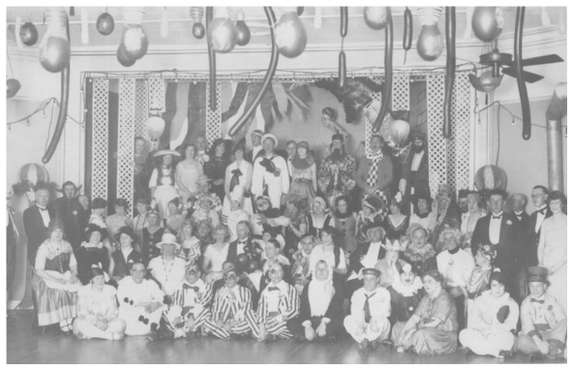
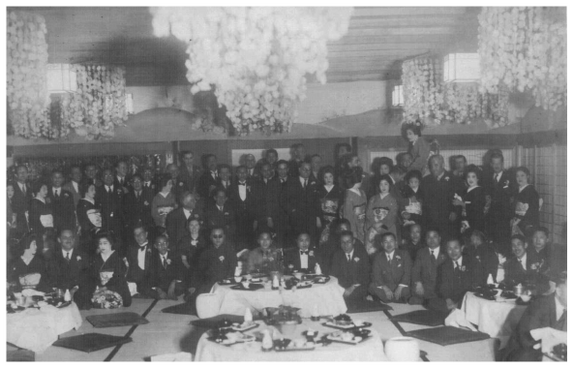
Figure 1
Greek Chinese and other European settlers celebrate Chinese New Year in Shanghai at a gala ball, February 1936
Citation: Diaspora Studies 19, 2 (2026) ; 10.1163/09763457-bja10194
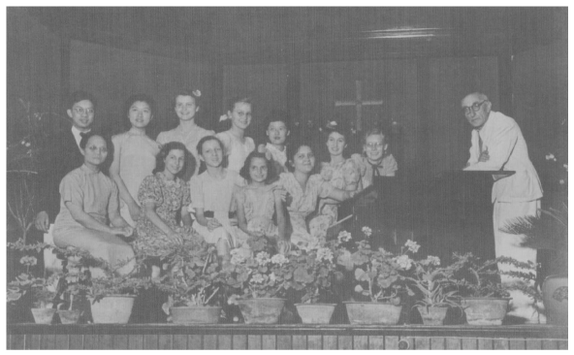
Dardalis Archives of the Hellenic Diaspora of La Trobe UniversityFigure 2
Greek and other European and Chinese students attending a Christian function during the Second World War in Dairen
Citation: Diaspora Studies 19, 2 (2026) ; 10.1163/09763457-bja10194
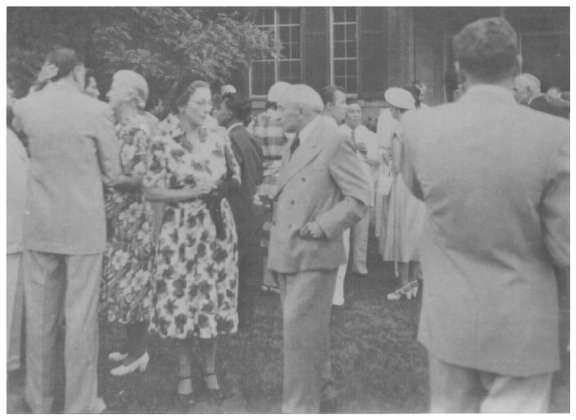
Dardalis Archives of the Hellenic Diaspora of La Trobe UniversityFigure 3
Greek Chinese settlers converse after a wedding, outside the Catholic Church in Beijing, 1948
Citation: Diaspora Studies 19, 2 (2026) ; 10.1163/09763457-bja10194
Dardalis Archives of the Hellenic Diaspora of La Trobe UniversityFurthermore, aspects of diasporic experiences and international politics are addressed in this paper. The migrants’ trajectories, all the way to their repatriation and the methods they employed to navigate the mobility regimes they confronted are also revealed. Migratory agency allows us to understand more deeply the process of staying or leaving, the diversity and patterns of similar migration experiences and the differences between forced and voluntary mobility. Above all, it cuts across barriers and structural constraints and underscores humans’ ability to shape their own destiny (De Haas, 2021).
2.1 Greeks in Tianjin
The Russo-Turkish War of 1876–1878 triggered a significant migration of Greeks, with nearly 150,000 individuals fleeing from Asia Minor to southern Russia (Xanthopoulou-Kyriakou, 1991). Subsequently, some moved to northeastern China, or Manchuria. Most of the Greeks in China settled in the north, in Tianjin. The Russian connection enabled them to move from the Caucasus and southern Russia to Manchuria through Siberia and look for business opportunities collaborating with the Russian authorities. Many worked as subcontractors on the construction of the Trans-Siberian Railway.3 Greek merchants from south Russia relocated their trades along the Manchurian section of the railway, taking advantage of the great influx of labourers in the region. This labour diaspora managed to switch careers and eventually merged with the established Greek merchant community as white-collar employees and brokers in East Asia (Cohen, 2023). Relatively few Greek sailors, merchants and shipowners found their way to China through the Indian Ocean maritime routes (Harlaftis, 2024). In Manchuria, Greek labourers and technicians who had brought their families to the region settled permanently after the completion of the railway. Thus, the Greeks rediscovered China in the late nineteenth century by voluntary resettlement, seeking better career prospects and protection from repression and danger (Tamis, 2011).
Another wave of Greeks moved to Manchuria during the Russo-Japanese War and were absorbed in the food processing, supply and alcohol industries. Among them, 200 based their enterprises in Harbin. By 1900, there were more than 30 Greek enterprises in the entire region; by 1930 it hosted approximately 120 Greek families, or 250 individuals (Tamis, 2011). Subsequently, Tianjin, being Beijing’s seaport, naturally attracted the mass of Greek migrants. Their family networks through intermarriage and business activities expanded in the surrounding area and attracted a progressively greater number of settlers.
The Kanelakises, one of the most prominent Greek families of Tianjin, were involved in tobacco retail. Hariton Kanelakis, one of the family’s younger members, calculated that there were 50 to 60 Greeks in Japanese-occupied Tianjin in 1944 (Tamis, 2011). According to the city’s municipal archives of April 1947, he was not far off the mark. The post-WWII authorities of Tianjin demanded that all foreigners register annually; this act, thankfully, gives us the rare opportunity to acquire the numbers, names, genders, occupations and residence addresses of the Greek settlers and to get a glimpse of their daily lives in war-torn China. The following list, compiled by a special branch of the Chinese Foreign Ministry and retrieved from the Tianjin Municipal Archives, contains the names of 76 Greek residents registered with the Greek Consulate:4
Mr. N. Amountzias (employee); Mr. G. Anastassellis (retired merchant) with his wife (housewife) and two relatives (brokers); Mr. V. Bazeos (United Nations Relief and Rehabilitation Administration [UNRRA] employee) with his wife and two young children; Mrs. A. Kalafatis (hotel employee); Mr. M. Kanelakis (merchant); Mr. H. Kanelakis (merchant); Mr. C. Kanelakis (merchant); Mr. E. Kanelakis (merchant); Mrs. T. Kanelakis (housewife); Mrs H. Kanelakis (housewife); Mrs. A. Kanelakis (housewife) with four children; Mr. P. Christodoulos (merchant) with his wife, Mrs. M. Christodoulos; Mr. A. Konstantinidis (merchant) with his wife, Mrs. M. Konstantinidis and two children; Mr. N. Emeziadis (broker/barber); Mr. D. Galatis (consul/merchant) with his wife and son (student); Mr. C. Kallitsis (broker) with Mrs. F. Kallitsis (housewife); Mr. T. Kolovos (employee); Mr. G. Kolovos (employee) with Mrs. F. Kolovos (housewife); Mr. D. Kyriazis (construction superintendent); Miss E. Lazaridou (dentist); Miss T. Livieratos (employee); Miss H. Livieratos (unemployed); Mr. M. Mavromaras (merchant); Mrs. S. Mavromaras and Mrs. A. Mavromaras (housewives); Miss S. Mavromaras (student); Mr. P. Mertyris (merchant); Mr. P. Marinellis (merchant); Miss R. Marinellis (unemployed); Mr. E. Paizis and Mr. G. Paizis (employees); Mrs. A. Paizis (housewife); Mr. G. Paizis and Mr. A. Paizis (retired merchants) and two Paizis babies; Mr. J. Paradissis (merchant) with his family (a housewife, a baby and two teenagers); Mr. A. Pesmatzoglou (UNRRA employee); Mr. G. Petropoulos (wine merchant); Mr. J. Pistofidis (agent) with Mrs. M. Pistofidis (housewife); Mrs. A. Pragmateftakis (employee); Mrs. L.N. Skiotis (housewife) with her two children (both students); Mr. T. Stavropoulos (broker); Mr. E.C. Spiridis (merchant); Mr. T. Terzopoulos (tobacco merchant); Mr. B. Tsakiridis, (actor); Mr. E.N. Vacakis (merchant) with Mrs. V. Vacakis (housewife) and N. Vacakis (student); and Mrs. C. Vasiliou (employee) and her boy, B. Vasiliou.
In the same document, there are two names which do not sound Greek (Mr B. and Mrs G. Birbouchouk); they probably adhered to the Greek-orthodox creed and therefore were included in the list by the local authorities.5
While we can thus infer that these Greeks were middle class and mostly business-oriented, we should not neglect those who came originally as labourers in nineteenth-century Russian-held Manchuria but moved again and managed to integrate with the Greek merchant community and make considerable profits. Their occupations, as businessmen and professionals, and social status, were not radically altered by the wars and the changes in their legal status from residents to prisoners of war to refugees.
Most of the men were classified as merchants and brokers and the rest as employees in international firms. At least two of them worked for the UNRRA, an organisation dedicated to providing assistance to millions of refugees after WWII. One of the Kanelakis men worked for a radio electric service company and two others ran a confectionery or bakery. Mr N. Amountzias worked at the same store, demonstrating that the Greeks not only preferred to operate family businesses but also tended to partner with fellow Greeks. Trade diasporas, without any assistance and support from their state of origin, tend to cling together and trust kin and family (Cohen, 2023). Mr A. Konstantinidis, classified as merchant, was also the manager of a company called Skiotis Bros. and Co. With other entrepreneurs, he was successful in inserting China into their vast network of commercial hubs, connecting Tianjin and Shanghai with Egypt, Smyrna, Constantinople and beyond. According to this detailed list, Mr J. Paradissis was a bookstore owner and a merchant. Similarly, Mr E.C. Spiridis was a merchant and the owner of Oriental Coffee Co. (Tamis, 2011). Some of the younger members of the community were students, which reaffirms the fact that the Greeks in north China came predominantly from the middle classes. These fortunate circumstances did not last though.
Concurrently, the Greek women in China seemed to lack voice. They had to accept unquestioningly the directives and norms that derived from their positionality in time and space. Most had followed their husbands to China. Those who were single were urged to marry to avoid criticism. In this sense, they constituted a double minority: as Greeks in China, and as females in unequal gendered relations vis-à-vis the Greek male majority within the community (Brah, 1996). Thus there were two modes of gendered relations at play—women as carriers of Greek culture abroad, and as mothers or as housekeepers at home (Anthias, 1998). Confined within the limits of their entrenched domesticity, they were rarely allowed to pursue a career, as is evident from the available data.
The monthly census in Table 1, compiled by Tianjin’s police office, differs from the municipal archives (TMA), in that its figures differ for April 1947, for example. Their disparity can be attributed most probably to the fact that the Foreign Ministry list presents those registered with the Consulate at some point but not necessarily in Tianjin in April 1947. What is certain is that, in post-war Tianjin, there were approximately 50 to 60 Greeks left, out of almost 250 living in the entire north China region in the 1930s.
2.2 Greeks in Shanghai
According to the digitised Shanghai Municipal Police records and the Shanghai Special Branch Foreign Affairs Officer’s dispatch of 22 June 1942, there were approximately 250 Greeks living there.6 For their spiritual needs, they often visited the local Russian Orthodox Church. The Greeks, merchants and businessmen mainly resided in the French concession area and conducted their business within the British concession (the Bund district). Some of them were renowned throughout the city for their business acumen (Giannoulatos), bargaining skills (Kavouris) and vast property holdings (Katemopoulos) (Tamis, 2011). From the 1930s to the massive exodus, these Greek merchants saw a high turnover in their investments and their businesses flourished owing to the sizeable presence of foreigners in Shanghai, many of whom consumed Western luxury goods (Tamis, 2011). The Greeks were attracted to the ‘Paris of the East’, a term used to denote the cosmopolitanism of this vibrant metropolis, which in many senses appeared as a microcosm of Europe.
Table 1
Monthly census of the Greek population in Tianjin, 19477
|
Month 1947 |
Males |
Females |
Total |
|---|---|---|---|
|
February |
28 |
20 |
48 |
|
April |
27 |
19 |
46 |
|
July |
26 |
19 |
45 |
|
October |
32 |
23 |
55 |
|
November |
33 |
27 |
60 |
The Greeks also formed one lasting social club, the ‘Hellenic Benevolent Society of China’, to morally and materially support their co-nationals. Without any form of state sponsorship, it was moral cohesion, family ties and solidarity which provided the ties that bound (Cohen, 2023). They held their monthly meetings at a hotel owned by one of the members. This organisation, established in 1933, aided the sick, Greek seamen and poor children, as shown in its statement of accounts for the year 1941.8 The documents, which describe the organisation’s membership, activities, budget, permits and other particulars, originally were drafted by the Shanghai Municipal Police but found their way into the US intelligence service after the Westerners’ flight in spring 1949.9 Another organisation, the ‘Hellenic Chamber of Commerce in China’, was formed in Shanghai on 15 December 1931 to promote commercial ties. Typically, it failed to receive any substantial backing from Athens or the Greek consular authorities in China and was soon dissolved.
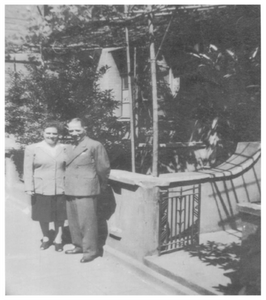
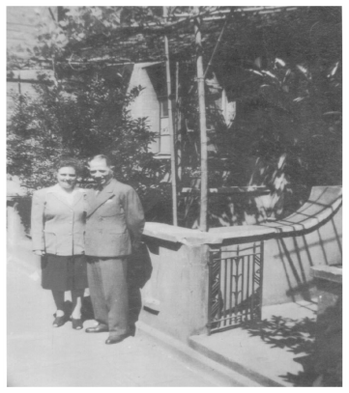
Figure 4
Temora and Christos Kanellakis at their home in Beijing, a few months before their repatriation to Greece, 1950
Citation: Diaspora Studies 19, 2 (2026) ; 10.1163/09763457-bja10194
Dardalis Archives of the Hellenic Diaspora of La Trobe UniversityA series of documents retrieved from Shanghai Municipal Archives (SMA) prove the limitations of the Greek influence there and the limited commercial interaction between China and Greece in the mid-twentieth century.10 Despite their individual success and wealth they proved unable or unwilling to create communal institutions such as churches, schools or hospitals. In Shanghai, the most cosmopolitan of all Asian port cities, the only Greek organisation that endured until the exodus was the Hellenic Benevolent Society.
We cannot be sure about the names and occupations of every Greek expatriate in Shanghai; it is also evident that not every Shanghai Greek joined the Hellenic Benevolent Society. However, the organisation’s 80-strong membership list provides a unique opportunity to delve into the presence and life of Shanghai Greeks in the 1940s. The first (honorary) member on the Society’s list was a Frenchman, Mr. J. Amour of the French municipal council (health department), which reveals that these associations worked with other foreign communities to enrich the city’s ethnic and cultural tapestry. The following list, compiled by the organisation in 1941, is not as detailed as that of the TMA and is missing some vital information. The spelling of names is problematic, for instance, and although their professional or residential addresses are recorded, information regarding gender and occupation was not. Most of the following data can be safely inferred but there is also a margin for error:
Mr. P. Alexiathes (employee); Ch. Andreadi(s) (alcohol merchant); P. Chrysanthopoulos (merchant); Mrs. P. Chrysanthopoulos (housewife) and P.P. Chrysanthopoulos (no information); Mr. P. Deliyannis (merchant) and Mrs. P. Deliyannis (housewife); Mr. K. Dimitriadis (employee) and his wife; Mr. M. ‘Durutti’, most probably Douroutti, (employee) and his wife; Mr. G. Economou (employee); Mr. P. Exacoustos (merchant); Miss A. Garzey and Miss A. Garzey (two different residential addresses); Mr. B. Karagrigoris (merchant); Mr. Ch. Kavouris (shipping broker) and his wife; Mrs. B. Kazandjoglou (employee); S. Mandalidis and L. Metaxas (employees of the same company); A. Michael (no information); Mr. A. ‘Nicolachis’, most probably Nikolakis, (merchant) and his wife; Mr. S. Pappadatos (merchant); Mr. S. Papadopoulos (merchant) and his wife; Mr. G. Peristeropoulos (merchant); Mr. D. Fyliotis (Greek consulate employee); Mr. A. Rapanakis (no information); Mr. J. Skaralatidis (broker/captain) and Mrs. J. Scaraltidis (housewife); a Sentouktsis couple (no information); Mr. M. Shikis (merchant); Mr. N. Tsikritsis (merchant) and his wife; Mr. A. Vassiliou (merchant); Mr. E. ‘Yannoulatos’ (consul/merchant) and his wife; and Ms. L. Yannoulatos (merchant).
In addition, there were an illegible name, a deceased person and a non-active member in the list. The document does not provide occupational information for the following individuals:
Mrs P. Alexiathes, M. Aprahamian, P. Arantellis, Mr. V. Castros and Ms. V. Castros, Mr. G. Calafatis, J. Chelmis, Miss A. Chelmis and N. Chelmis, a Constantinides couple, Mr. F. Christodoulou and Mrs. Christodoulou, A. Drakopoulos, P. Galakatos, N. Karas and his wife, a ‘Lazaridy’ couple, Mr. D. Negris, a Panayotou couple, a Passikides couple, Mr. V. Pavlo(s), S. Petropoulos, N. Pippides, Mrs N. Stakios, Mr. G. Stamatelatos and his wife, Mr. S. Stefanidis and a Vlachos couple.11
In many cases, we cannot be certain about their occupations, especially since the term ‘company employee/worker’, as in the cases of Deliyannis or Alexiathes, broadly encompasses various levels of professional activities and ranks. We can, however, infer that women were destined for domestic work. Hierarchies and forms of subordination were reproduced in expatriate environments. We also know that these Greek men were mostly involved in shipping, trade and other commercial enterprises and therefore the term ‘merchant’ accurately describes many of them. The cases of ‘brokers’ and ‘shipping agents’, such as Kavouris and Skarlatidis, are characteristic, as well as other typical middle-class professions such as alcohol retailer (Andreadis), perfume retailer, (Tsikritsis), clothing and spirits retailer (Nikolakis), stamp shopkeeper (Papadopoulos), tobacco retailer (Chrysanthopoulos), carpet retailer (Peristeropoulos) and confectionery shopkeeper (Dimitriadis). We learn from Tamis that J. Chelmis opened a factory in Shanghai as early as 1904 and that he later purchased a hotel, which became the regular gathering place for the Greeks (Tamis, 2011). However, their prosperity was short-lived, and all of them evacuated the city before 1952.
The SMA possess fragmented population censuses and some of them were found and consulted. The most unified one covers the year 1947, enabling us to compare the numbers of Greek residents in Tianjin (approximately 50) and Shanghai (approximately 250), as displayed in Table 2. The data reveals the exact numbers of Greeks registered or actually residing in the city in each given month of 1947. Some months were chosen indicatively. We can see that the numbers of men surpassed women and that the numbers in Shanghai remained stable after WWII, and started dwindling not with the Chinese Civil War but after Mao’s victory. Unlike the list from Tianjin, the Shanghai list discloses the number of children aged 7 or below.
Table 2
Monthly census of the Greek population in Shanghai, 194712
|
Month 1947 |
Males |
Females |
Children aged 7 |
Total |
|---|---|---|---|---|
|
or below |
||||
|
June |
143 |
103 |
9 |
255 |
|
August |
143 |
104 |
9 |
256 |
|
October |
142 |
103 |
9 |
254 |
|
December |
140 |
102 |
8 |
250 |
Figure 5
Europeans, Japanese and Chinese celebrate a social event in Shanghai a few months before the War (1938)
Citation: Diaspora Studies 19, 2 (2026) ; 10.1163/09763457-bja10194
Dardalis Archives of the Hellenic Diaspora of La Trobe University3 Greece and Cold War Politics in Asia
The Chinese Civil War of 1945–1949 resulted in the triumph of the Chinese Communist Party (CCP) and the founding of the People’s Republic of China (PRC) on 1 October 1949. The defeated nationalists fled to Taiwan and established the Republic of China (ROC) government as a counterweight to the PRC (two-Chinas problem). By mid-1949, during the later stages of the Civil War, major cities like Shanghai and Nanjing fell into the hands of the communists and suffered material damage, with many foreign residents caught in the crossfire. The seizure of Tianjin in January 1949 signalled the de facto end of foreign trading privileges and the special status enjoyed by expatriates in northern China. Owing to the widespread political and economic instability following the war, some foreigners, including the Greeks, quickly evacuated the country, whereas others remained until the CCP gradually nationalised their businesses in the early 1950s (Lim, 2013).
The Greeks in China, having previously fled from Asia Minor or Soviet Russia, found temporary refuge in north China. This did not last, however, because they had to relocate involuntarily once more. Global geopolitics shaped their trajectories in space and time. As foreigners in China, after the annulment of the unequal treaties in 1943 they did not enjoy any kind of citizenship right; their legal status was precarious (Bickers, 1999). Fleeing foreigners and Chinese alike were meant to stay in a neutral or in-between space safe from persecution as long as the reasons for their departure remained in place.
The Refugee Convention, founded in 1951, eliminated the use of the term ‘displaced person’ and referred to those being ‘forcibly displaced during the Second World War’ as ‘refugees’ (Rass and Tames, 2020). In the Greek case, among other similar cases, their classification into migrants, refugees, displaced persons or asylum seekers was problematic because they had not been forced or threatened by the communists to leave. However, strict controls, economic pressures, passive hostility and instability were subtle but effective methods of pushing them towards the exit. This is defined as involuntary mobility because the migrants were not literally forced to leave (deportation) but felt compelled to evacuate against their own will. The migratory agency approach leaves these actors room for personal choice and free will to leave, stay or reach an intermediate safe space (De Haas, 2021). Besides, the escapees’ legal status would define which entity was entitled to and responsible for their rescue and under which circumstance (Chi-Kwan, 2007).
Instead of a dichotomous distinction between departure/arrival, legal/illegal and refugee/migrant, it is more pertinent to examine the Greek mobility in the Far East under the prism of migrant trajectories. The Greeks’ voluntary or involuntary return was characterised by ambiguity, failed attempts, detours and onwards movements. Human agency and personal aspirations coexisted and, in numerous cases, conflicted with state intervention, Cold War politics and legal migratory frameworks, as we will see.
In the 1950s and 1960s, Greek Cold War diplomacy followed American policies and dictations, because Greece had been a NATO member since 1952. For instance, the ROC was endorsed by Washington, and subsequently Athens, as the legitimate Chinese government. After all, it was American aid in the form of financial and material assistance (the Marshall Plan) which put war-torn Greece on the road to reconstruction after 1947 (Kazamias, 2022). During the devastating Greek Civil War (1946–1949), the American- and British-backed government of the Kingdom of Greece was pitted against the communist forces that had earlier fought and liberated Greece from the Axis Powers. In a climate of American sponsorship, even dependence and acute anti-communism, the defeated side was persecuted by the subsequent conservative government (Liakos and Doumanis, 2023). Having recently experienced the Civil War, the two most prominent political figures of the time, Konstantinos Karamanlis (1907–1998) and Evangelos Averoff-Tossizza (1910–1990), were convinced of the horrors of the ‘Red Peril’ in the Balkans, Europe and beyond (Hatzivassiliou, 2006).
Athens’ support in the UN sessions and diplomatic recognition of Taipei’s nationalist government at the expense of a communist Beijing was a given. In a 1950 communication, the Greek Ministry of Foreign Affairs (MoFA) reassured the ROC ambassador to Athens, Mr Wen Yuan-Ning (1900–1984), that Greece would not recognise the PRC. Mr Wen sought Greek and Cypriot support for Taipei’s regime in the UN; Athens acquiesced but asked Wen not to make it public, an event that could potentially result in ‘communist retaliations against the Greeks’ still living on the mainland. According to the MoFA, Athens had to keep its stance on the matter a secret in order to facilitate the Greeks who were trying to flee China (Wu, 2014). The retrieved archival documents of 1949–1953 demonstrate that Athens, not a major Cold War player, was unable to exert any influence in East Asia or dispatch any kind of substantial material help to the escapees. Post-WWII Greece, in essence, had not formulated a formal policy towards that region in general or China–Taiwan specifically but simply followed NATO’s dictums.
The hostility demonstrated by the Greek government, diplomats and non-leftist press towards the PRC had a detrimental impact on bilateral relations, trade and the life prospects of the Greeks still residing in mainland China. It is not a surprise that newspapers representing the moderate or conservative and right-wing Greek society, at that time, were riddled with biased and stereotypical remarks, depicting the mainland as a barbaric and inhumane place (Wu, 2014). Only in 1972 did Greece recognise the PRC; American influence and ideological revulsion meant that bilateral diplomatic relations did not exist in the 1950s and the 1960s.13 The last diplomats, including those based in Tianjin (like Dionysios Galatis) and Shanghai (Emmanuel Giannoulatos), evacuated China in 1952 and the consulates stopped operations; by then, most of the Greek settlers had left (Wu, 2014). The fact that the Greeks, unlike citizens of other European states, have not been compensated for their property losses by the Chinese state to this day, as we examine later, showcases the Greek state’s deficiency and marginal position in the area.
Figure 6
Greek and British Chinese settlers in the British Embassy, Beijing (1949)
Citation: Diaspora Studies 19, 2 (2026) ; 10.1163/09763457-bja10194
Dardalis Archives of the Hellenic Diaspora of La Trobe University4 Escaping the Mainland
Amid the turmoil of the Chinese Civil War, a number of Greeks in northern Chinese urban centres chose to liquidate their businesses and find refuge in safer and more international locations, such as Shanghai and Hong Kong. The escalating violence caused cities like Tianjin to suffer extensive destruction, prompting expatriates from various nations to seek safety elsewhere. The situation became more dramatic with the end of the Civil War and the communist victory of 1949 (Westad, 2003). Western diplomatic authorities and governments issued travel advisories, encouraging citizens to evacuate war-torn China from 1948.
Many Greek residents responded by returning to Greece or emigrating to Western countries that offered greater political stability and familiarity, having pre-existing Greek communities. This migration intensified notably in the spring of 1951, when hundreds of Greeks left via Hong Kong, heading primarily to destinations like Australia, Canada and the US (Tamis, 2011). It was up to them to decide if they would use these intermediate spaces as transit points and places of transfer or settle there (Schapendonk et al, 2020). Hong Kong thus acted as an intermediate space between China and the destination countries. If Australia, Canada and other countries were not the Greeks’ final destination, they would provide migratory middle spaces. The roles of these in-between spaces are multilayered, because they offered hope, aspirations, anchorage and departure, as well as frustration, stillness and marooning (Bastide and Yeoh, 2025).
In the early 1950s, a significant number of foreigners who had chosen to remain and observe the evolving situation in Communist China found the mounting pressure increasingly difficult to endure. As a result, many sought to leave by applying for transit visas and exit permits to depart the country (Hooper, 1986). In 1949, Tianjin diplomat Galatis communicated to the Greek honorary and unpaid consul in Hong Kong, British merchant Cedric Blaker (1889–1965), that the Greek community in north China numbered nearly 300, among whom at least 20 were desperately trying to escape the country but lacked the financial means to cover the journey’s expenses.14
The Greek consulates on the mainland frequently received appeals for assistance from distressed Greek residents of Shanghai and other Chinese regions. Many Greek expats, especially after the annulment of the unequal treaties in 1943, had lost their previous extraterritorial rights and protection under the influence of the powers and turned to Greece’s diplomatic offices in Hong Kong, Shanghai and Tianjin. In their correspondence, they requested Giannoulatos’s and Galatis’s help in obtaining entry and transit visas to British-ruled Hong Kong, enabling them to board ships and return to Greece or move to other more politically stable destinations.15 These letters are physical and tangible manifestations of the asylum seekers’ fear, panic and hope.
During this era of turmoil and civil strife, almost all foreigners on the mainland were trying to escape and find refuge in or through the British colony. Therefore, Hong Kong became a transit point for rerouting, or a new host country in many cases. The Greek consuls there tried to accommodate as many petitions as possible but financial limitations and Greece’s focus on more urgent matters in Europe and the Balkans meant that the fleeing expats had to resort to their own devices. The escapees were not passive victims waiting for salvation but determined individuals taking matters into their own hands, breaching the barriers of their movement, defying restrictions, overcoming obstacles and navigating and adjusting their own trajectories (Schapendonk et al, 2020).
It is evident that Athens organised rescue missions between 1949 and 1951, but they were poorly executed, scarce, and had limited means and little success. The Greeks in distress could not count on their government or its diplomatic venues in East Asia, an area obviously beyond Athens’ reach and strategic planning. Giannoulatos, Blaker and Galatis were all honorary consuls, which means that they were not paid for their service and had to attend to the Greeks’ needs at their convenience outside their main commercial activities. The absence of salaried, professional full-time agents explains the escapees’ experiences, helplessness and abandonment.16 The Far East remained—and perhaps is still so—beyond Greece’s diplomatic and financial reach. To this day, there is no official Greek diplomatic representation in Hong Kong.
According to the archives of the Greek diplomats in China, by January 1950 there were still 700 Greeks left on the mainland. Some were remarkably affluent, but most came from the middle classes (teachers, sailors, engineers, bakers, accountants, merchants, businessmen, doctors and students). Many of them had fled communist Russia but ‘bad fortune’ befell them again in China and now they were ‘struggling under this bad ideology’ (Wu, 2014). Consular authorities informed the MoFA that most of the Greeks desired to remain in China and, by 6 February 1949, only six wanted to migrate. The MoFA, in typical anti-communist fashion, urged the Greeks in China to evacuate and escape Mao’s menace: ‘not only [would] their proprieties be confiscated but their lives too [would] be put in danger’ (Wu, 2014).
Expatriate and later escapee Nestor Karas, applied for a transit visa to Japan, which was issued in 1951. Some of his relatives had moved to Japan after the communist victory in China. Other Greeks, after continuous adjustments, managed to repatriate but we cannot be certain about their exact numbers. The escapees reacted in various and spontaneous ways and it is difficult to trace each trajectory. Tamis’s study revealed that the Greek government offered them accommodation in Athens suburbs, initially in camp tents and later in permanent subsidised housing. This was the experience of Tsikritsis, a successful perfume merchant in Shanghai. He fled China with his wife in 1951, abandoning his considerable property and resettling in Santiago, Chile. Two years after this rerouting, they relocated to refugee accommodation flats in Agia Varvara, a suburb of Athens called ‘little China’ because of the great number of Greek refugees settled there by the authorities (Tamis, 2011).
5 Confiscations and the Reparations Issue
The Western presence in China reached its peak in the 1910s to 1920s but declined during the Sino-Japanese War, the subsequent Civil War and the ascension of the CCP. After the communist victory and as a result of the Cold War’s geopolitical antagonisms, foreigners were subjected to pressures, strict controls, labour demands, expropriation and heavy taxation. Some, especially American citizens, were dubbed either ‘imperialist spies’ or bourgeois elements detrimental to socialist culture. At least initially, and despite Mao’s talk in 1939 about the ‘nationalization of all the big enterprises and capital of the imperialists, traitor and reactionaries’, the communists did not implement an official confiscation policy. Mao Zedong himself proclaimed later that foreign presence and businesses would not be expelled but allowed on a new equal basis (Hooper, 1986). Therefore, the initial flight of Westerners was not forced. However, political instability, uncertainty, economic hardships and the Greek government’s directives brought about the exodus.
The French, the British and the rest were fleeing China to avoid getting caught in the crossfire in the biggest urban centres and because their governments advised them to do so in 1948. Most of the Americans had been evacuated from China’s biggest cities by 1949. Small Western-run businesses were more vulnerable than American and British conglomerates; their owners struggled to sell their houses and possessions in a failing market and get out (Hooper, 1986). Greek and other foreign nationals surrendered their assets to free themselves of liabilities and discord with the authorities so that they could apply for an exit permit. The CCP’s subtle attempt to take over their enterprises felt like outright nationalisation to them.
The outbreak of the Korean War in June 1950 strained Sino-Western relations further. As a result, the CCP adopted a policy of gradual heavy-handed pressure on Westerners, mainly based on excessive taxation and insolvency, to make them ‘voluntarily’ hand over their assets, sell out and leave. After 1950, a large number of foreign nationals (1,500 in Shanghai alone), who had decided to wait and see how life would be like in a communist China, found this pressure unbearable and applied for transit visas and exit permits (Hooper, 1986). Their categorisation into migrants, refugees, or displaced persons is challenging because they were not physically coerced or threatened to leave.
In the 1950–1952 MoFA records, we found that Greek residents were required by Beijing to ‘surrender their property titles’. Even unsalaried honorary consul Galatis, ‘after the communist invasion and occupation, suffered financial damages, his property was destroyed and he [was then] in fact without any financial means’. The Greeks’ position was ‘difficult and generally tragic’. In the meantime, the Korean War made the PRC a hostile nation. Greece sent a detachment in support of its NATO allies in September 1950 and Greek diplomats were afraid that Greek residents would become Beijing’s hostages (Wu, 2014).
Galatis, the consul in Tianjin, settled in Athens in 1972 and supported the Greek claims for compensation by issuing letters of support, giving formal testimonies and trying to convince the Greek authorities to take the matter to the UN. He had his car confiscated by the Japanese in 1943 and, in 1945, asked the Tianjin police authorities for assistance to locate and retrieve it.17 In Athens, he supported the cause of the Metaxas family who, among other Greeks, had been expelled from northern China and whose wealth was confiscated (Tamis, 2011). In the 1950s, Beijing’s gradual expropriation programme targeted almost every foreigner, nationalising Greek properties, which became a subject of negotiation between Athens and Beijing from 1973 to 2010. Hundreds of Greek settlers who had made China their home left between 1949 and 1955. According to testimonies, the new regime allowed them to carry only two suitcases, one inch of silver and USD 50 per person on their way out (Tamis, 2011).
Having repatriated to Greece, many of the refugees formed a group to claim compensation for their confiscated assets in China after the establishment of bilateral relations in 1972, and initiated a long negotiation process with Beijing. On 24 April 1973, N. Katapodis was appointed ambassador in Beijing and MoFA instructed him to start negotiations with the Chinese. There were similar requests by the American, French and Italian governments, reinforcing Athens’s claims. Katapodis, after approaching the Chinese authorities and his German, French and British colleagues, responded to MoFA on 3 August 1974 that the Chinese ‘were not ready or prepared’ to enter into negotiations for two reasons: 1) property titles had already been signed off to Chinese nationals; and 2) it was difficult to ascertain the value of the nationalised properties since many had been demolished or destroyed. In the case of the German compensations, Katapodis wrote that Beijing was unwilling to accommodate any (similar) requests since it believed that ‘… the Germans made their wealth and properties in China exploiting the Chinese people’. The Greek ambassador kept on trying, but on 26 May 1975 wired Athens that the Chinese ‘were following a dense strategy and employing tactics of delay’ (Tamis, 2011).
In October 1979, the claimants decided to launch a petition to the Greek Prime Minister, Konstantinos Karamanlis (1907–1998):
… we request the [Greek] Government to take all necessary steps to convince the Chinese Government to indemnify us for our properties, which [China] utilizes and exploits for more than 30 years. The People’s Republic of China, is a great state and a friendly nation, with which we continuously develop good relations in all areas and thus it is not fair to refuse to offer us compensation for our assets, especially when [the Chinese Government] accepted the agreement of the 14th May 1979 that she signed with the USA to pay $US80,5 million of the American properties that were nationalized in China …
Two months later, a collective body of claimants, residing now in Athens, petitioned the Office of Financial Affairs of MoFA, informing them of the level of the requested amount and the type of nationalised assets. The list contains familiar names, such as Galatis, Skiotis, Kanelakis and Meihanatzidis. It took the Greek authorities seven years to examine these cases and initiate a fresh round of negotiations with China in 1984. By then, the original 65 claimants had become 22 and the requested amount had shrunk from USD 13 million to USD 5,730.00 (Tamis, 2011).
By 1972, when Galatis initiated the process, the American and British compensation claims had been satisfied. Numerous rounds of slow-paced negotiations between Athens and Beijing were needed to reach an agreement, however. Ultimately, in 1991, both sides agreed on compensation of USD 500,000 but one of the claimants ‘did not agree with the proposed arrangement’. As a result, no reparation was allocated. The Greek refugees who had settled in Australia, in the meantime, continued their compensation campaign. Petitions by Greeks who were former residents in Beijing, Tianjin, Dairen and Shanghai can be found in the holdings of the Greek consulate in Sydney, the latest one submitted in August 1999 (Tamis, 2011).
Collective legal action was taken but to no avail. The inadequacy of Greece’s consular authorities in China confirms the limited resources and lack of interest in Athens. The Greek archives do not hold further information on this subject, but we can infer the following. As a minor player during the Cold War era, unable to shape developments and exert any influence, Greece blindly followed Allied directives. Without any bargaining chips or a way to force the Chinese into negotiations, the Greek government could not possibly support these claims as more influential nations had done. It is not surprising that these reparation demands were initially dismissed and later taken lightly by Beijing, judging by the meagre proposed compensation amount.
Moreover, during the Japanese takeover of northern China (1931–1945), some Greeks suffered further hardships, confiscation and abuses from the occupiers. Their claims for compensation were negotiated between the Greek and Japanese governments after the war but led to nothing, either (Tamis, 2011). Professor Tamis retrieved a reparation petition from the MoFA records, written in English and Greek by a Greek national, resident of Hong Kong from 1933 to 1952. Dionysios Poniris, who later established himself on the island of Ithaka, informed the MoFA that he was a merchant in Hong Kong, which was occupied by the invading Japanese forces in 1941. According to the claimant, the Japanese confiscated his wares and ‘a total value of HK 470,000’ and was never compensated for his losses. Furthermore:
… and not only that but I also suffered various ill-treatments by the Japanese, from which I developed bodily injuries and psychic disorders, which were established by the War Criminal Court of Hongkong, the consequences of which continuously exist up to today, for the compensation of which I have submitted a petition to the English Colonial Administration for the amount of 250,000 Hongkong dollars.
Tamis, 2011
Poniris provided the colonial authorities with a list of his confiscated merchandise, and they accepted ‘the truth and good foundation of [his] arguments’. In 1953, he decided to make his claims against the Japanese government known to MoFA, seeking satisfaction.18
A more peculiar reparation petition was submitted by a Greek merchant in Tianjin to the Japanese authorities. In December 1945, following the end of World War II, Mr E.N. Vacakis was still engaged in negotiations with the Japanese consulate in Tianjin regarding the type of compensation he was to receive, three years after his goods had been confiscated:
In March 1942, the Japanese Military Authorities had confiscated 37 cases Carnation milk, the official confiscation receipt in my hand. Some time ago I approached the Japanese consulate, with the intention to ascertain the possibility of collecting this cargo and I was told to go and see the liaison office. I approached the Liaison office and we ascertained the said cargo was disposed. Then I proposed to substitute the equivalent of this cargo with any other commodity they have available and we agreed to substitute the 37 cases of milk, with 25 bags (each 100 kilo) of sugar. I referred this matter to G5 headquarters who act as custodians of the sugar and they suggested to refer this matter to the Chinese Authorities. In consideration of the present hard times, I beg to request you to kindly issue orders to release the 25 bags of sugar, which will greatly relieve my family after so many years of privations.19
The private residence of Mrs. A. Kanelakis was appropriated by the Japanese occupying forces in Tianjin. After their withdrawal, she returned, only to find that it had been requisitioned by a local company. It took almost two years of painstaking negotiations to be allowed entrance, but others were not as lucky.20 The case of Nicholas Tsikritsis, the perfume dealer from Shanghai, is illuminating in this regard. His petitions for reparations were repealed on numerous occasions and the formerly thriving businessman had to work until the end of his life; he died in 1970 ‘from his pains and his dissolution’ (Tamis, 2011).
6 Conclusion
The Greek migrants in China were not a mobile proletariat and did not hail from the rural and poverty-stricken parts of Greece. As with other groups in China (such as Europeans, Jews and Parsees), they were either established middle-class merchants or shipowners and sailors (Van Dyke, 2018). Many had transnational connections and commercial interests and operated within transimperial networks; the rest were absorbed in the retail and service industries. The migratory settlement in China, limited in numbers but made up of educated and well-off individuals and ex-labourers from Manchuria, does not share the characteristics of the hundreds of thousands of labourers who flooded into the New World in the nineteenth century (Kenny, 2003; Reeder, 2025). Some Greeks entered China to avoid danger and persecution in Eastern Europe and Russia. But in this case, the Greek diaspora a word coined by Thucydides after the Greek verb ‘diaspeiro’ (to disperse) can be more accurately called a trade diaspora rather than a victim or labour diaspora.
The Greek settlers in Shanghai and Tianjin shared the same background and experiences at home and in China. The first migrants arrived in the late nineteenth century, whereas the mass of them settled there in the first decades of the twentieth century. Railway workers in Manchuria in the nineteenth century (labour diaspora) turned themselves briefly into a thriving trade diaspora (Cohen, 2023). The choice between the two cities was a matter of circumstances, family connections and business opportunities. Many of the businessmen based in Tianjin maintained branches and operated shops in Shanghai, and vice versa (Tamis, 2011).
Both cities were occupied by the PRC forces in 1949—Tianjin in January and Shanghai in May (Westad, 2003)—and it was in precisely that year that both Greek communities abandoned them en masse. The ensuing chaos made cataloguing them impossible. In this last stage, they repatriated not because they were willing to do so (‘voluntary return migrants’) but out of necessity (‘involuntary mobility’). Another term, coined by De Haas (2021), may reflect better the conditions of the fleeing Greeks: ‘distress migration’ denotes the abuse migrants experience in the host country but also their access to resources to facilitate their exodus. In the Greek case, these resources did not come from official venues but rather were employed by themselves, most of them being affluent.
Successful as they might have been locally up to 1949, these expatriates operated within certain entrepreneurial and social limitations, as revealed in the records of the two formal organisations they established in Shanghai: the Benevolent Society and the Chamber of Commerce. The latter’s charter states that Greco-Chinese commerce output was minimal and that the organisation was not properly recognised by Greece’s official authorities. The former managed to stay afloat with membership fees and donations. The Greeks’ marginal position and influence meant that they could set up only this kind of formal institution of limited reach; communal organisations such as schools, newspapers, hospitals and political organisations were unfeasible. Still, the study of their presence in China is meaningful because it brings their lives, forgotten voices and diasporic agency to life.
Compared with other ethnic minorities on the move, both Greek communities had some distinctive characteristics. Not being citizens of a great power, their influence in faraway China was negligible. Unofficially, and most of the time, they fell under the protection of France (Trincia, 1998), because Greece was unwilling or unable to staff its diplomatic services in China with competent and professional agents. States, especially the Great Powers of the Cold War era, shaped, dictated and even instrumentalised migratory flows with their policies and for their benefit. Notably, the hundreds of Chinese who fled the mainland after 1949 were ‘claimed’ by both the PRC and the American-backed ROC to legitimise their existence (Chi-Kwan, 2007). In comparison, Athens, besides some ill-prepared and far-fetched retrieval schemes, proved unable to protect them or even reach a diplomatic solution with Beijing. Galatis’s moving compassion and decades-long assistance came as a striking difference.
In addition, the small number of Greeks in China was a double-edged sword for Athens: the government could rescue them without excessive expenditure but, at the same time, they were a negligible, unnoticeable group, literally forgotten in a faraway land. The Greek expatriates in despair naturally turned to their state’s consular authorities in China and British-held Hong Kong, only to be disappointed. Ultimately, considerable numbers made their way home or elsewhere via spontaneous behaviour rather than planned official provisions (Gatrell, 2020).
Their flight, transit, rescue and overall trajectories were a byproduct of state actions, international antagonism and internal policies. These descendants of Odysseus were persecuted by the Soviet authorities, pushed out by the Chinese Communists, stranded by the British in Hong Kong and almost ignored by their homeland. Their constant movement and immobility map a series of geopolitical events across at least two continents and highlight aspects of human agency and transnational mobility (Schapendonk et al, 2020). These processes across time and space, and often shaped by repetition and failures, as in the case of the Greeks’ desperate efforts to reach Hong Kong, are transformative for migrants and locals alike. Hong Kong was at the intersection between multiple transnational refugee routes, a spatial centrality that provided specific resources to the refugees, such as political stability, port facilities, migration infrastructure, international solidarity and some level of diplomatic support, while also imposing constraints in the form of immobility and political deliberations (Bastide and Yeoh, 2025).
Their numbers in China’s urban centres were too limited to create widespread communal networks or to alter the local ethnocultural landscape. Perhaps it was this that bound them closer together amidst a sea of Chinese and other European expatriates. Family, kin, dialect and religion were not only a business strategy but also a response to the danger of alienation and/or assimilation into foreign cultures. These expats appealed to the community’s solidarity and support in times of need and aligned their commercial activities when they saw fit. Without Greek schools or churches, their children blended with other expat ethnicities and joined multinational associations and recreation clubs. Many Greek Orthodox migrants in China were converted to Catholicism or Protestantism, a sign of their new cosmopolitan status (Tamis, 2011).
The Greeks, as a transnational diasporic community, had to negotiate between old and new loyalties. Ethnic identities get reshaped, negotiated, moulded and liquidated in a multicultural environment among a myriad other Asian port-city urbanities (Bhabha, 2004). In this multicultural setting, the Greeks and other ethnic minorities tried to preserve their distinct identities but at the same time blended in and collaborated with the local Chinese and fellow European communities alike (Chan, 2021). Some of the most affluent settlers hired Greek language tutors for their children, but a thorough attempt to promote and teach the language was never implemented. With only two communal organisations and with the consulates being understaffed and ineffective, it was up to individuals to organise social meetings and national celebrations. For example, the Economou, Skarlatidis and Kavouris families socialised during festivities, buffets and social events in Shanghai (Tamis, 2011). This photographs in this paper and official records give glimpses of Greek lives in China. Thorough research on their level of acculturation and assimilation patterns will necessitate access to personal memoirs, diaries and letters, which are currently off limits.
In the census lists, we notice another pattern: most Greek men were either married to Christian Orthodox women (Greek and Russian) or not married at all. It was not uncommon for Greek men to remain unmarried in China. For example, G. Paizis, E.C. Spiridis and P. Arantellis were well-known bachelors among the Greek circles in Shanghai. Cultural differences and linguistic barriers may explain this trend, but we cannot exclude the element of alienation or intolerance stemming from both sides. Just like the Greeks, the Italian community in 1920s–1930s China was composed mainly of male professionals, many of them unmarried, who preferred the cities of northern China as their place of residence (Samarani, 2014). This phenomenon necessitates further investigation. Very few Greek men married local girls, which reveals a tendency of non-integration or even prejudice against Chinese culture. Even if some tried to embrace Shanghai’s and Tianjin’s culture, this process was cut short by their sudden evacuation. More information is needed to ascertain the Greeks’ level of assimilation.
However, when it came to business, they trusted kin and family over anything else. A common commercial culture, and family ties in a faraway land without any state support, was their survival strategy in a competitive environment, which led to resilience and economic adaptability (Cohen, 2023). The Greeks in Shanghai and Tianjin invited their relatives to China (the chain diaspora) and created commercial alliances to operate their family businesses more economically. Small retail shops, bakeries and coffee houses did not necessitate large amounts of investment and yielded a high turnover, which allowed these businessmen to accumulate wealth and expand their operations. Family ties and perhaps the Hellenic Benevolent Society of China, operating from 1933 to 1949, cultivated a spirit of solidarity and much-needed cohesion during times of uncertainty.
At times, Greek entrepreneurs in 1920s–1940s China were commercial rivals, especially since most of them dealt in tobacco and alcohol retail. Despite this antagonistic framework, they cultivated cordial relationships in the name of national and social cohesion. The Kanelakises, for example, baptised the child of their tobacco rival, Mr Ch. Doukakis. Families spent holidays together and took part in the same social events. There are countless examples of intermarriages within the Greek community to strengthen their family businesses and build strategic alliances. The Japanese invasion of Manchuria, confiscation, detentions and hostile treatment by the occupiers, and fear, united the Greeks against the common danger (Tamis, 2011).
Greek merchant communities across the world, and evidently in Asia, were led by men, as in the Chinese overseas paradigm, retaining patriarchal authority—only men were involved in business (Harlaftis, 2005). Given the customs of the time, it is not surprising that very few women pursued, or were allowed to pursue, professional careers in China; the overwhelming majority looked after their children and households, according to the available material. Greek women migrated to China mostly to accompany their husbands. The diaspora experience seemed to reinforce gender roles and patriarchal structures. Home culture was transplanted to China and women followed the traditional patterns of religion, speech and propriety (Clifford, 1994). Further investigation will hopefully shed more light on the Greek diaspora’s gendered dynamics.
A gender-based division of roles, spheres and duties was not unique to Greek Orthodox diasporic cultures (Exertzoglou, 2008). Ethnic cultures in general maintain unwritten core rules of gender roles and sexuality. The Greeks in China displayed two gender roles. Those of the dominant society, stemming from the homeland and infused by European expatriate cultures in China, were profoundly conservative and reactionary, in line with the 1920s–1930s spirit. Then there were those exclusive and hierarchical roles within the minority. Both roles entailed levels of subordination and inequality for women in line with arbitrarily constructed ‘biology’ and the ‘natural laws’ of the time. The dominant majority and the ethnic group subordinated women by limiting their economic activities and shaping modes of social behaviour (Anthias, 1998).
Despite the commercial success of the Greeks in China, the prospect of displacement and insecurity during the Japanese invasion and the Chinese Civil War loomed above them. From affluent merchants to destitute refugees for the second or third time in their lifetime, the Greeks of Shanghai, Tianjin and other urban centres had to find a way out in 1951–1952 by themselves. The Greek motherland, indifferent or unable to effectively protect and assist them left them in a state of despair. The inadequacy of the state apparatus alludes to the escapees’ capability (freedom) to choose where to live after their exodus instead of an automated and passive response to a series of external push–pull factors (De Haas 2021). In their seemingly never-ending odyssey, they moved mostly through space (South Russia, Siberia, North China, Hong Kong, Australia and Greece) instead of to new permanent destinations.
This paper has addressed a major gap in diaspora studies by examining the largely overlooked Greek communities in Asia, with a focus on China. Through new archival sources, it has tried to shed light on their social, economic and political roles and connect their experience to wider discussions of migration, gender and entrepreneurship. Aspects of daily life, gender roles, international politics and agency have been highlighted through their activities, flight and reparation efforts. Overall, the study has enriched global migration by revealing the Greek diaspora element in Asian contexts.
“
In 1903, however, there were only three Greek inhabitants in the city of Dalian (Dalny), too few for the establishment of a viable community there (Aglen et al, 1913).
The Russians were investing heavily in the region before 1905, expanding their naval base in Port Arthur (leased in 1898 for 99 years), founding towns and villages, and extending the railway lines all the way to Dairen, in South Manchuria (Guins, 1943).
Tianjin Municipal Archives (TMA), Minguo 36niandu Waiqiaorenshu Tongji (The Peiping and Tientsin Bureau of Ministry of Foreign Affairs, The Statistics of Foreign Residents for 1947), document no. J0010-1-000346, 1947.
TMA, Waishi Bangongshi, biaoti: Tianjin waiguo qiaomin mingdan, baokuo Faguo, Xīla, Yīngguo, Meiguo, Yìdali, Ruishi, Danmai, Bilìsi deng [waiwen] (Foreign Affairs Office, title: List of Foreign Expatriates in Tianjin including France, Greece, United Kingdom, United States, Italy, Switzerland, Denmark, Belgium, etc. [Foreign Languages]), Document no. 401206800-J0009-1-000090, April 3 1947.
Records of the Central Intelligence Agency-Shanghai Municipal Police 1894–1949, record Group 363, Series number RG263, Rolls 60–62, box number M1750, archive ID 86.
Tianjin Municipal Police (TMA), The Letter of Police Office on the Statistics on Foreign Household Registrations, Fire Cases, and So on, Jingju Hansong Waiqiao Hukou Huozai Deng Tongji, J0009-1-000222, 1947.3.
Records of the Central Intelligence Agency–Shanghai Municipal Police 1894–1949, record Group 363, Series number RG263, Rolls 60–62, box number M1750, archive ID 86.
As the communist forces approached Shanghai, the nationalist Chinese garrison commander gave the remaining Municipal Police files to the local US intelligence services. Many of the files were destroyed but most were rescued and transferred to the US National Archives (Wakeman, 1996).
Shanghai Municipal Archives (SMA), Shanghai Gonggongzujie Gongbuju Zongbanchu Guanyu Daxila Tongxianghui Shi (Shanghai Municipal Council, Shanghai International Settlement Municipal Council General Office on the Affairs of Hellenic Communal Associations and Hellenic Chamber of Commerce), document n. U1-4-3375, 1928–1937.
Records of the Central Intelligence Agency-Shanghai Municipal Police 1894–1949, record Group 363, Series number RG263, Rolls 60–62, box number M1750, archive ID 86.
Shanghai Municipal Police (SMA), Shanghaishi Jingchaju Xingzhengchu Gei Renshishi Cankao Zhi Saliu, Qi Nian Liu, Qi, Ba, Jiu, Shi, Shiyi, Shier, Yi, Er Yuefen Waiqiao Hukou Guoji Wai Fenlei Ji Fenbu Qingkuang Tongjibiao, Lvke Ji Lvke Jisu Yuanyin Tongjibiao, Shimin Huji Tongjibiao Deng, Statistics of the Classification and Distribution of Foreign Residents by Nationality for June, July, August, September, October, November, December, January, and February of 1947 and 1948, Provided by the Administrative Division of the Shanghai Municipal Police to the Personnel Office for Reference; Statistics of Tourists and Reasons for Their Accommodation; and Statistics of Residents’ Household Registration, etc., Document no. Q131-2-268, 1946–1948.
In December 1949, American Senator William Fife Knowland (1908–1974), claimed that every state that recognised the PRC would be cut off from US financial assistance (Wu, 2014).
Service of Diplomatic and Historical Archives (hereafter referred to as ‘YDIA’) of the Hellenic Ministry of Foreign Affairs (hereafter referred to as ‘MoFA’) Tianjin Consulate (1952), folder 18, subfolder 8, section 1, Galatis to Blaker, Pr. No. 2696, 23 May 1949.
YDIA, MoFA, Tianjin Consulate (1952), folder 18, subfolder 8, section 1, Cooke to Galatis, Pr. No. 1817R, 13 July 1951.
YDIA, MoFA, Tianjin Consulate (1952), folder 18, subfolder 8, section 1, Galatis to Cooke, Pr. No. 3615, 22 September 1951.
Tianjin Municipal Police (TMA) Xila Zhujin Lingshiguan Hanzhu Chaxun Qian Beidi Moshou Qiche Yijie (Letter from Greek Consulate for the Search on the Confiscated Automobile), Document number J0219-3-028252, 28 August 1945.
YDIA, MoFA, Japanese reparations, folder 1, subfolder 4, section 1, Poniris to Greek Foreign Ministry, Pr. No. 35965, 13 June 1953.
TMA, Xila lingshi, biaoti: Xila qingqiu yi 25 bao baitang zuowei buchang, míbu zhiqian bei Rìbenren meishou de 37 xiang niunai {Consul of Greece, title: Greece requests compensation of 25 bags of white sugar for the 37 boxes of milk previously confiscated by the Japanese}, Document number 3401206800-J0009-1-000442, 18 December 1945.
TMA, Bureau of Foreign Affairs of Tianjin Municipal Government, Waishichu Tong Xila Zonglingshiguan Wanglai Hanjian (The correspondence Between Bureau of Foreign Affairs and Greek Consulate), Document number J0009-1-000443, 18 October 1947.
References
Acropolis. 1929. ‘Ξέρετε ότι εις την Κίναν υπάρχουν ολόκληροι αποικίαι Ελλήνων?’ [Do you know that in China there are whole communities of Greeks?], 3.04.1929.
Aglen, Francis Arthur et al. 1913. Decennial Reports on the Trade, Industries etc. of the Ports Open to Foreign Commerce and on the Condition and Development of the Treaty Port Provinces: 1902–1911. Vol. 1, Northern and Yangtze Ports, Shanghai: Statistical Department of the Inspectorate General of Customs.
Anthias, F. 1998. ‘Rethinking Social Divisions: Some Notes towards a Theoretical Framework’, The Sociological Review, 46 (3): 505–535.
Aslanian, S.D. 2011. From the Indian Ocean to the Mediterranean: The Global Trade Networks of Armenian Merchants from New Julfa. Berkeley, CA: University of California Press.
Bastide, L. and B.S.A. Yeoh. 2025. ‘Mapping the “Middle-Spaces” of Migration: Towards a Linked Ecology Approach to Migration Industry, Migration Infrastructure and Migration Brokerage’, Migration Studies, 13 (1) (March): 1–24.
Bhabha, K. Homi. 2004. The Location of Culture, Oxford: Taylor & Francis Group.
Bickers, R. 1999. Shanghailanders: The Formation and Identity of the British Settler Community in Shanghai, 1843–1937, Oxford: Oxford University Press.
Brah, A. 1996. Cartographies of Diaspora: Contesting Identities, London and New York: Routledge.
Delis, A., J. Ibarz, A. Sydorenko and M. Barbano. 2023. Mediterranean Seafarers in Transition: Maritime Labour, Communities, Shipping and the Challenge of Industrialization (1850s–1920s). Leiden: Brill.
Chan, C.S. 2020. ‘Macau martyr or Portuguese traitor? The Macanese communities of Macau, Hong Kong and Shanghai and the Portuguese nation’, Historical Research, 93 (262): 754–768.
Chan, C.S. 2021. The Macanese Diaspora in British Hong Kong: A Century of Transimperial Drifting, Amsterdam: Amsterdam University Press.
Chi-Kwan, M. 2007. ‘The “Problem of People”: British Colonials, Cold War Powers and the Chinese Refugees in Hong Kong, 1949–1962’. Modern Asian Studies 41, 6 (January): 1145–1181.
Clifford, J. 1994, ‘Diasporas’, Cultural Anthropology, 9: 302–338.
Cohen, R. 2023. Global Diasporas: An Introduction (3rd ed.), London: Routledge.
Daus, R. 1989. Portuguese Eurasian Communities in Southeast Asia (Local History and Memoirs). Berlin: Free University of Berlin.
De Haas, H. 2021. ‘A Theory of Migration: The Aspirations-Capabilities Framework’, Comparative Migration Studies 9, 8: 1–35.
Exertzoglou, H. 2008. ‘Reconstructing Community: Cultural differentiation and identity politics in Christian Orthodox communities during the late Ottoman era’, in Rozen. M. ed. Homelands and Diasporas: Greeks, Jews and their Migrations, Part 2, London: Tauris.
Gatrell, P. 2020. ‘“Negotiating Resettlement”: Some Concluding Thoughts’, Historical Social Research, 45 (4): 290–306.
Guins, G.C. 1943. ‘Russians in Manchuria’, The Russian Review 2, 2 (Spring): 81–87.
Harlaftis, G. 2005 ‘Mapping the Greek maritime diaspora from the early 18th to the late 20th century’, in Baghdiantz McCabe I., Harlaftis, G. and Minoglou, I. eds. Diaspora Entrepreneurial Networks: Five Centuries of History. Oxford, New York: Berg Publications, pp. 147–169.
Harlaftis, G. 2024. ‘Unravelling the Historical Ties: Commercial and Maritime Networks of Greek Entrepreneurs in China, eighteenth–21st Centuries’. Paper presented at the 10th China-CEEC High-Level Think Tanks Symposium, Chinese Academy of Social Sciences—Institute of European Studies, Beijing, 2024.
Hasiotis, I.K. (Ιωάννης Κ. Χασιώτης). 2004.
Οι Έλληνες στη Ρωσία και τη Σοβιετική Ένωση [The Greeks in Russia and the Soviet Union], Thessaloniki: Institute for Balkan Studies.Hasiotis, I.K., O. Katsiardi-Hering and E. Ampatzi. 2006.
Οι Έλληνες στη διασπορά : 15ος -21ος αιώνας [Diasporic Greeks: 15th–21st Century]. Athens: Greek Parliament Foundation.Hatzivassiliou, E. 2006. Greece and the Cold War: Front Line State, 1952–1967, London: Routledge.
Hooper, B. 1986. China Stands Up: Ending the Western Presence, 1948–1950, Sydney: Allen & Unwin.
Hsu, I.C.Y. 1980. ‘Late Ch’ing Foreign Relations, 1866–1905’, in Fairbank, J.K. and Liu, K-C. The Cambridge History of China, Volume 11: Late Ch’ing, 1800–1911, Part 2, Cambridge: Cambridge University Press.
Kardasis, V. 2001. Diaspora Merchants in the Black Sea: The Greeks in Southern Russia, 1775–1861 Lanham, MD.: Lexington Books.
Karpozilos, A. 1999. ‘The Greeks in Russia’, in Clogg, R. (ed.) The Greek Diaspora in the Twentieth Century. Basingstoke: Macmillan; New York: St. Martin’s Press, pp. 137–157.
Kazamias, A. 2022. Greece and the Cold War: Diplomacy and Anti-Colonialism in the Aftermath of Civil Conflict. London: I.B. Tauris.
Kenny, K. 2003. ‘Diaspora and Comparison: The Global Irish as a Case Study’, Journal of American History 90, 1 (June): 13–62.
Kitroeff, A. 2006. ‘Μεταπολεμική Μετανάστευση’ [Postwar Emigration], in Hasiotis, I.K., Katsiardi-Hering, O. and Abatzi, E. eds.
Οι Έλληνες στη διασπορά : 15ος -21ος αι . [Diasporic Greeks: 15th–21st Century], Athens: Greek Parliament Foundation, pp. 75–77.Larkin, M.T. 2024. The China Firm: American Elites and the Making of British Colonial Society. New York: Columbia University Press.
Liakos, A. and Ni. Doumanis. 2023. The Edinburgh History of the Greeks, twentieth and Early 21st Centuries. Edinburgh: Edinburgh University Press.
Lim, A.W.W. 2023. ‘Decolonization and its aftermath: The fate of the Baghdadi Jewish diaspora in British Asia’, in Kowner, R. ed. Jewish Communities in Modern Asia: Their Rise, Demise and Resurgence. Cambridge: Cambridge University Press.
Lim, J. 2013. ‘Observations of the Political and Economic Situation in China by the British Mercantile Community during the Civil War, 1945–1949’, in Brady, A-M. and Brown, D. eds. Foreigners and Foreign Institutions in Republican China, London: Routledge, pp. 107–110.
Markovits, C. 2000. ‘Indian communities in China, c. 1842–1949’, in Bickers, R. and Henriot, C. eds. New Frontiers: Imperialism’s New Communities in East Asia, 1842–1953. Manchester: Manchester University Press, pp. 54–74.
Nikitaridis, N. 2017.
Οι Έλληνες του Σουδάν [The Greeks of Sudan]. Athens: Agelaki.Panayi, P. 2017. The Germans in India: Elite European Migrants in the British Empire. Manchester: Manchester University Press.
Rass, C. and I. Tames. 2020. ‘Negotiating the Aftermath of Forced Migration: A View from the Intersection of War and Migration Studies in the Digital Age’, Historical Social Research 45, 4: 7–44.
Reeder, L. 2025. ‘La Partenza: The Gender and Political Implications of the Rituals of Leaving’, in Kenny, K. and Marinari, M. eds. Italians and Irish on the Move, New York: NYU Press.
Ristaino, M.R. 2002. Port of Last Resort: The Diaspora Communities of Shanghai. Stanford, CA: Stanford University Press.
Samarani, G. 2014. ‘The Italian Presence in China: Historical Trends and Perspectives (1902–1947)’, in Marinelli, M. and Andornino, G. eds. Italy’s Encounter with Modern China; Imperial Dreams, Strategic Ambitions, New York: Palgrave, pp. 49–68.
Schapendonk, J., I. van Liempt, I. Schwarz and G. Steel. 2018. ‘Re-routing Migration Geographies: Migrants, Trajectories and Mobility Regimes’, Geoforum 96: 211–216.
Tajuddin, A. 2018. ‘Diasporic insecurity as constructional framework for Chinese political identity in colonial Malaya (1826–1957)’, Journal of International and Global Studies, 10 (1): 24–39.
Tamis, A.M. 2011. Greeks in the Far Orient. Athens: Vanias Publishing.
Trincia, L. 1998. ‘La Santa Sede tra Attività Missionaria e Interessi delle Potenze Europee in Estremo Oriente’, Annali dell’Istituto Italiano-Germanico in Trento 24: 257–286.
Tziovas, D. 2009. Greek Diaspora and Migration since 1700 Society, Politics and Culture. Farnham: Ashgate.
Van Dyke, P.A. 2018. ‘The Two Ambiguous Faces of the Canton Trade’, in Van Dyke, P.A. and Schopp, S.E. eds. The Private Side of the Canton Trade, 1700–1840: Beyond the Companies. Hong Kong: Hong Kong University Press, pp. 20–42.
Wakeman, F., Jr. 1996. The Shanghai Badlands: Wartime Terrorism and Urban Crime, 1937–1941. New York: Cambridge University Press.
Westad, O.A. 2003. Decisive Encounters: The Chinese Civil War, 1946–1950. Stanford, CA: Stanford University Press.
Wu, Y. 2014. H E
λλάδα και η Κίνα :προδιαθέσεις και πολιτικές , 1946–1966 [Greece and China: Dispositions and Policies, 1946–1966]. PhD dissertation: University of Athens.Xanthopoulou-Kyriakou, A. 1991. ‘The Diaspora of the Greeks of the Pontos: Historical Background’, Journal of Refugee Studies 4 (4): 357–363.
Archival Sources
Service of Diplomatic and Historical Archives (YDIA) of the Hellenic Ministry of Foreign Affairs, Tianjin Consulate (1952) and Japanese reparations
Tianjin Municipal Archives (TMA)
Shanghai Municipal Archives (SMA)
Central Intelligence Agency—Shanghai Municipal Police 1894–1949