Abstract
This study aimed to develop a sociocultural-based learning model inspired by the philosophy and traditional practice of Pinisi boat construction from Indonesia to promote character values within biology education. The research was conducted in two main phases: (1) designing the PINISI learning model and (2) testing its effectiveness in developing studentsâ character values. The study followed an educational research design comprising preliminary research, prototyping, and evaluation stages. During the experimental phase, 107 high school students from Makassar, South Sulawesi, Indonesia, participated. A character self-assessment questionnaire was used to measure key values, including honesty, discipline, precision, responsibility, and collaboration. Data analysis involved descriptive statistics and one-way ANOVA tests. The results demonstrated that the PINISI learning model, which incorporates a problem-based learning approach, effectively improved studentsâ character values. This model offers a useful reference for promoting character education in schools and holds promise for further research in more diverse educational settings.
1 Introduction
Developing strong character values alongside academic knowledge is essential for secondary school students worldwide to prepare for successful futures in both their careers and personal lives. According to the World Economic Forum (2023), fostering positive attitudes and values is among the most important competencies students should develop (Elhussein et al., 2023). In this regard, incorporating character education into biology learning plays a vital role in promoting universally recognized human virtues that benefit individuals and society, thereby supporting national character education initiatives.
Virtues such as integrity, compassion, and self-discipline have long been regarded as essential for personal and social well-being. These values were defined by classical philosophers like Plato, Aristotle, and Cicero and have been further emphasized by modern educators such as Thomas Lickonya. While these virtues are considered universal, they are also shaped by cultural and societal contexts, reflecting both shared human ideals and local values (Jeynes, 2019; Lestari et al., 2024).
By integrating character education into biology instruction, students can develop positive attitudes, make wise decisions, and become more aware of environmental and social issues in their surroundings (Ballard et al., 2017). Consistent with this approach, the Indonesian national curriculum identifies character values as essential competencies that must be incorporated into biology education to promote studentsâ holistic development (Kemdikbud, 2022).
Character values can also be effectively integrated into classroom teaching through a cultural integration model, which leverages cultural diversity to instill moral, ethical, and social values in students. This approach enhances studentsâ understanding of both local and global cultures while strengthening character traits such as tolerance, empathy, and social skills (Liu & Li, 2019). Integrating cultural elements into learning also helps reduce intercultural conflicts and improve interpersonal relationships, thereby promoting mutual respect (Singh et al., 2022). By combining cognitive, affective, and social dimensions, this cultural integration model plays a crucial role in shaping students who can adapt to a pluralistic global society while maintaining a strong sense of national pride (Howson & Lall, 2022).
Despite curriculum requirements and the recognized benefits of integrating cultural values into classroom instruction, teachers in Indonesia continue to face challenges in incorporating character education into biology lessons (Ciampa & Wolfe, 2020). To help overcome these challenges, this study focuses on designing and developing a learning model that can serve as a practical reference for teachers and lecturers in promoting character education in schools.
1.1 Background
Character development has become a central focus of education worldwide, including in Indonesia. A strong character equips individuals to be not only academically capable but also socially and morally responsible (GarcÃa Ãlvarez et al., 2024; Wagner et al., 2020). In many countries, character education is considered essential for preparing future generations to address global challenges. It is widely recognized for its potential to improve educational quality and foster more peaceful and inclusive societies (Hermino & Arifin, 2020). For example, Japan promotes moral growth through its âmoral educationâ curriculum, encouraging respect and responsibility among students (Nishino, 2017). Similarly, Finlandâs education system balances academic learning with character development to nurture intelligent, empathetic, and socially responsible individuals (Heikkilä et al., 2020). Thus, character education is not only about instilling moral values but also about preparing responsible citizens for democratic and pluralistic societies (McGrath, 2022).
One promising approach to fostering character development is the integration of sociocultural values into subject learning, particularly in science. This approach not only deepens content understanding but also promotes values that reflect both local and global sensibilities. In Indonesia, incorporating cultural values into biology education has increased studentsâ appreciation for diversity and raised their awareness of environmental sustainability (Lestari et al., 2023). Similar initiatives in Japan have promoted greater student responsibility and social awareness (Mine et al., 2023). These models make biology education more relevant by aligning learning with studentsâ social and cultural environments.
Sociocultural-based learning models, which incorporate student experiences and social interactions into instruction, have been shown to enhance cognitive, affective, and social development. These models help students strengthen their cultural identities, improve communication skills, and develop important values such as empathy, respect, and resilience (Kachroo & Ramanathan, 2023; Supriyanta et al., 2019). Such values are essential for navigating the complexities of a globalized world and fostering inclusive, adaptive learning environments. Character education, grounded in cultural experiences, supports intellectual growth and helps individuals make sound decisions while adapting to change (Ariani et al., 2022; Jamaluddin et al., 2022). As Lickona (1996) emphasized, schools are ideal environments for nurturing these values and preparing future generations to thrive in society.
Indonesiaâs rich cultural heritage offers valuable resources for integrating character values into education, strengthening both national identity and ethical development. Examples include traditional games like Engklek, literary works such as Serat Sabdajati, and performing arts like Wayang Golek, each embodying philosophical principles related to cooperation, empathy, and responsibility (Halimah et al., 2020; Kristanto & Wibowo, 2023). Research by Kristanto and Wibowo (2023) highlights how Engklek effectively fosters tolerance, discipline, self-control, and empathy in young children. Similarly, the Serat Sabdajati by Ranggawarsita emphasizes spiritual, religious, and social values, promoting virtues such as care, self-awareness, and harmony with others (Purwadi et al., 2022). These cultural elements reflect a deep integration of traditional wisdom into character education, guiding individuals toward ethical and harmonious lives. However, despite their richness, these cultural values remain underutilized in formal school curricula, underscoring the need for more systematic integration (Samsonova & Gam, 2021).
As part of recent education reforms, Indonesia has introduced the Merdeka Curriculum (Kementerian Pendidikan, Kebudayaan, Riset, dan Teknologi [Kemdikbudristek], 2022), a national framework designed to promote more flexible, student-centered learning with a strong emphasis on character development. This curriculum is aligned with the Pancasila Student Profile, a framework that defines the ideal characteristics of Indonesian students based on the nationâs foundational philosophy, Pancasila (Kemdikbud, 2022). These characteristics include faith in God, global awareness, cooperation, critical thinking, creativity, and independence (Kemendikbud, 2022). Although the Merdeka Curriculum (Kemdikbudristek, 2022) prioritizes character education, many teachers still face challenges due to limited technical guidance on how to effectively integrate these values into subject teaching (Karimah et al., 2023). While the curriculum policy seeks to address this through the Pancasila Student Profile (Nurdyansyah et al., 2022; Gyanthi et al., 2023), in practice, many educators report a lack of clear and structured methods for embedding character education into their lessons.
A preliminary study conducted in 2022 with 607 secondary school students in Makassar City revealed that both students and teachers had limited exposure to character education rooted in local culture (Arifin et al., 2024). Integrating cultural contexts into biology instruction not only promotes student engagement but also strengthens the connection between human, ecological, and social systems (Jirout, 2020). Aligning science learning with local environments offers students opportunities to explore their cultural heritage while fostering values such as responsibility, cooperation, and perseverance (Chen et al., 2022).
1.2 Research Questions
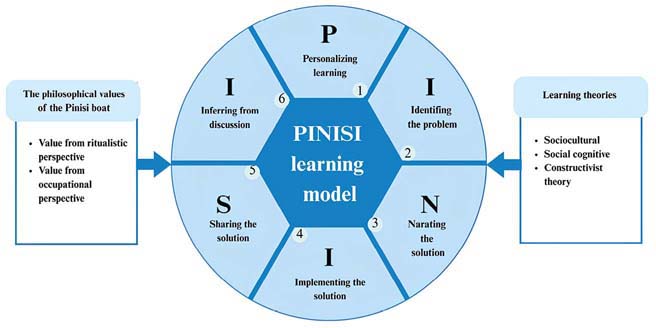
In this study, the authors report on the development and evaluation of the PINISI learning model, which they specifically designed to promote character values through biology education. The name PINISI is inspired by the traditional Pinisi boat, a significant cultural symbol in Indonesia representing strength, endurance, and progress. Reflecting these qualities, the model follows a structured, step-by-step process, with each stage corresponding to the letters of the acronym PINISI: Personalizing learning, Identifying the problem, Narrating the solution, Implementing the solution, Sharing the solution, and Inferring from discussion.
The PINISI model was developed directly by the authors using the educational research and development framework proposed by Plomp and Nieveen (2007), which includes three main stages: preliminary research, prototyping, and evaluation. This systematic approach was employed to produce a practical learning model that can be effectively applied to foster character development among high school students. This study represents a continuation of the authorsâ earlier development work and focuses on evaluating the effectiveness of the finalized model in classroom practice.
The primary objective of this research was to present the development process of the PINISI model and to provide empirical evidence of its effectiveness in promoting character values through a sociocultural approach in biology instruction.
To address these objectives, the authors formulated the following research questions, which guided the study:
How was the PINISI learning model developed using a sociocultural approach?
How does the developed PINISI learning model influence studentsâ character values in biology learning?
2 Theoretical Framework
The development of the PINISI learning model was guided by three key theoretical perspectives: sociocultural theory, social cognitive theory, and constructivist theory. In addition, the philosophical values embodied in the traditional construction of the Pinisi boat provided both the conceptual foundation and practical strategies for integrating character education into biology instruction. Specifically, researchers targeted the development of honesty, discipline, precision, responsibility, and collaboration as these values also align with the Indonesian governmentâs Pancasila Student Profile Strengthening Project (Kemdikbud, 2022), which is a co-curricular initiative under the Merdeka Curriculum (Kemdikbudristek, 2022).
2.1 Sociocultural Perspective and Character Values in the Construction of Pinisi Boats
Vygotskyâs sociocultural theory emphasizes the role of social and cultural contexts in learning, suggesting that studentsâ everyday experiences and prior knowledge can foster deeper engagement, particularly in science education (Furberg & Silseth, 2022). When teachers understand and incorporate cultural values into their instruction, they can design more effective learning environments that enhance both academic outcomes and character development (Bahri et al., 2023). Cultural integration in the classroom provides meaningful learning experiences that promote self-awareness, social understanding, and the development of positive character traits.
This theoretical foundation directly informed the development of the PINISI learning model and guided the first research question concerning how the model was designed using a sociocultural approach.

Framework of the development of the PINISI learning model
Citation: Asia-Pacific Science Education 11, 1 (2025) ; 10.1163/23641177-bja10096
Building on these theoretical insights, the authors developed the PINISI learning model to translate sociocultural principles into practical classroom strategies that support both academic learning and character formation. It aligns with the OECDâs 2030 Learning Compass, which emphasizes the importance of developing knowledge, skills, attitudes, and values for future readiness (OECD, 2019), and with Indonesiaâs Vision 2045, which focuses on human development and scientific progress (Bappenas, 2019). To succeed in both local and global contexts, students need structured opportunities to cultivate moral and ethical habits while preserving and appreciating their cultural heritage.
The PINISI learning model applies sociocultural theory by emphasizing personalized learning experiences that foster key character traits such as discipline, precision, and responsibility. Its subsequent stages, including identifying the problem, narrating the solution, implementing the solution, sharing the solution, and inferring from discussion, are each grounded in social interaction, encouraging collaboration and communication between students and teachers throughout the learning process.
A compelling example of cultural integration in education is the traditional construction of the Pinisi boat, practiced by the Bugis-Makassar people of South Sulawesi, Indonesia. Recognized by UNESCO as an Intangible Cultural Heritage in 2017, this boat-building tradition is rich in philosophical meaning and involves ceremonial rituals such as annakbang kalabiseang (the cutting of wood for the keel), annattara (the joining of the keel parts), and ammosi (the construction of the middle hull). Each stage reflects deeply held cultural values, including gratitude, discipline, cooperation, and spiritual reverence (Asfar et al., 2021; Demmalino et al., 2019). These rituals symbolize not only technical craftsmanship but also a profound respect for nature, spirituality, and communal responsibility (Faisal, 2012). By drawing directly from this cultural practice, the authors embedded these values into the design of learning activities, addressing the studyâs second research question regarding the modelâs influence on studentsâ character development.
Inspired by these traditions, the PINISI learning model incorporates both technical knowledge and sociocultural dimensions to promote character education. The boat-building process serves as a metaphor for learning: leaders in the construction process demonstrate responsibility and precision through careful planning and coordination, while workers exemplify cooperation and mutual respect through collaborative efforts (Faisal, 2012; Lisbijanto, 2019). Together, these roles model individual accountability and collective harmony, reinforcing values such as teamwork, mutual respect, and environmental stewardship.
The PINISI learning model was inspired by these traditions, incorporating both technical knowledge and sociocultural dimensions. It reflects the character values demonstrated during the pinisi construction process. For example, leaders in the boat-building process exemplify responsibility and precision through planning and coordination, while workers model cooperation and mutual respect through collaborative efforts. Together, these roles embody both individual accountability and collective harmony, reinforcing values such as teamwork, respect, and environmental stewardship (Faisal, 2012; Lisbijanto, 2019)
Grounded in these cultural practices and supported by empirical evidence, the PINISI learning model offers a practical framework for integrating character education into science instruction. This approach not only addresses identified gaps in studentsâ character development, as highlighted in the preliminary study (Kristanto & Wibowo, 2023) but also responds directly to the research questions posed in this study regarding the development and effectiveness of culturally informed character education models. Research also affirms that integrating local cultural values in learning strengthens studentsâ interpersonal skills, empathy, and sense of responsibility (Hafina et al., 2022). By embedding the philosophical teachings of the Pinisi tradition into science instruction, educators create meaningful, culturally relevant learning environments that not only enrich studentsâ scientific understanding but also foster the moral and ethical foundations necessary to navigate modern life.
Building upon the sociocultural foundations of the PINISI learning model, two additional theories, Social Cognitive Theory (SCT) and Constructivist Theory, further informed the modelâs instructional design and its focus on character development through science education. These theories shaped both the learning activities within the model and the strategies for fostering key character values identified in the research objectives.
2.2 Social Cognitive Theory
Social Cognitive Theory (SCT) highlights the importance of the social environment in shaping studentsâ motivation, learning, and self-regulation (Schunk & Usher, 2012; Usher & Ford, 2022). According to SCT, learning results from the continuous interaction of personal, behavioral, and environmental factors, including studentsâ thoughts and emotions, their actions during learning, and the social and physical contexts in which learning occurs (Lee & Tseng, 2024; Middleton et al., 2019).
This framework is particularly relevant for science education, where students acquire knowledge not only through direct instruction but also through observation, social interaction, and environmental engagement (Schunk & DiBenedetto, 2020). Within the PINISI model, SCT underpins the stages of identifying the problem, narrating the solution, and implementing the solution. These phases encourage teachers to design inquiry-based learning experiences that connect science concepts to studentsâ lived realities, fostering critical thinking and applied learning.
SCT also emphasizes the importance of student agency and self-reflection. In the context of the PINISI model, learning science becomes a process of both content mastery and character development, as students practice self- regulation and collaborate on real-world problem-solving tasks. A supportive classroom culture further reinforces these dynamics. Integrated character education programs, for example, have been shown to improve student motivation, social-emotional competencies, and teacher effectiveness (Giwangsa et al., 2022). By applying SCT principles, the PINISI learning model promotes meaningful participation and the development of essential character values such as responsibility, collaboration, and self-discipline within science education.
2.3 Constructivist Theory
Constructivist theory posits that learners actively build knowledge by connecting new information to their prior experiences and existing understanding (Bada & Olusegun, 2015; Krahenbuhl, 2016). This theory emphasizes the importance of student engagement, hands-on exploration, and the integration of meaningful content to support deep learning (Taber, 2019). Piagetâs cognitive theory, which complements constructivist approaches, suggests that teachers should consider studentsâ developmental stages and provide opportunities for experiential, interactive learning (Dobson & Dobson, 2021). As learning is shaped by social environments, studentsâ thinking and cognitive development are closely tied to their interactions within their communities (Rabillas et al., 2023).
Within the PINISI learning model, constructivist principles inform the identifying the problem stage, where students collaborate to investigate real- world issues relevant to their local cultural and environmental contexts. Through this collaborative inquiry, students begin to develop critical character values such as independence, responsibility, and cooperation. By connecting classroom learning to authentic, practical experiences, this process supports both cognitive development and character formation. As research has shown, constructivist-based instruction improves learning outcomes across various educational contexts (Demır & Kaya, 2022). The constructivist foundation of the PINISI model thus not only deepens studentsâ scientific understanding but also empowers them to develop ethical reasoning, reflective thinking, and the reflective habits of mind necessary for responsible citizenship.
Together, these theoretical perspectives, sociocultural theory, social cognitive theory, and constructivist theory, provided the foundation for designing the PINISI learning model and informed the research questions concerning its development and effectiveness. The following section outlines the research methodology used to develop and evaluate the model, focusing on its implementation in biology instruction to foster studentsâ character values and academic competencies.
3 Methodology
3.1 Development of PINISI Learning Model
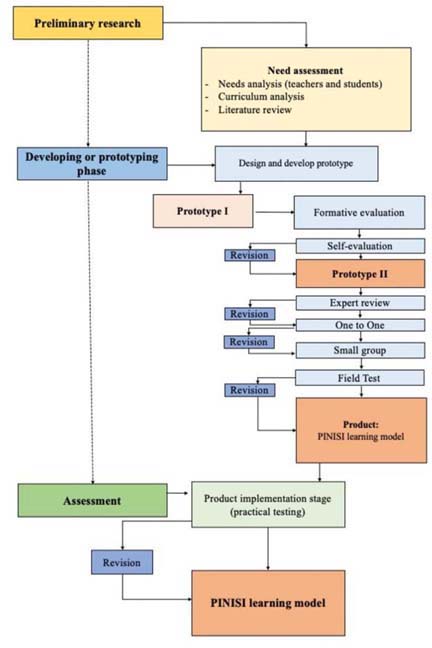
This section describes the development of the PINISI learning model, which was guided by the systematic instructional design framework proposed by Plomp and Nieveen (2007). The development process followed three major stages, including preliminary research, prototyping, and assessment, each with the goal of creating a comprehensive and effective instructional model that supports both academic learning and character development, as outlined in the research objectives.
According to Plomp and Nieveen (2007), effective instructional design involves clearly defined goals, careful selection of relevant content, and the establishment of appropriate evaluation strategies. These design principles directly support the integration of learning theories, specifically sociocultural theory, social cognitive theory, and constructivist theory, that informed the conceptual foundation of the PINISI model. Khalil and Elkhider (2016) further reinforced the importance of aligning learning theories with instructional design principles to improve the overall quality of instruction.
3.1.1 Preliminary Research Phase
During the preliminary research phase, a needs analysis was conducted with both teachers and students to identify instructional gaps, particularly in promoting character values within biology education. This stage also included a comprehensive review of Indonesiaâs Merdeka Curriculum (Kemdikbudristek, 2022) and a synthesis of relevant literature on sociocultural learning theories. Insights from this phase addressed the first research question by informing how the model could integrate local cultural perspectives and character education into biology instruction.
3.1.2 Prototyping Phase
Following the preliminary research, the prototyping phase focused on the creation and iterative refinement of the model. An initial product (Prototype 1) was developed and subjected to a formative evaluation process designed to identify areas for improvement. The formative evaluation consisted of five interconnected components. First, a self-evaluation was conducted by the developer to assess the internal coherence of the modelâs design. This was followed by an expert review carried out by biology education specialists to validate the content and ensure pedagogical alignment with character education objectives. Next, individual one-to-one evaluations with students were implemented to assess the clarity and accessibility of the instructional materials. Subsequently, a small group or micro evaluation explored the modelâs effectiveness in fostering collaboration and character development within a social learning environment. Finally, a field test was conducted to examine the feasibility and practical application of the model in real classroom settings with a broader group of participants.
This phased approach ensured that each stage of the PINISI model, from personalizing learning to inferring from discussion, was grounded in the theoretical principles outlined earlier and effectively supported the cultivation of character values such as honesty, discipline, and responsibility.
3.1.3 Assessment Phase
The final stage, the assessment phase, focused on evaluating the practicality and effectiveness of the fully developed model in authentic classroom environments. Data were collected on how successfully the PINISI model promoted both science learning and the development of character values, addressing the second research question concerning its impact on studentsâ character formation through biology instruction.
The results from this phase informed final revisions and confirmed the modelâs suitability for instructional use. An overview of the PINISI learning model development process is presented in Figure 2.
Development process of the PINISI learning model
Citation: Asia-Pacific Science Education 11, 1 (2025) ; 10.1163/23641177-bja10096
Following the development of the PINISI learning model, the study proceeded to examine its application in classroom settings to assess its effectiveness in fostering both academic achievement and character development.
3.2 PINISI Learning Model Study
3.2.1 Participants
This study involved 107 high school students (aged 15â16) from a public school in South Sulawesi, Indonesia. Participants were assigned to one of three instructional groups: the PINISI learning model group (n = 36), the problem- based learning (PBL) group (n = 36), and the direct instruction (DI) group (n = 35).
To ensure equivalence across groups, a preliminary equivalence test was conducted using studentsâ biology scores from the previous semester. The results indicated no significant differences in prior academic achievement among the groups (Sig. = 0.553, p > .05), confirming that the groups were comparable at the start of the study. Descriptive statistics for the participant groups are presented in Table 1.
Descriptive statistics of participants by group and gender
Citation: Asia-Pacific Science Education 11, 1 (2025) ; 10.1163/23641177-bja10096
3.2.2 Context of Study
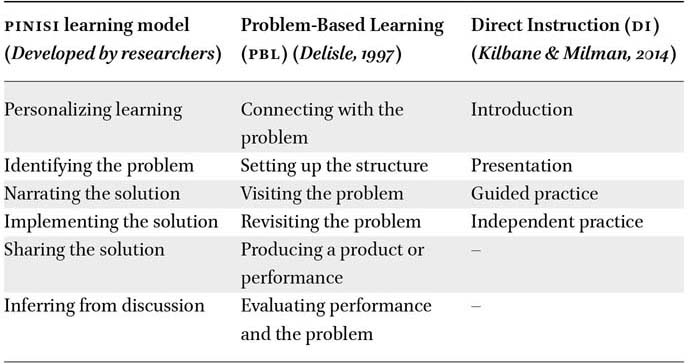
This section outlines the three instructional models examined in the study: the PINISI learning model, the problem-based learning (PBL) model, and the direct instruction (DI) model. The purpose of this comparison was to evaluate how the socioculturally based PINISI model influences studentsâ character values in high school biology learning, relative to the more commonly implemented PBL and DI models. Both PBL and DI approaches are aligned with the Indonesian national curriculum and are widely used by teachers in classroom instruction.
PBL is a structured, student-centered instructional approach grounded in constructivist theory. It encourages students to explore and solve real-world problems either independently or collaboratively, helping them connect classroom content to their daily lives (Cattaneo, 2017; Delisle, 1997). The learning process typically involves initial discussions, self-directed inquiry, and culminating presentations or reports (Loyens et al., 2023). Assessment within the PBL model primarily focuses on studentsâ knowledge acquisition and skill development based on identified learning needs (Silva et al., 2018).
DI is a teacher-centered model that emphasizes structured content delivery and is often used when students require additional support with unfamiliar or complex material. The DI approach generally consists of four stages: introduction, presentation of new concepts, guided practice, and independent work. This model focuses on building foundational knowledge and developing cognitive skills in a sequential manner (Kilbane & Milman, 2014; Mason & Otero, 2021).
While all three models aim to support student learning, they differ in instructional strategies and intended outcomes. The PINISI learning model uniquely integrates sociocultural values to foster both cognitive development and character growth. In contrast, PBL emphasizes the development of problem-solving and critical thinking skills, while DI focuses on the sequential delivery of content to support academic mastery. A summary of the instructional processes used in each model is presented in Table 2.
Instructional process comparison: PINISI, PBL, and DI learning models
Citation: Asia-Pacific Science Education 11, 1 (2025) ; 10.1163/23641177-bja10096
By examining these instructional models, this study aimed to determine not only their relative effectiveness in supporting academic achievement but also their influence on the development of studentsâ character values. The following section describes the research design employed to implement and evaluate these instructional approaches, focusing on how each model contributed to fostering character development within the context of high school biology education.
To systematically evaluate the effectiveness of the PINISI learning model, this study employed the following research design.
3.3 Research Design
This study employed a research and development (R&D) approach to design and evaluate the PINISI learning model, an instructional framework grounded in sociocultural values. Educational R&D is a systematic process used to develop and validate educational products (Borg & Gall, 1983). The PINISI model was developed following the design framework proposed by Nieveen and Plomp (2007), which incorporates iterative stages of development, testing, and refinement.
To evaluate the modelâs effectiveness, a post-test only control group design was used, adapted from Cohen et al. (2018). This experimental design assesses learning outcomes after the instructional intervention without the use of a pre-test, thereby allowing for comparison of post-intervention results across instructional groups. The structure of this design is summarized in Table 3.
Post-test only control group design
Citation: Asia-Pacific Science Education 11, 1 (2025) ; 10.1163/23641177-bja10096
3.3.1 Instrument for Measuring Student Character in Biology Learning
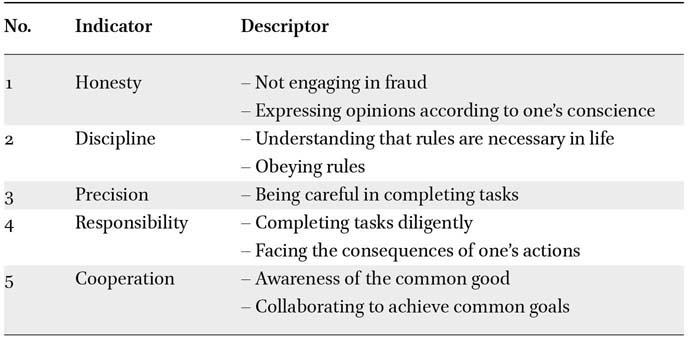
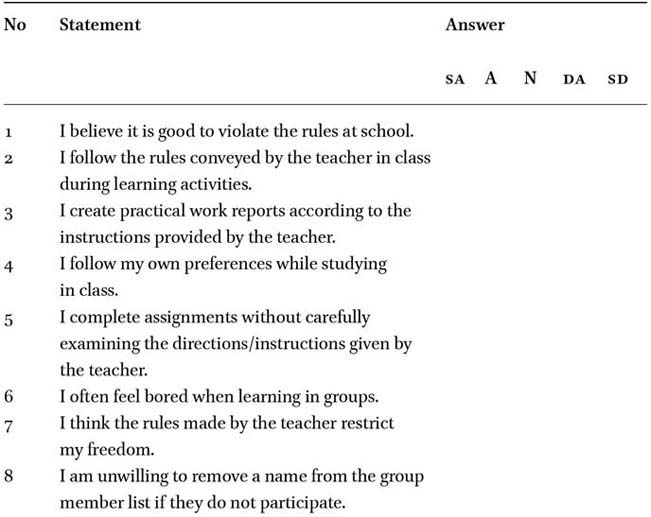
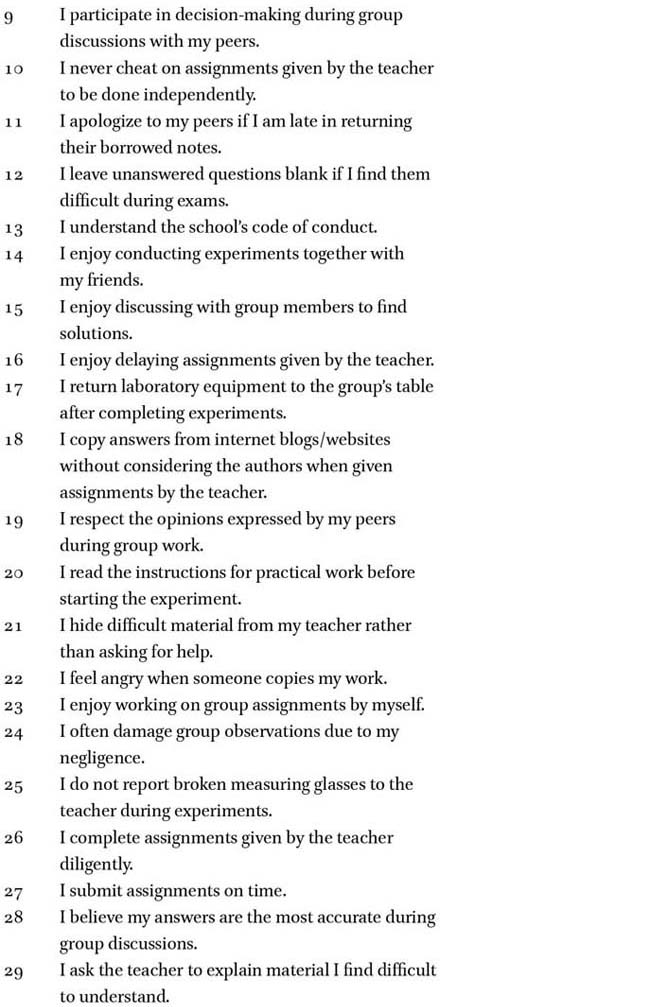
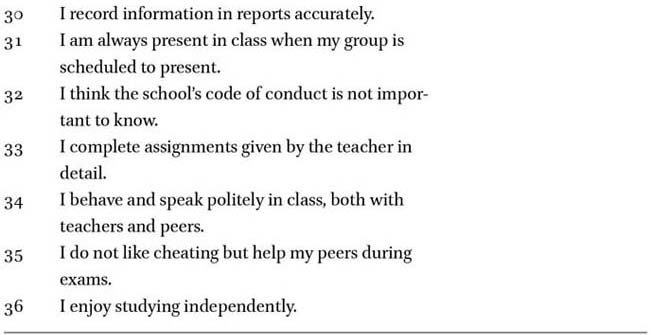
Data on studentsâ character development in biology learning were collected using a questionnaire administered during the final class meeting of the semester. The instrument consisted of 36 statements representing five character indicators: honesty, discipline, precision, responsibility, and cooperation. These indicators were adapted from the Kemdikbud (2022) character framework and aligned with values derived from the philosophical traditions of Pinisi boat construction. The full questionnaire is provided in Appendix 1.
To ensure the validity and reliability of the instrument, a Pearson productâ moment correlation test was conducted. The results confirmed that all items were valid, with correlation coefficients ranging from r = .279 to .401. The instrument also demonstrated strong internal consistency, with a Cronbachâs alpha of
Descriptions of the character indicators and their corresponding descriptors are presented in Table 4.
Indicators and descriptors of Pinisi philosophy values for empowering student character
Citation: Asia-Pacific Science Education 11, 1 (2025) ; 10.1163/23641177-bja10096
Source: Adapted from Kemdikbud (2022)3.4 Data Analysis
3.4.1 Development of the PINISI Learning Model
The development of the PINISI learning model was guided by a series of validation stages, including evaluations of its theoretical foundation, structure, instructional process, social system, reaction principles, support systems, expected impact, and implementation procedures. Feedback from content experts and practitioners was collected throughout this process to refine the model and ensure its alignment with educational objectives and practical classroom application. Expert evaluations were conducted based on the criteria outlined in Table 5.
Evaluation criteria used by experts
Citation: Asia-Pacific Science Education 11, 1 (2025) ; 10.1163/23641177-bja10096
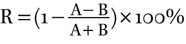
Source: Adapted from Tegeh et al. (2014)In addition to expert evaluations, the reliability of the developed model was assessed using the percentage agreement coefficient. According to Drost (2012), if the reliability value falls below 70%, the product requires revision. The following formula was used to calculate the agreement coefficient:
Citation: Asia-Pacific Science Education 11, 1 (2025) ; 10.1163/23641177-bja10096
Where:
R = Percentage agreement coefficient
A = Validatorâs highest score
B = Validatorâs lowest score
3.4.2 Practicality Assessment
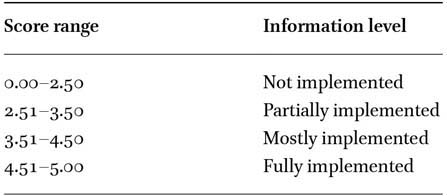
The practicality of the PINISI learning model was evaluated through structured observation sheets, focusing on the fidelity of implementation by teachers and levels of student engagement. Observations were conducted over seven class meetings. The mean score obtained from these observations was interpreted according to the criteria presented in Table 6.
Implementation criteria for the learning process
Citation: Asia-Pacific Science Education 11, 1 (2025) ; 10.1163/23641177-bja10096
Source: Adapted from Hobri (2009).The PINISI learning model was considered practically applicable if the average implementation score fell within the âmostly implementedâ category or higher. This indicates that the modelâs essential components functioned effectively in practice and no further revisions were required.
3.4.3 Effectiveness Analysis
To analyze the effectiveness of the PINISI learning model on student character development, a one-way analysis of variance (ANOVA) was conducted. Prior to performing the ANOVA, the necessary statistical assumptions were tested to ensure the validity of the results, as recommended by Bennett et al. (2023). These assumptions included: (1) scale of measurement, (2) independence of observations, (3) normality of data distribution, and (4) homogeneity of variances.
The research hypothesis was tested at a 5% significance level (
In addition, an effect size analysis was conducted to measure the magnitude of the PINISI learning modelâs impact on character education outcomes.
Based on these analyses, the following section presents the studyâs findings, highlighting the comparative effectiveness of the PINISI learning model in fostering character development and academic achievement among high school biology students.
4 Results
4.1 Development of the PINISI Learning Model
4.1.1 Prototyping Phase
The PINISI learning model was developed by creating a prototype based on the five essential elements of a learning model, as described by Joyce et al. (2009). These elements include: (1) syntax (the stages of learning), (2) social system, (3) reaction principle, (4) support system, and (5) instructional and nurturant effects. An overview of the model design is presented in Figure 3.
Five basic elements for developing the PINISI learning model
Citation: Asia-Pacific Science Education 11, 1 (2025) ; 10.1163/23641177-bja10096
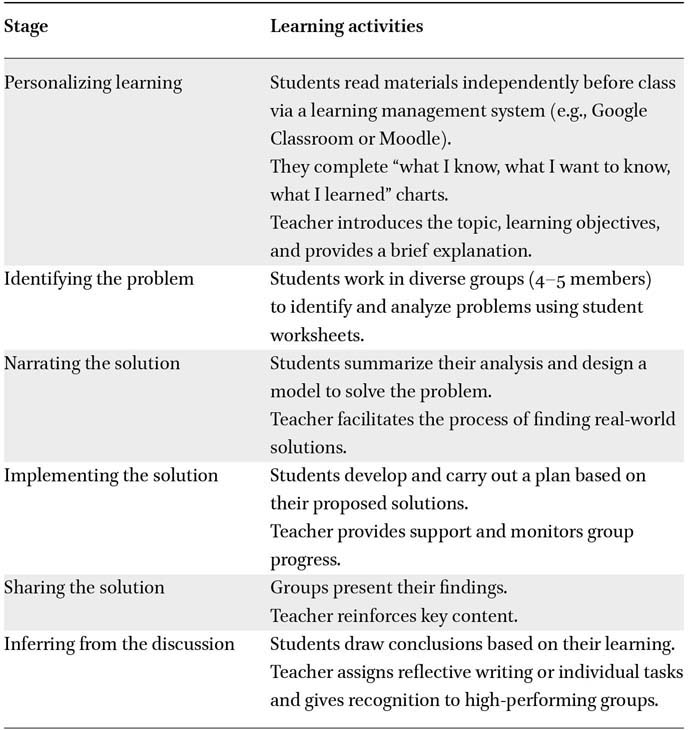
Source: Adapted from Joyce et al. (2009)The learning activities associated with each stage of the process are shown in Table 7. As noted in Section 1.2, the process of the learning model was represented by the acronym PINISI.
Process and learning activities of the PINISI learning model
Citation: Asia-Pacific Science Education 11, 1 (2025) ; 10.1163/23641177-bja10096
4.1.2 Social System
The social system refers to the dynamics and interactions between students and between students and teachers. A positive and collaborative learning environment encourages active participation and engagement in learning activities.
4.1.3 Reaction Principle
The reaction principle guides how teachers respond to student work. Within the PINISI learning model, teachers design meaningful and culturally rooted learning experiences. They act as facilitators, motivators, and guides, which serve to support students throughout each stage of the learning process by teaching, evaluating, and encouraging reflection.
4.1.4 Support System
The support system for the PINISI learning model includes instructional tools and resources such as teaching modules aligned with the Merdeka Curriculum (Kemdikbudristek, 2022). The development of these modules aims to create flexible, student-centered learning tools that support the achievement of the Pancasila Student Profile (Kemdikbud, 2022). These modules are designed to be adaptable to different learning environments and encourage active student participation (Mulabbiyah et al., 2024; Sanjaya et al., 2022; Widarti et al., 2023). In addition to teaching modules, the support system includes student worksheets and assessment instruments.
4.1.5 Instructional and Nurturant Effects
The PINISI learning model has a profound impact on studentsâ character development through both its instructional and nurturing effects. Instructionally, it cultivates key virtues such as honesty, discipline, and cooperation, which are fundamental components of moral education. Its nurturing effects promote independence, learning motivation, and a deeper appreciation for cultural values, aligning with current educational objectives. Research has shown that incorporating character education into learning models enhances student behavior and fosters academic achievement and character growth (GarcÃa Ãlvarez et al., 2024; Weber & Harzer, 2022). In this context, the PINISI learning model offers a holistic approach to education, integrating academic success with the cultivation of moral and ethical values. By addressing both instructional and nurturing aspects, the model prepares students for academic excellence and responsible participation in society.
4.1.6 Formative Evaluation Phase
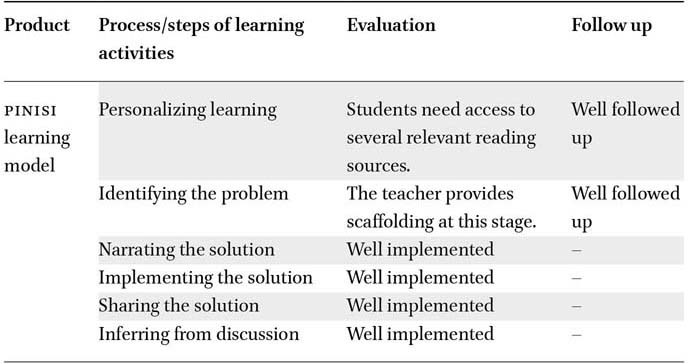
The formative evaluation aimed to identify weaknesses in the prototype. This phase included self-evaluation, expert review, one-to-one evaluation, small- group evaluation, and field testing. The results of the formative evaluations are summarized in Table 8.
Limited-scale trial evaluation results of the PINISI learning model
Citation: Asia-Pacific Science Education 11, 1 (2025) ; 10.1163/23641177-bja10096
The results from the limited-scale evaluations, including one-to-one, small group, and field testing, indicated that only the first two stages, personalizing learning and identifying the problem, both required revisions based on feedback. These revisions were successfully addressed. Overall, the learning model was effectively implemented by teachers and students, suggesting its readiness for classroom application.
4.2 Expert Validation of the PINISI Learning Model
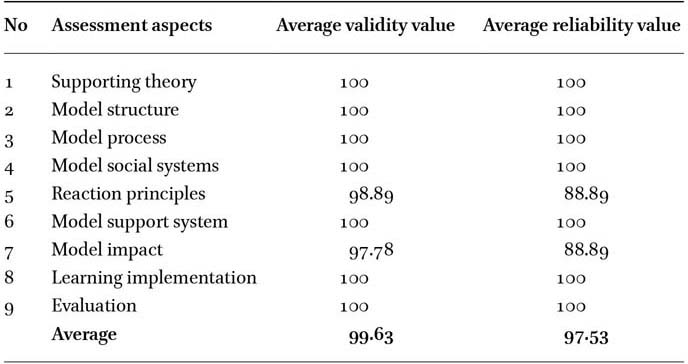
The formative evaluation phase also included expert reviews conducted by three validators with expertise in biology education. The validators assessed several components to determine the modelâs validity, reliability, and overall suitability for teaching and learning. The results are presented in Table 9.
Validation results of the PINISI learning model by expert validators
Citation: Asia-Pacific Science Education 11, 1 (2025) ; 10.1163/23641177-bja10096
As shown in Table 9, the average validity score was 99.63%, and the average reliability score was 97.53%, indicating that the model achieved a âvery goodâ qualification and was suitable to proceed to the practicality assessment phase.
4.3 Assessment Phase Results
The assessment phase collected data on the practicality of the PINISI learning model. Observations were recorded using implementation sheets across seven class meetings. In general, the model was implemented effectively. The average scores for each phase of the process are shown in Table 10.
Average observation scores for implementation of the PINISI learning model
Citation: Asia-Pacific Science Education 11, 1 (2025) ; 10.1163/23641177-bja10096
As shown in Table 10, the average score of 4.95 indicates that nearly all aspects of the learning model were successfully and consistently implemented by both teachers and students.
4.4 Effectiveness of the PINISI Learning Model in Empowering Studentsâ Character Values
A one-way ANOVA was conducted to compare the effects of the PINISI, PBL, and DI instructional models on student character education. Prior to the analysis, all assumptions were tested:
Normality: All groups demonstrated normally distributed data (p = .208 > .05).
Homogeneity of variance: The Levene test confirmed homogeneity (p = .151 > .05).
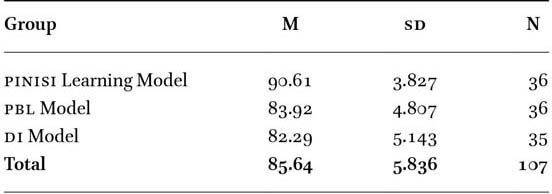
Descriptive statistics of post-test scores for character education
Citation: Asia-Pacific Science Education 11, 1 (2025) ; 10.1163/23641177-bja10096
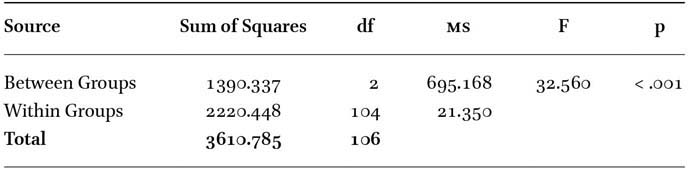
The results in Table 12 show a statistically significant difference among the three instructional groups (F(2, 104) = 32.56, p < .001).
One-way ANOVA test of Between-Group differences
Citation: Asia-Pacific Science Education 11, 1 (2025) ; 10.1163/23641177-bja10096
The results presented in Table 13 indicate that the PINISI learning model significantly outperformed both the PBL and DI models in developing studentsâ character values (p < .001). However, no significant difference was found between the PBL and DI groups (p = .420).
Post Hoc Pairwise Comparisons (Bonferroni Adjustment)
Citation: Asia-Pacific Science Education 11, 1 (2025) ; 10.1163/23641177-bja10096
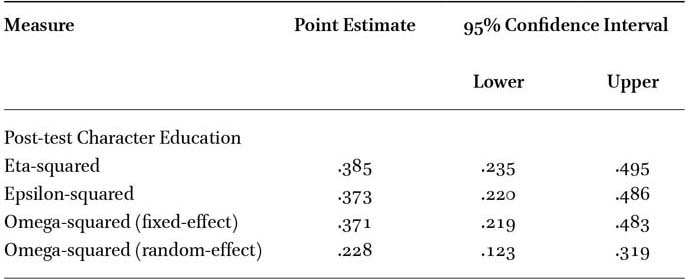
The analysis of the impact of instructional models on studentsâ character education outcomes also provides insight into the extent to which the instructional model contributes to the observed variation in character development, as shown in Table 14.
Effect size estimates for one-way ANOVA
Citation: Asia-Pacific Science Education 11, 1 (2025) ; 10.1163/23641177-bja10096
The Eta squared value of .385 suggests a large effect size, indicating that the instructional model accounts for a substantial proportion of the variance in studentsâ character education outcomes. This result underscores the effectiveness of the PINISI learning model in fostering character education and highlights its potential as a valuable instructional approach in educational settings.
5 Discussion
5.1 The Development of the PINISI Learning Model
The development of the PINISI learning model represents an instructional strategy that integrates sociocultural philosophical values into biology education, particularly those embodied in the traditional construction of the pinisi boat by the Bugis-Makassar community in South Sulawesi, Indonesia. Grounded in the spiritual, philosophical, and social principles upheld by the leaders and craftspeople involved in pinisi boat building, these values are reflected in the six core learning activities that define the PINISI process. The model also aligns with a PBL approach, providing relevance and authenticity in addressing contextual challenges in contemporary education (Hudha et al., 2024).
Designed with the primary goal of cultivating character values, the PINISI learning model fosters honesty, discipline, meticulousness, responsibility, and cooperation through science instruction. These character traits are essential not only for academic development but also for nurturing individuals capable of contributing meaningfully to society. By embedding character education within biology lessons, the model supports the broader national agenda of strengthening character education, particularly in the context of Indonesiaâs ongoing educational reforms. Implementation of the model was found to increase student engagement, motivation, and success in learning science, while simultaneously developing essential life skills that students can carry beyond the classroom.
As an educational framework, the PINISI learning model offers valuable guidance for teachers seeking to integrate character education into the science curriculum. Its cultural integration enhances both the relevance and richness of student learning, while empowering educators to shape students into responsible and ethical citizens prepared for success in a globalized world (Riddle, 2024). By incorporating culturally relevant content and creating opportunities for meaningful learning experiences, the model demonstrates respect for studentsâ cultural identities, supporting both academic achievement and personal growth.
Evidence from previous studies highlights the importance of cultural integration in character education. For example, the use of Wayang Golek, a traditional Indonesian puppet performance, effectively conveys moral lessons and shapes student behavior and interpersonal relationships (Halimah et al., 2020). Through characters such as Gatotkaca and Cepot, Wayang Golek not only engages children but also helps internalize values like responsibility, creativity, and environmental care (Effendi et al., 2020). These cultural expressions promote cooperation, empathy, tolerance, respect for diversity, self-control, environmental sensitivity, and democratic citizenship, all of which align with the broader objectives of character education.
The structured process of the PINISI learning model plays a central role in supporting the development of these character traits. For instance, the value of honesty fosters trust and integrity in communication and decision-making. Discipline, emphasized throughout the learning stages, encourages self-control, rule adherence, and perseverance when facing challenges. Meticulousness develops through tasks requiring attention to detail and accuracy, particularly in scientific inquiry and problem-solving activities, which are central to biology education (Yakob et al., 2021). Responsibility is cultivated as students are encouraged to take ownership of their actions, complete tasks diligently, and accept the outcomes of their decisions. Cooperation is embedded in group-based tasks and collaborative problem-solving activities, fostering mutual support, constructive dialogue, and collective achievement.
This intentional development of character traits has the potential to transform school culture. When character education is systematically integrated into learning, incidents of negative behaviors such as bullying and social exclusion are reduced. Students exhibit greater empathy, kindness, and care for others, contributing to a more supportive and inclusive learning environment (Gizzarelli et al., 2023). This positive environment, in turn, enhances both academic outcomes and social well-being.
A particularly noteworthy feature of the PINISI learning model is its emphasis on personalizing learning in the initial stage. In this phase, students independently explore learning materials through digital platforms, such as learning management systems. This promotes self-directed learning and allows students to construct prior knowledge before classroom instruction. Through this independent exploration, students begin to demonstrate values such as honesty, discipline, and responsibility, both in and beyond the classroom. This process also enhances readiness for collaborative learning, increases motivation, and reinforces the student-centered nature of the model. By combining cultural relevance, character development, and inquiry-based learning, the PINISI learning model provides a compelling and contextually appropriate approach to science education in Indonesian schools.
5.2 The Effectiveness of the PINISI Learning Model in Empowering Studentsâ Character Values
The learning process is a crucial platform for cultivating studentsâ character values and must be implemented systematically and sustainably to prepare them for diverse real-world challenges. Character development can be effectively fostered through structured teaching and learning activities, both inside and outside the classroom, particularly when moral conditioning is intentional and consistently modeled by teachers (Pike et al., 2021). When students are routinely exposed to positive values, they are more likely to internalize and demonstrate them in their everyday behavior. For character education to be effective, it must be embedded in instructional materials and reflected in the broader school culture (Wijaya, 2017). Biology education offers a powerful context for integrating character development with sociocultural relevance. Through the exploration of scientific and ethical issues, biology teachers can guide students in developing moral sensitivity and applying ethical reasoning in real-life contexts (Leij et al., 2022).
In this study, the PINISI learning model produced the highest average scores for character development, significantly outperforming both the PBL and DI models. This demonstrates the modelâs effectiveness in fostering key values such as honesty, discipline, meticulousness, responsibility, and cooperation.
The learning process begins with the personalizing learning stage, where students independently engage with pre-class materials through the PINISI learning management system. This stage allows students to build foundational knowledge in preparation for classroom discussions. It can also encourage the development of self-regulation, responsibility, and diligence through individual learning experiences (Nabizadeh et al., 2020). The integration of sociocultural context with personal exploration is consistent with Vygotskyâs view that meaningful learning emerges from the interplay between individual agency and cultural context (Schunk & Usher, 2012).
In the identifying the problem stage, students collaborate in heterogeneous groups to explore and define learning-related issues. This collaborative approach can help foster teamwork and mutual respect while building awareness of shared goals (Ennis, 2017). Working together in this way allows students to engage in constructive dialogue and develop interpersonal skills.
Next, in narrating the solution, students generate and present possible solutions to the problems identified. This process encourages careful reasoning, comparison of alternatives, and synthesis of information from various sources. Students can learn to take responsibility for their contributions and refine their thinking based on group discussions (Brante & Wang, 2019; Park, 2012).
During the implementing the solution phase, students put their plans into action, applying scientific knowledge and collaborative strategies to address real-life issues. They are encouraged to justify their decisions and reflect on the process, fostering logical thinking, accountability, and problem-solving skills. Structured guidance and effective classroom management can further reinforce these behaviors (Watson, 2014).
The sharing the solution stage offers students an opportunity to present their groupâs findings. This public presentation fosters confidence, communication skills, and a sense of ownership over their learning. Peer feedback and whole-class discussions can help further deepen understanding and promote engagement (Majid, 2021).
Finally, in inferring from discussion, students and teachers jointly reflect on the learning experience, consolidating knowledge and connecting it with character values. This stage can help reinforce cooperative behavior, encourage reflection, and support students in articulating what they have learned (Santrock, 2011).
At the conclusion of the learning cycle, students or groups demonstrating exceptional participation may receive recognition or rewards. Such acknowledgments can support intrinsic motivation and reinforce positive behaviors, contributing to studentsâ academic growth and social-emotional development (Pai et al., 2015).
Overall, the PINISI learning model empowers character development through a carefully sequenced, culturally grounded instructional approach. Each stage, from individual exploration to group collaboration, provides opportunities for students to internalize essential values while engaging meaningfully in biology learning.
6 Conclusion
This study explored the development and implementation of the PINISI learning model as a culturally grounded approach to character education within biology instruction. Drawing on sociocultural theory and the philosophical values of the pinisi boat-building tradition, the model integrates six structured stages that guide students through inquiry-based and collaborative learning. The results indicate that the model effectively fostered core character traits, including honesty, discipline, precision, responsibility, and cooperation, while also enhancing engagement and comprehension in science learning.
The PINISI model offers a promising framework for contextualizing science education in Indonesian classrooms. By embedding character values into the learning process, it supports national curriculum goals while affirming the relevance of local cultural knowledge. Students participating in the model not only demonstrated stronger character development compared to those in traditional instructional settings but also showed increased motivation and participation in classroom learning.
These findings support growing calls to integrate sociocultural content into curriculum design, particularly in character education. The modelâs emphasis on community, reflection, and moral action aligns with broader efforts to connect education with 21st-century competencies and national identity.
However, this study has several limitations. It was conducted with a small sample of Grade 10 students in a single region and focused only on biology content related to environmental change. These factors limit the generalizability of the findings. Future research should explore the modelâs adaptability across different grade levels, regions, and subject areas to assess its broader applicability. Further studies may also investigate the long-term impacts of the model on studentsâ ethical reasoning and civic participation.
In conclusion, the PINISI learning model contributes a meaningful and culturally responsive approach to character education. Its integration of tradition, inquiry, and reflection provides a strong foundation for strengthening both student identity and science learning in diverse educational contexts.
Acknowledgements
We extend our sincere gratitude to the Center for Higher Education Funding and Assessment (PPAPT) and the Indonesia Endowment Fund for Education (LPDP) for generously funding this research through Ministry of Higher Education, Science, and Technology of the Republic of Indonesia scholarship program (BPI) for doctoral studies, under the reference No. 2010/J5.2.3/BPI.06/ 10/2021. Gratitude is also extended to the Faculty of Mathematics and Natural Sciences at the State University of Malang where the researchers study.
Funding
This work was supported by the Center for Higher Education Funding and Assessment (PPAPT) and the Indonesia Endowment Fund for Education (LPDP) for generously funding this research through Ministry of Higher Education, Science, and Technology of the Republic of Indonesia scholarship program (BPI) for doctoral studies under Grant (2010/J5.2.3/BPI.06/10/2021).
Ethical Consideration
This study was approved by the local research ethics board. Informed consent was obtained from all participants and their guardians, and participantsâ privacy and confidentiality were maintained through the use of pseudonyms and the removal of identifying information.
About the Authors
Arifah Novia Arifin is a PhD candidate in the Department of Biology, Faculty of Mathematics and Natural Sciences, Universitas Negeri Malang, Indonesia. In addition, she is a lecturer at the Department of Biology Education, Faculty of Mathematics and Natural Sciences, Universitas Negeri Makassar, Makassar, Indonesia. Her research focuses on biology teaching and learning strategies, character education, learning media, and 21st-century competencies.
Utami Sri Hastuti is a professor in the Department of Biology, FMIPA, Universitas Negeri Malang, Indonesia. She is a senior lecturer and researcher in the fields of biology teaching and learning, learning evaluation, digital handouts, science process skills, cognitive learning outcomes, educational philosophy, and microbiology.
Murni Sapta Sari is a professor in the Department of Biology, Faculty of Mathematics and Natural Sciences, State University of Malang, Malang, Indonesia. Her research areas are biology learning assessment, 21st-century skills, the structure of plant development, and biology education.
Herawati Susilo is a professor at the Department of Biology, Faculty of Mathematics and Natural Sciences, State University of Malang, Malang, Indonesia. Her research areas are biology learning assessment, 21st-century skills, lesson study, and biology education.
References
Ariani, F., Ulfatin, N., Supriyanto, A., & Arifin, I. (2022). Implementing online Integrated character education and parental engagement in local cultural values cultivation. European Journal of Educational Research, 11(3), 1699â1714. https://doi.org/10.12973/eu-jer.11.3.1699.
Arifin, A. N., Hastuti, U. S., Sari, M. S., & Susilo, H. (2024). Laporan hasil analisis penelitian pendahuluan [Report on the results of the preliminary research analysis] [Unpublished report]. Department of Biology, Universitas Negeri Malang.
Asfar, K., Abubakar, A., Pababbari, M., & Sabry, M. S. (2021). Living Qurâan in Annyorong Lopi Pinisi tradition: an Anthropological study of the Qurâan. Jurnal Adabiyah, 21(2), 451. https://doi.org/10.24252/jad.v21i2a9.
Bada, S. O., & Olusegun, S. (2015). Constructivism learning theory: A paradigm for teaching and learning. Journal of Research & Method in Education, 5(6), 66â70. https://doi.org/10.9790/7388-05616670.
Bahri, A., Arifin, A. N., Jamaluddin, A. Bin, Muharni, A., & Hidayat, W. (2023). Smart teaching based on lesson study promoting studentâs digital literacy in the rural area. European Journal of Educational Research, 12(2), 901â911. https://doi.org/https://doi.org/10.12973/eu-jer.12.2.901.
Ballard, H. L., Dixon, C. G. H., & Harris, E. M. (2017). Youth-focused citizen science: Examining the role of environmental science learning and agency for conservation. Biological Conservation, 208, 65â75. https://doi.org/10.1016/j.biocon.2016.05.024.
Bappenas. (2019). Ringkasan eksekutif visi Indonesia 2045 (Berdaulat, maju, adil, dan makmur) [Executive summary of Indonesiaâs vision 2045 (Sovereign, advanced, just, and prosperous)]. In Sistem manajemen pengetahuan (Vol. 32). https://perpustakaan.bappenas.go.id/e-library/file_upload/koleksi/migrasi-data-publikasi/file/Policy_Paper/Ringkasan%20Eksekutif%20Visi%20Indonesia%202045_Final.pdf.
Borg, W. R., & Gall, M. D. (1983). Educational research: An Introduction. Longman, Inc.
Brante, E. W., & Wang, S. (2019). A multiple-case study on studentsâ sourcing activities in a group task. Cogent Education, 6(1), 1651441. https://doi.org/10.1080/2331186X.2019.1651441.
Cattaneo, K. H. (2017). Telling active learning pedagogies apart: From theory to practice. Journal of New Approaches in Educational Research, 6(2), 144â152. https://doi.org/10.7821/naer.2017.7.237.
Chen, J., Tan, J., & Lei, J. (2022). Exploring learner identity in the blended learning context: A case study of collaborative writing. System, 108(June), 102841. https://doi.org/10.1016/j.system.2022.102841.
Ciampa, K., & Wolfe, Z. M. (2020). Integrating character education into an elementary common core standards-aligned curriculum: A pilot study. Curriculum Perspectives, 41(1), 59â69. https://doi.org/10.1007/s41297-020-00116-2.
Cohen, L., Manion, L., & Morrison, K. (2018). Research Methods in Education (Eighth edi). Routledge.
Delisle, R. (1997). How to use problem-based learning in the classroom. In E. Hall (Ed.), Notes and Queries (Vols. s11-II, Issue 34). Association for Supervision and Curriculum Development.
Demır, M., & Kaya, M. (2022). Analysis of constructivist learning modelâs effects on student outcomes: A second order meta-analysis. Kuramsal EÄitimbilim. https://doi.org/10.30831/akukeg.1122136.
Demmalino, E. B., Ibrahim, T., & Lumoindong, Y. (2019). Panrita Lopi: Cultural value and religiosity behind professionalism of making Pinisi boats in Bulukumba regency. ETNOSIA: Jurnal Etnografi Indonesia, 4(1), https://doi.org/10.31947/etnosia.v4i1.6422.
Dobson, J., & Dobson, T. (2021). Empowering student voice in a secondary school: Character education through project-based learning with students as teachers. Teacher Development, 25(2), 103â119. https://doi.org/10.1080/13664530.2020.1865442.
Drost, E. A. (2011). Validity and reliability in social science research. Education Research and Perspectives, 38(1), 105â123. https://doi.org/10.70953/ERPv38.11005.
Effendi, Y. R., Bafadal, I. B., Sudana, I. N. D. S., & Arifin, I. A. (2020). The principal transformational leadership strategy in developing national policies for strengthening character education in eastern Indonesia. Italian Journal of Sociology of Education, 12(2), 51â78. https://doi.org/10.14658/PUPJ-IJSE-2020-2-3.
Elhussein, G., Leopold, T., Silva, A., & Zahidi, S. (2023). Defining education 4.0: A taxonomy for the future of learning (Issue January). World Economic Forum. https://www3.weforum.org/docs/WEF_Defining_Education_4.0_2023.pdf.
Ennis, C. D. (2017). Educating students for a lifetime of physical activity: Enhancing mindfulness, motivation, and meaning. Research Quarterly for Exercise and Sport, 88(3), 241â250. https://doi.org/10.1080/02701367.2017.1342495.
Faisal. (2012). Pinisi boat and maritime culture of Biraâs people. Jantra, 7(1), 80â88. https://repositori.kemdikbud.go.id/5139/1/Jantra_Vol._VII_No._1_Juni_2012.pdf.
Furberg, A., & Silseth, K. (2022). Invoking student resources in whole-class conversations in science education: A sociocultural perspective. Journal of the Learning Sciences, 31(2), 278â316. https://doi.org/10.1080/10508406.2021.1954521.
GarcÃa Ãlvarez, D., Cobo Rendón, R., & Lobos, K. (2024). Character strengths as predictors of general and academic self-efficacy in university students. Frontiers in Psychology, 15. https://doi.org/10.3389/fpsyg.2024.1490095.
Giwangsa, S. F., Maftuh, B., Supriatna, M., & Ilfiandra, I. (2022). The role of character education programme in developing studentsâ cognitive and non-cognitive abilities and teachersâ competencies. Cypriot Journal of Educational Sciences, 17(12), 4477â 4490. https://doi.org/10.18844/cjes.v17i12.8026.
Gizzarelli, E., Burns, S., & Francis, J. (2023). School staff responses to student reports of bullying: A scoping review. Health Promotion Journal of Australia, 34(2), 508â517. https://doi.org/10.1002/hpja.680.
Gyanthi, N. M. W., Agustiana, I. G. A. T., & Firstia, D. G. (2023). LAPS-HEURISTIC: Learning model improves mathematical problem-solving ability. International Journal of Elementary Education, 7(1), 169â177. https://doi.org/10.23887/ijee.v7i1.58407.
Hafina, A., Nur, L., & Malik, A. A. (2022). The development and validation of a character education model through traditional games based on the Socratic method in an elementary school. Cakrawala Pendidikan, 41(2), 404â415. https://doi.org/10.21831/cp.v41i2.46125.
Halimah, L., Arifin, R. R. M., Yuliariatiningsih, M. S., & ⦠(2020). Storytelling through âWayang Golekâ puppet show: Practical ways in incorporating character education in early childhood. ⦠Education. https://doi.org/10.1080/2331186X.2020.1794495.
Heikkilä, M., Hermansen, H., Iiskala, T., MikkiläâErdmann, M., & Warinowski, A. (2020). Epistemic agency in student teachersâ engagement with research skills. Teaching in Higher Education, 28(3), 455â472. https://doi.org/10.1080/13562517.2020.1821638.
Hermino, A., & Arifin, I. (2020). Contextual character education for students in the senior high school. European Journal of Educational Research. https://eric.ed.gov/?id=EJ1262407.
Hobri. (2009). Metodologi penelitian pengembangan (Aplikasi pada penelitian pendidikan matematika) [Development research methodology (Application in mathematics education research)]. PENA Salsabila. https://scholar.google.co.id/citations?view_op=view_citation&hl=id&user=13ASH2kAAAAJ&citation_for_view=13ASH2kAAAAJ:Se3iqnhoufwC.
Howson, C. K., & Lall, M.-C. (2022). Comparative perspectives on the role of national pride, identity and belonging in the curriculum. Education Sciences, 12(3), 194. https://doi.org/10.3390/educsci12030194.
Hudha, A. M., Oktapiani, H., & Rahardjanto, A. (2024). Evaluating the impact of the OIDDE learning model on critical thinking, learning outcomes, ethical attitudes, and learning engagement among Indonesian high school students. Asia-Pacific Science Education, 10, 442â470. https://doi.org/10.1163/23641177-bja10087.
Jamaluddin, A. B., Zubaidah, S., Mahanal, S., & Gofur, A. (2022). Exploration of the Indonesian Makassar-Buginese Siriâ educational values: The foundation of character education. International Journal of Evaluation and Research in Education, 11(1), 10â19. https://doi.org/10.11591/ijere.v11i1.21670.
Jeynes, W. H. (2019). A meta-analysis on the relationship between character education and student achievement and behavioral outcomes. Education and Urban Society. https://doi.org/10.1177/0013124517747681.
Jirout, J. J. (2020). Supporting early scientific thinking through curiosity. Frontiers in Psychology, 11(August), 1â7. https://doi.org/10.3389/fpsyg.2020.01717.
Joyce, B. R., Weil, M., & Calhoun, E. (2009). Models of teaching (8th ed.). Pearson/Allyn and Bacon Publishers.
Kachroo, W. Q., & Ramanathan, G. (2023). Well-being and perceived social support among Kashmiri college students. Morfai Journal, 3(1), 45â52. https://doi.org/10.54443/morfai.v3i1.768.
Karimah, A., Sulthoni, A., & Atok, R. Al. (2023). The urgency of character education in the life of society 5.0. 1(5), 73â81. https://doi.org/10.2991/978-2-38476-020-6_8.
Kemdikbud. (2022). Projek penguatan profil pelajar Pancasila (4th ed., Issue 1) [Project to strengthen the Pancasila student profile]. Pusat Kurikulum dan Pembelajaran. https://kurikulum.kemdikbud.go.id/file/1679308669_manage_file.pdf.
Kementerian Pendidikan, Kebudayaan, Riset, dan Teknologi [Kemdikbudristek]. (2022). Kurikulum Merdeka: Landasan filosofis dan implementasi [Merdeka Curriculum: Philosophical foundations and implementation]. https://kurikulum.kemdikbud.go.id/file/1711507788_manage_file.pdf.
Khalil, M. K., & Elkhider, I. A. (2016). Applying learning theories and instructional design models for effective instruction. AJP Advances in Physiology Education, 40(2), 147â156. https://doi.org/10.1152/advan.00138.2015.
Kilbane, C. R., & Milman, N. B. (2014). Teaching models designing instruction for 21st century learners. In J. Johnston (Ed.), Educational Algebra. Pearson.
Krahenbuhl, K. S. (2016). Student-centered education and constructivism: Challenges, concerns, and clarity for teachers. The Clearing House: A Journal of Educational Strategies, Issues and Ideas, 89(3), 97â105. https://doi.org/10.1080/00098655.2016.1191311.
Kristanto, W., & Wibowo, H. (2023). Ese of Engklek in character education: Early childhood education. International Journal of Early Childhood Learning, 30(2), 53â72. https://doi.org/10.18848/2327-7939/CGP/v30i02/53-72.
Lee, K.-W., & Tseng, Y.-F. (2024). Driving the dual learning process of management knowledge: A social cognitive theory perspective. The International Journal of Management Education, 22(1), 100940. https://doi.org/10.1016/j.ijme.2024.100940.
Lestari, N., P., & Suyanto, S. (2024). A systematic literature review about local wisdom and sustainability: Contribution and recommendation to science education. Eurasia Journal of Mathematics, Science and Technology Education, 20(2), 1â19. https://doi.org/10.29333/ejmste/14152.
Lestari, N., Paidi, & Suyanto, S. (2023). Ecopedagogy: Biology learning profile of high school in Pulau Timor. Journal of Education Culture and Society, 14(2), 494â511. https://doi.org/10.15503/jecs2023.2.494.511.
Lickona, T. (1996). Eleven principles of effective character education. Journal of Moral Education, 25(1), 93â100. https://doi.org/10.1080/0305724960250110.
Lisbijanto, H. (2019). Kapal Pinisi [Pinisi ship]. Histokultura. https://bintangpusnas.perpusnas.go.id/konten/BK6643/kapal-pinisi-edisi-2.
Liu, L. B., & Li, Q. (2019). Culturally and ecologically sustaining pedagogies: Cultivating glocally generous classrooms and societies. American Behavioral Scientist, 63(14), 1983â2006. https://doi.org/10.1177/0002764219850865.
Loyens, S. M. M., van Meerten, J. E., Schaap, L., & Wijnia, L. (2023). Situating higher- order, critical, and critical-analytic thinking in problem- and project-based learning environments: A systematic review. In Educational Psychology Review (Vol. 35, Issue 2). Springer US. https://doi.org/10.1007/s10648-023-09757-x.
Majid, M. (2021). Study of the narrative structure of Loram Kudus people as a means of learning literary appreciation: Content analysis based on Vladimir Propp. Journal of Physics: Conference Series, 1823(1). https://doi.org/10.1088/1742-6596/1823/1/012103.
Mason, L., & Otero, M. (2021). Just how effective is direct instruction? Perspectives on Behavior Science, 44(2â3), 225â244. https://doi.org/10.1007/s40614-021-00295-x.
McGrath, R. E. (2022). Some key issues in the evaluation of character education. Journal of Education, 202(2), 181â184. https://doi.org/10.1177/00220574211025066.
Middleton, L., Hall, H., & Raeside, R. (2019). Applications and applicability of social cognitive theory in information science research. Journal of Librarianship and Information Science, 51(4), 927â937. https://doi.org/10.1177/0961000618769985.
Mine, A., Okamoto, S., Myojin, T., Hamada, M., & Imamura, T. (2023). Basic biology education in high school and acceptance of genetically modified food in Japan. Plos One, 18(2), e0281493. https://doi.org/10.1371/journal.pone.0281493.
Mulabbiyah, M., Desmawanti, R., & Sulong, R. (2024). Teacher readiness and challenges in implementation of Merdeka curriculum in Madrasah Ibtidaiyah. El Midad, 16(1). https://doi.org/10.20414/elmidad.v16i1.9895.
Nabizadeh, A. H., Leal, J. P., Rafsanjani, H. N., & Shah, R. R. (2020). Learning path personalization and recommendation methods: A survey of the state-of-the-art. In Expert Systems with Applications (Vol. 159). Elsevier Ltd. https://doi.org/10.1016/j.eswa.2020.113596.
Nishino, M. (2017). The challenge of developing meaningful curriculum initiatives for moral education in Japan. Journal of Moral Education, 46(1), 46â57. https://doi.org/10.1080/03057240.2016.1276438.
Nurdyansyah, F., Muflihati, I., Muliani Dwi Ujianti, R., Novita, M., Kusumo, H., M., & Charles Ryan, J. (2022). Indonesian character-building strategy: Planning the Pancasila student profile strengthening project in Kurikulum Merdeka. KnE Social Sciences, 2022(1), 362â369. https://doi.org/10.18502/kss.v7i19.12456.
OECD. (2019). Attitudes and values for 2030. OECD Future of Education and Skills 2030, 1â18. www.oecd.org/education/2030-project.
Pai, H.-H., Sears, D. A., & Maeda, Y. (2015). Effects of small-group learning on transfer: A meta-analysis. Educational Psychology Review, 27, 79â102. https://doi.org/10.1007/s10648-014-9260-8.
Park, K.-W. (2012). Exploration of the difficulties in applying problem-based learning (PBL) to the class and the solution. Journal of Curriculum Evaluation, 15(1), 81â102. https://doi.org/10.29221/jce.2012.15.1.81.
Pike, M. A., Hart, P., Paul, S. A. S., Lickona, T., & Clarke, P. (2021). Character development through the curriculum: Teaching and assessing the understanding and practice of virtue. Journal of Curriculum Studies, 53(4), 449â466. https://doi.org/10.1080/00220272.2020.1755996.
Plomp, T., & Nieveen, N. (2007). Educational Design Research (3rd print). Netherlands Institute for Curriculum Development (SLO). https://www.slo.nl/zoeken/@4315/educational-design/.
Purwadi, Ekowati, V. I., Hartanto, D. D., Nurhidayati, D., Dwiadmojo, G. N., Wulan, S. H., Prastowo, G., & Meilawati, A. (2022). Character education in Serat Sabdajati, the last work of R. Ng. Ranggawarsita. Cakrawala Pendidikan, 41(3), 848â862. https://doi.org/10.21831/cp.v41i3.48760.
Rabillas, A. R., Kilag, O. K. T., Cañete, N. A., Trazona, M. S., Calope, M. L. L., & Kilag, J. N. (2023). Elementary math learning through Piagetâs cognitive development stages. Excellencia: International Multidisciplinary Journal Of Education, 1(4). https://multijournals.org/index.php/excellencia-imje/article/view/55.
Riddle, S. (2024). New perspectives on curriculum and democracy: Opening curricular spaces for more democratic futures. Curriculum Perspectives. https://doi.org/10.1007/s41297-024-00292-5.
Samsonova, N. V., & Gam, A. V. (2021). Using ethical assignments as a means of developing the sociocultural identity of primary schoolchildren. Perspektivy Nauki i Obrazovania, 52(4), 263â279. https://doi.org/10.32744/pse.2021.4.17.
Sanjaya, W., Erita, Y., Putri, R. S., & Indriyani, N. (2022). Teachersâ readiness and ability in designing teaching modules in the independent curriculum. Journal of Digital Learning and Distance Education, 1(7), 288â296. https://doi.org/10.56778/jdlde.v1i7.46.
Santrock, J. W. (2011). Educational psychology. McGraw-Hill.
Schunk, D. H., & DiBenedetto, M. K. (2020). Motivation and social cognitive theory. Contemporary Educational Psychology, 60, 101832.
Schunk, D. H., & Usher, E. L. (2012). Social cognitive theory and motivation. The Oxford Handbook of Human Motivation, 2, 11â26.
Silva, A. B. Da, Bispo, A. C. K. de A., Rodriguez, D. G., & Vasquez, F. I. F. (2018). Problem-based learning: A proposal for structuring PBL and its implications for learning among students in an undergraduate management degree program. Revista de Gestao, 25(2), 160â177. https://doi.org/10.1108/REGE-03-2018-030.
Singh, E. P., Doval, J., Kumar, S., & Khan, M. M. S. (2022). Investigating the impact of full-term experiential learning project on management graduates: An emerging economy perspective. Review of International Business and Strategy, 32(4), 677â694. https://doi.org/10.1108/ribs-03-2021-0049.
Supriyanta, E. Y., Mustadi, A., Wangid, M. N., & Suhardi. (2019). Sociocultural-based reflective picture storybook: urgency in social skill development. https://doi.org/10.2991/iccie-18.2019.29.
Taber, K. S. (2019). Constructivism in education. In Early Childhood Development (pp. 312â342). IGI Global. https://doi.org/10.4018/978-1-5225-7507-8.ch015.
Tegeh, I. M., Jampel, I. N., & Pudjawan, K. (2014). Model penelitian pengembangan [Development research model]. Graha Ilmu.
Usher, E., & Ford, C. J. (2022). Social cognitive theory and personal agency. Routledge.
Van Der Leij, T., Avraamidou, L., Wals, A., & Goedhart, M. (2022). supporting secondary studentsâ morality development in science education. Studies in Science Education, 58(2), 141â181. https://doi.org/10.1080/03057267.2021.1944716.
Wagner, L., Holenstein, M., Wepf, H., & Ruch, W. (2020). Character strengths are related to studentsâ achievement, flow experiences, and enjoyment in teacher-centered learning, individual, and group work beyond cognitive ability. Frontiers in Psychology, 11. https://doi.org/10.3389/fpsyg.2020.01324.
Watson, M. (2014). Developmental discipline and moral education. In Handbook of Moral and Character Education (p. 21). Routledge.
Weber, M., & Harzer, C. (2022). Relations between character strengths, school satisfaction, enjoyment of learning, academic self-efficacy, and school achievement: An examination of various aspects of positive schooling. Frontiers in Psychology, 13(October), 1â15. https://doi.org/10.3389/fpsyg.2022.826960.
Widarti, H. R., Habiddin, H., Parlan, P., Setiawan, N. C. E., Rokhim, D. A., Maharani, R. N., Peni, R., Wahyudi, A., Wahyudi, B., Arif, S., & Pratiwi, J. K. (2023). Training on the development of constructivist-based teaching modules for educational practitioners at SMAN 3 Sidoarjo. Journal of Community Practice and Social Welfare, 3(2), 37â47. https://doi.org/10.33479/jacips.2023.3.2.37-47.
Wijaya, A. (2017). The relationships between Indonesian fourth gradersâ difficulties in fractions and the opportunity to learn fractions: A snapshot of TIMSS results. International Journal of Instruction, 10(4), 221â236. https://doi.org/10.12973/iji.2017.10413a.
Yakob, M., Hamdani, H., Sari, R. P., Haji, A. G., & Nahadi, N. (2021). Implementation of performance assessment in stem-based science learning to improve studentsâ habits of mind. International Journal of Evaluation and Research in Education, 10(2), 624â631. https://doi.org/10.11591/ijere.v10i2.21084.
Appendix 1
Character values questionnaire â student self-assessment instrument
Citation: Asia-Pacific Science Education 11, 1 (2025) ; 10.1163/23641177-bja10096