


We instinctively know, with no need for explanation, that maintaining a connection with the unique character of our historic and natural environment, with the language, the music, the arts and the literature, which accompanied us throughout our life, is fundamental for our spiritual wellbeing and for providing a sense of who we are. There is an intrinsic value of culture to a society, irrespective of its place in the human development index, which is apparent to everyone and which makes it a development outcome in itself. (UNESCO, n.d.a)
Internal transformation requires an integration of those thought-currents of the East and West that are now heading for the rise of planetary worldview, a world centric consciousness, and a global conscience for taking side with life, with righteousness, with compassion, with human dignity. (Beg, 2000, p. 24)
Welcome to the future of education, fueled by a transformative perspective on how research as transformative learning can help prepare future generations to resolve the global sustainability crises of our rapidly changing world!
Education and worldview
The world is undergoing rapid modernization as we enter the fourth industrial revolution, characterized by emerging digital technologies, artificial intelligence, DNA mapping, robotics, nanotechnologies, 3D printing, biotechnologies, and the internet of things (Infosys, 2016). Beginning in the 16th century, a much slower process of modernization occurred as European powers invaded, colonized and subjugated indigenous and local civilizations in Africa, Asia, Australasia and the Americas. Today, the digital era of high speed communications is accelerating the global reach of modernity.
Loss of Cultural Diversity
Although nearly all major political powers withdrew from their overseas territories during the 20th century, the colonial project did not necessarily leave with them. It morphed into subtle forms of neo-colonialism (Nkrumah, 1966) which govern the social, political and economic policies and practices of many newly independent nations, as well as those that were never directly occupied (such as Nepal) but were subject to “economic, cultural and (to varying degrees) political penetration” (Loomba, 2005, p. 12) by their colonised neighbours (e.g., British India). Cultural studies researchers warn that neo-colonialism devalues indigenous knowledge systems (Aikenhead & Michell, 2011) and “renders the cultural identity and experiences of the Other invisible” (Mutua & Swadener, 2004, p. 209). During the 20th century, and continuing today, a major vector of neo-colonialism has been the Western education export industry and its international benchmarking systems, such as TIMMS and PISA.
For any nation of non-Western heritage, buying into a global one-size-fits-all education system can be a Faustian bargain. On the one hand, modern education is designed to produce a highly skilled workforce essential for improving a nation’s infrastructure, social services, and material standard of living. On the other hand, the absence of local cultural capital in imported curricula contributes to loss of cultural and linguistic diversity, especially in monolingual English-speaking international schools.
Linguistic extinction has been recognised as the major contributor to the loss of humanity’s library of indigenous wisdom, as evidenced in The Index of Linguistic Diversity (Harmon & Loh, 2010), and thus to a breakdown in the spiritual link between humans and Nature (Nadarajah, 2014). The importance of the interrelationship between language, culture and the natural environment (i.e., biocultural diversity) has been documented by UNESCO, The World Wide Fund for Nature, and Terralingua.
In the language of ecology, the strongest ecosystems are those that are the most diverse. That is, diversity is directly related to stability; variety is important for long-term survival. Our success on this planet has been due to an ability to adapt to different kinds of environment over thousands of years (atmospheric as well as cultural). Such ability is born out of diversity. Thus language and cultural diversity maximises chances of human success and adaptability. (Skutnabb-Kanga, Maffi, & Harmon, 2003, p. 10)
Along with anthropogenic climate change, loss of ecosystems and biodiversity, industrial pollution of our air, soil, rivers and oceans (especially by highly invasive plastic waste), unfettered economic growth (Jackson, 2009), proliferation of nuclear weapons, militant religious fundamentalism, highly divisive politics, ultra-nationalism and chauvinistic elitism, we are facing unparalleled crises at a global level that are seriously challenging the future of life on our planet; causing us to rethink what it means to be human (Baldwin, 2017).
Education for Sustainable Development
As the Doomsday Clock – now set at two minutes to midnight – signals impending global catastrophe (Bulletin of Atomic Scientists, 2018), and as governments struggle to unite in a coherent international effort to respond meaningfully, the role of education has become paramount in helping to resolve arguably the greatest ethical challenge of modern times: sustainable development.
For decades, UNESCO (n.d.b) has been urging the world to reverse these destructive global trends by embracing education for sustainable development, based on the United Nations’ three pillars of sustainability: society, environment and economy (ECOSOC, 2018). However, UNESCO (n.d.c) recognises that although “placing culture at the heart of our strategies is both the condition for enabling sustainable development, and a powerful driving factor for its achievement”, much remains to be achieved in integrating cultural identities and values into sustainable development policies and practices, including education for sustainable development.
Education for sustainable development is not a simple process of inculcating new knowledge and skills; rather, it involves transforming the learner’s habituated ways of knowing, acting and valuing (Fien, 2003). Ervin Laszlo (2008) argues that fostering heightened consciousness based on an ethic of planetary stewardship should be the goal of education for sustainable development. It makes good sense, therefore, that curricula and pedagogies that aim to facilitate education for sustainable development need to integrate disciplinary knowledge and skills, values education, and citizenship education (Settelmaier, 2009; Taylor, Taylor, & Chow, 2013).
The premise of this book is that education for sustainable development is essential to help resolve our proliferating global crises, especially the worldwide decline in cultural diversity, which is the main focus of our chapter authors. Our holistic notion of sustainability aligns with Paolo Freire’s view that a socially just, equitable, Nature-friendly, and conscientization-driven planetary system is needed if we are to ameliorate the global crises faced by humanity (Ferreira, 2017).
Education’s Economic Imperative
However, Western science and mathematics education (now being widely incorporated with engineering and technology disciplines as STEM education) is too narrowly focused on the goal of (sustainable?) economic development; thereby, turning a blind eye to the equally important sustainable development pillars: the natural environment and the culturally diverse social world.
As teacher educators with backgrounds in science and mathematics education, we believe that education (and STEM education, in particular) can and should help to provide a sustainable development pathway through the ongoing chaos, complexity and confusion by preparing young people; not only to be job-ready for the gig economy but, equally importantly, to be socially aware and responsible citizens capable of thinking globally and acting locally, willing to exercise their democratic rights to make the world a better place for all sentient and non-sentient beings, as heralded by The Earth Charter (2001).
However, the task is far from easy because science and mathematics education remains highly resilient to fundamental change. During the latter part of the 20th century, powerful theories drawn from sociology and psychology (e.g., constructivism) were imported to address major shortcomings in teaching and learning practices (Taylor, 2015a). The result was to marginally reform science and mathematics education to be more student-centred; overall, more punctuated equilibrium than revolutionary change. The prevailing science and mathematics education paradigm, which frames the transmission of objective theoretical knowledge and confirmatory problem-solving skills, has largely resisted recent calls by visionary curriculum reformers to develop students’ transdisciplinary capabilities – critical reflection, ethical understanding, empathic communication, creative thinking, communicative competence, collaborative decision-making, intercultural awareness – that are part and parcel of education for participating in the new digital economy and for living sustainably (ACARA, 2016; Gonski et al., 2018).
For example, Australian government-funded STEM education initiatives overlook sustainability in favor of harnessing innovative digital technologies to develop young people’s information and technology capability (Birmingham, 2018). This is serving a largely economic imperative; a necessary course of action but one that is wholly insufficient.
Western Modern Worldview
A major reason for the resilience of the established science and mathematics education paradigm is its historical embeddedness in the powerful Western modern worldview that arose in Europe during the Enlightenment, or Age of Reason (Carroll, 2004), and which fueled European colonialism. This universalist worldview holds that Nature is subordinate to the so-called triumph of human reason (i.e., anthropocentrism) and that each of material/spirit, object/subject and fact/value are incommensurable dichotomies (i.e., dualism) (Christians, 2005). Culture studies researchers (e.g., Abrams, Taylor, & Guo, 2013) argue that the fundamental premises of the Western modern worldview severely constrain the possibility of reconceptualising modern STEM education policy and practice, including educational research:
an ontology of materialism that regards mind-independent matter as the only reality in the world, and is blind to spirituality, values, aesthetics, ethics, and emotionality.
an epistemology of positivism that drives a wedge of objectivity between the observer and the supposedly mechanical universe.
a neo-colonial and essentialist predisposition of deficit thinking about the cultural capital of the culturally different (e.g., Eastern, indigenous) other.
a strategic alliance with the economic growth imperatives of capitalism to produce a social elite of scientists and researchers, industry and military leaders, engineers and doctors, and STEM teachers, amongst others.
These grand narrative premises are grounded in historic Eurocentric notions of society, the culturally reproductive function of schooling, and philosophically insufficient empiricist views of the nature of science. They have long acted in concert, mostly at a subliminal level, to shape normative Western science and mathematics education policy and practice, including the positivist epistemology of educational research (Denzin & Lincoln, 2000; Taylor, 2011). Globalization of the Western science and mathematics education paradigm has contributed to eliminating cultural difference worldwide, thereby threatening the sustainability of non-Western worldviews (Ladson-Billings, 2000).
The basic premises of the Western modern worldview – unemotional objectivity, material reality, value-neutral facts – are at odds with Eastern and indigenous wisdom traditions in which an aesthetic, intuitive, spiritual relationship connects humans and Nature (i.e., nondualism), giving rise to moral and ethical values that govern sustainable development practices (Chakrabarti, 2004; Cheon, 2018; Nadarajah, 2014). This nondual perspective resonates strongly with the ethicist, Christian Becker (2012), who argues that “Sustainability ethics requires at its basis a certain concept of the human being as an emotional, rational, creative, communicative, and fundamentally relational being” (p. 80).
Thus, for sustainable development (economic, cultural, and environmental) to be successful, education systems worldwide need to: (i) deconstruct the hegemony of the Western modern worldview; (ii) explore bridges between Western and Eastern (and indigenous) worldviews (Aikenhead & Michell, 2011; Beg, 2005); and (iii) enrich STEM with the Arts (i.e., STEAM) to develop students’ transdisciplinary capabilities (Taylor, 2018).
In teacher education we need to embrace the worldviews of all students as we strive to prepare 21st century educators who can develop and implement culturally inclusive policies and practices that facilitate sustainable development of local cultural capital and the natural environment, while also serving the economic development needs of their respective nations (UNESCO, 2005). This book provides a model of transformative professional development for achieving this goal.
Transformative learning
Resolving global sustainable development challenges requires future citizens who can act ethically, critically and imaginatively in conceiving, developing and implementing visions for a sustainable planet. To produce such competent and ethically astute citizens we need to radically restructure education systems in accordance with the metaphor of education as cultural reconstruction. A paradigm shift is required that reconceptualises the purpose of education as addressing both global and local perspectives: a glocalized education (Robertson, 1995). In our endeavor to achieve this goal, we have developed an approach to postgraduate professional development that engages participants in the experience of transformative learning to develop transdisciplinary capabilities (Luitel, 2018; Taylor, 2013).
Transformative learning has its roots in the scholarly work of Jack Mezirow (1991) who drew on philosophers such as John Dewey and Jurgen Habermas to reveal how our perspectives are subject to epistemic, sociocultural and psychological constraints that restrict the way we make sense of our experience of the world. Recognising that we have limited ability to participate fully as creative, communicative and self-determining agents in the processes of democracy, Mezirow and colleagues have articulated theories of transformative learning that enable us to develop our innate potential and become more fully human (Taylor, Cranton, & Associates, 2012) by expanding conscious awareness of our situatedness in the world in order to understand deeply who we are and who we might yet become, as individuals and as social beings:
…experiencing a deep, structural shift in the basic premises of thought, feelings, and actions. It is a shift of consciousness that dramatically and permanently alters our way of being in the world. Such a shift involves our understanding of ourselves and our self-locations; our relationships with other humans and with the natural world; our understanding of relations of power in interlocking structures of class, race, and gender; our body-awareness; our visions of alternative approaches to living; our sense of possibilities for social justice and peace and personal joy. (Morrell & O’Connor, 2002, p. xvii)
Transformative learning involves using cognitive, emotional, social and spiritual tools to reconceptualise and reshape this relationship. Heightened consciousness can be attained by developing higher-order abilities: critical awareness and critical self-reflection, ethical and political astuteness, empathy and compassion, and visionary and altruistic perspectives (Taylor, 2015b). These higher-order abilities are essential for future community leaders to resolve complex ethical dilemmas arising from competing interests associated with issues of sustainable development (Taylor, Taylor, & Chow, 2013).
East-West Reconciliation
The literature of Western and Eastern wisdom traditions supports our embrace of transformative learning (McLaren & Kincheloe, 2007; Shivanand, 2018). As the Sufi scholar, Moazziz Ali Beg (2005), argues: “To achieve unity between men, we must cultivate unity within ourselves: to enact a unity, we must have a vision of it before our eyes” (p. 217). Since time immemorial, we have been evolving in many ways. The Upanishads mention that we can change ourselves to come out of the conditions and conditionalities of birth-death cycles. We do not just change ourselves; rather we have the capacity to change others. For millennia, the Guru-disciple relationship has been presented as a model for enabling liberation from the illusions of day-to-day conditionalities. Transformative processes are impactful on our thinking and actions as the shift in thinking is likely to be demonstrated in our daily actions. Because the change may be very subtle, we need to develop a heightened consciousness in order to perceive it. However, the transformative process is not linear, easily predictable, and one-size-fits-all; rather, it is a multi-pronged, multi-dimensional and multi-paradigmatic process.
All chapter authors of this book engaged in transformative learning under the influence of the poignant question of Parker Palmer (1998): who is the self that teaches? This question focused their research inquiries, enabling them to examine contradictions, dilemmas and paradoxes embedded in their thinking and actions, beliefs and advocacy, and personal and professional values. By addressing this question, one can deepen self-understanding as an educational practitioner and develop a vision for an empowering, agentic and inclusive education system that is meaning-centred, life-affirming, and inclusive of practices arising from wide-ranging cultural lifeworlds. In their inquiries these practitioner researchers heeded the transformative call of Mahatma Gandhi: be the change you want to see in the world. This defining feature renders the primacy of the practitioner researcher’s identity reconstruction as a social change agent (Kincheloe & Pinar, 1991).
In designing their research studies, these practitioner researchers created a mix of contemporary research paradigms and methods, such as auto/ethnography, narrative inquiry, arts-based research, self-study, critical inquiry, and philosophical inquiry. Their hybrid epistemic inquiries drew on their faith-based wisdom traditions – Muslim, Hindu, Kiranti (Rai), Buddhist, Christian – to bring their cultural capital into the foreground of their inquiries, enabling them to contest the hegemony of the Western modern worldview and envision culturally contextualised education policies and practices better suited to their diverse national aspirations. These exemplars of culturally-embedded research inquiries are likely to enable researchers who hold a diverse range of worldviews to see their own cultural ways of knowing to be as legitimate as the mainstream epistemologies developed in Western universities.
Transformative research
Our transformative research approach engages educational practitioners in research as a transformative learning experience for the purpose of transforming their professional practices, and thus the lives of future generations.
This activist approach draws on resistance education research (McLaren, 2005), critical reflective inquiry (Freire, Freire, & Macedo, 1998), arts-based critical inquiry (Barone & Eisner, 2006), critical autoethnography (Ellis, 2004), mindful inquiry (Bentz & Shapiro, 1998) and philosophical inquiry (Greene, 1997). Research as transformative professional development enables practitioners to deconstruct the hegemonic grip of the Western modern worldview on their everyday practices as a basis for envisioning culturally inclusive education systems. In the opening chapters we explain how, as educational practitioners, we have come to understand the unique power of transformative research to revitalize education at this critical moment in history as a paradigm shift transforms societies around the world.
As Thomas Kuhn (1962) famously explained, a paradigm shift is a revolutionary social act that disrupts the status quo and involves critical scrutiny of existing norms (i.e., frames of reference that give rise to our basic assumptions). Such was the case with the transformation of perspective and practice from the mechanistic worldview of Isaac Newton to Albert Einstein’s relativistic worldview. This radical shift occurred because of intractable problems inherent in the prevailing Newtonian paradigm, giving rise to ontologically counterintuitive paradigms such as relativity and quantum theory (Omnès, 1999; Rae, 2004). These new paradigms have opened up a discourse between Eastern (e.g., Buddhist and Vedantic) and Western scholars, especially in relation to the nature of human consciousness, with exciting commonalities being discovered (e.g., Ricard & Thuan, 2001).
Multi-Paradigm Research
In the field of educational research, a transdisciplinary paradigm shift has been underway since the 1980s due to perceived limitations of the prevailing positivist paradigm. New research paradigms – interpretivism, criticalism, postmodernism, and integralism – have offered new epistemologies of practice (i.e., ways of knowing, being, valuing and acting) for researchers (Taylor & Medina, 2013). This transdisciplinary perspective, which “starts with the logic of everyday actions rather than with traditional scientific disciplines” (Werlen, 2015, p. 11), has democratized research by placing it in the hands of practitioner researchers, empowering them as social activists and change agents. Following the vision-logic of philosopher Ken Wilber (2007), transformative research adopts an integral perspective that enables researchers to design multi-paradigmatic inquiries aimed, ultimately, at transforming educational policy and practice (Taylor, Taylor, & Luitel, 2012).
Taking the ethical view of beneficence, we argue that educational research as transformative professional development contributes to achieving sustainable development in four ways.
Practitioner researchers are enabled to become lifelong learners who reflect critically on their societal roles as citizens, teachers, teacher educators, and social activists so as to address global crises through their engagement in educational processes.
Through various scholarly approaches embedded in research as transformative professional development, practitioners are prepared to take educational action (e.g., developing curricula, implementing pedagogies, initiating structural change) in their personal and professional contexts.
Because of our mentoring focus on critical thinking (i.e., what are the shortcomings of our educational processes?) and creative thinking (i.e., what can be done to overcome these shortcomings?), transformative practitioners do not invest in being cynical or unduly skeptical; rather, they generate culturally contextualized solutions to the pressing problems faced by humanity.
One of the major outcomes of research as/for transformative professional development is to develop practitioners capable of looking into and reassessing their own culturally-situated ethical standpoints through critical reflective practice.
Over the past 35 years working in graduate centres in Australian and Asian universities, we have taught transformative research courses and mentored hundreds of students undertaking transformative research studies. We have been fortunate that our students – professional school teachers and university teacher educators – have brought with them distinctive worldviews from Nepal, Indonesia, Thailand, Japan, Singapore, Pakistan, Mozambique, South Africa, Malawi, Saudi Arabia, and the Philippines. As chapter authors of this book, these professional educators share their unique experiences of designing transformative research studies to examine their deeply rooted beliefs and practices, transforming their culturally situated selves, envisioning transformative pedagogies, and endeavoring to sustain them on return to their home universities where they have been confronted by varying forms of normative resistance.
Pedagogical Challenges
Engaging postgraduate students in an epistemological paradigm shift, especially professional STEM educators, can be a challenging pedagogical task. Typically, at an early stage in their careers nearly all have been indoctrinated into the objectivist epistemology of the positivistic paradigm. As the default paradigm for postgraduate research, positivism does not provide space to raise the consciousness of researchers about the hegemonic nature of culturally disempowering educational processes or enable them to develop a vision of a culturally inclusive and agentic education system. The positivistic assumption of determinism influences researchers to respond with instrumental rationality to social environments, thereby restricting the nature and scope of their roles (Literat, 2016). Such a totalising perspective (or narrow methodological prescription) does not empower postgraduate researchers to exercise the free will necessary to reflect critically on their personal and professional experiences and to re-envision their future practices.
We have struggled long and hard to develop empowering teaching approaches that enable our postgraduate students to embrace the counterintuitive power of the newer research paradigms. See Chapters 2 and 3 on our experience of developing and implementing transformative teaching approaches. Here we present a brief overview of transformative research methods that we employ to engage our research students in transformative learning (For a fuller account see Taylor, Taylor, & Luitel, 2012; Taylor, 2014).
Ideology critique
To counter the hegemonic grip of positivism, we strive to enable our postgraduate research students to expose and critique the realist ontology’s limited possibility for articulating their unfolding selves during the research process. As they come to understand how the epistemology of objectivism provides a disempowering notion of what counts as social reality and restricts them from developing a vision of what is possible, we engage them in critical self-reflection as a basis for knowing who they are going to become as transformative professionals.
Narrative writing
We invite our postgraduate researchers to exercise their free will by articulating their research problems through writing narratives of their lifeworlds. Such an ontology-driven activity is strengthened through exposure to multiple research paradigms that allow them to generate thick descriptions of their personal-professional practices (i.e., interpretivism), to develop their professional praxis through critical self-reflection (i.e., criticalism), and to utilise arts-based methods in making sense of and expressing their unfolding subjectivities (i.e., postmodernism) (Luitel & Taylor, 2011).
Cultivating cultural values
Because the (seemingly) value-neutral regime of the positivistic research paradigm is unhelpful for promoting research that aims to cultivate passion, feelings and vision, we enable our postgraduate researchers to develop their axiological standpoints as activist researchers. We encourage them to unpack how/why they find their professional identities to be in conflict with the core values they grew up with in their (e.g., Asian, African, Arabic) cultures that promote ecological well-being, symbiosis of materiality and spirituality, and learning by embodiment.
Arts-based logics and genres
The positivistic paradigm is enacted by means of the logics of proposition, deduction and analysis, and is enforced by the assumption that these are the only legitimate thinking and representational tools at our disposal, a key stumbling block for enabling practitioner researchers to unpack phenomena under study. The exclusive use of propositional logic enslaves researchers to narrowly expressed syllogisms, deductive logic serves to reproduce pre-existing theories and perspectives, while the logic of analysis employs divisive dualisms in making knowledge claims (Willis, 2007). In order to loosen the hegemonic grip of exclusionary logics and genres, we enable our postgraduate researchers to draw from the postmodern arts-based research paradigm to develop and employ dialectical, narrative, poetic and metaphorical logics and genres (Luitel & Taylor, 2013).
Dialectical logic
We value dialectical logic as a means for engaging productively (rather than eliminating) contradictions imbued in either-or dualistic logic in order to generate synergistic and complementary perspectives. Conceived as useful for addressing everyday contradictions, dialectical logic can be portrayed as the logic of and, meaning that sometimes opposing entities should be allowed to co-exist in our lived reality (Edwards, 2011).
Metaphorical logic
We employ metaphorical logic to enable practitioner researchers to engage in multi-schema envisioning, using elastic correspondence (cf. one-to-one correspondence theory of truth) between conflicting schemas to capture the complexity of a phenomenon or event. Metaphorical logic is used also to explore the meaning of concepts and ideas otherwise hidden in the narrowness of literalism. This logic offers a platform for thinking and acting through perspectival as-thoughs to minimise extreme essentialism embedded in the positivistic research tradition (Joanna, 2011).
Poetic logic
Transformative research offers a space for poetic logic and genres as a basis for exploring nonreal, felt, mythical, perceptual, imagistic and atypical realities otherwise neglected by hypothetico-deductive logic, thereby disrupting the stereotypical view of research as producing real (i.e., not fictive), clean (i.e., not messy), and unequivocal texts (Faulkner, 2007). We have experienced how narrative logic and genres are important means for thinking through multiple dimensions of researchers’ lifeworlds as they promote post/reductionist thinking that integrates place, people, action, and time in generating diachronic research texts. Embedded in the traditions of world cultures, diachronic vision enables practitioner researchers to make their narratives intelligible by mapping transpired moments of their unfolding inquiries across space and time.
Visual genres
We take visual genres as incorporating photographs, paintings, cartoons, collage and creative models, to name a few. We employ these genres to demonstrate the multi-vocal, embodied and nonlinear nature of knowledge claims. Such nonlinguistic genres permit researchers to represent particulars, peculiarities and extraordinariness otherwise distorted through the mediative process of linguistic textuality (Butler-Kisber, 2008).
Quality standards
Another major challenge lies in enabling researchers to identify quality standards for transformative research inquiries that explore the complex, dynamic, fluid and ever-changing lifeworlds of educational practitioners. Because the positivistic standards of validity and reliability are epistemologically irrelevant for judging the quality of the process and product of research as reconceptualising professional praxis, we facilitate our postgraduate researchers to address quality standards from multiple research paradigms, such as: incisiveness, illuminating, and verisimilitude in postmodernism; credibility and transferability in interpretivism; and pedagogical thoughtfulness, critical reflexivity, and ideology critique in criticalism, to name but a few (Taylor, 2014).
Encountering resistance
Not surprisingly, when newly graduated transformative educators return to their workplaces and passionately endeavor to exercise their roles of change agents, they encounter resistance (and/or indifference) from their institutions, colleagues, and students. This has been our experience in breaking new ground in the postgraduate programs of our departments of teacher education. Reflecting on our collective experience, we have identified four major challenges that transformative educators are likely to encounter.
Cultural Mismatch
Graduates of transformative research programs are likely to encounter a cultural mismatch between what they have learned to become – transformed professionals committed to education for sustainable development – and what they experience on return to their teacher education programs. Institutional cultural practices are often expressed in the form of hierarchical and bureaucratic power relations. In many cases, resistance by management (i.e., elitism) dismisses the legitimacy of local wisdom traditions in favor of the imperatives of the Western modern worldview, an attitude known to postcolonial scholars as comprador intelligentsia (Fanon, 1986). Facing the prevailing attitude of business-as-usual, recently returned graduates can be blamed for being professionally unrealistic in their desire to promote education for sustainable development of local communities.
Epistemological Clash
The second challenge is epistemological. Transformative research graduates face resistance to their promotion of research as transformative learning because of the prevailing positivistic view of research as testing a priori hypotheses. Hostilities may develop as colleagues’ state forcefully in research forums that research as transformative learning is not considered to be legitimate research. This view can be held by seemingly innovative researchers who favor qualitative research methods which, on close examination, often turn out to be framed (invisibly) by the post-positivist paradigm (Taylor, 2014). Likewise, cryptopositivism embedded (invisibly) in mixed-methods research makes it difficult for transformative researchers to promote epistemological debates and discussions (Kincheloe & Tobin, 2009). Because research funding regimes and institutional productivity demands are very much tied to the positivist language of hypothesis testing, data analysis and research findings, transformative researchers can encounter difficulties in participating in this dominant language game.
Pedagogical
The third challenge is pedagogical. Transformative research graduates are likely to teach research methods courses to postgraduate students who hold (tightly to) a fixed set of beliefs and habits about teaching and learning shaped by conventional didactic (i.e. teacher-centred) educational practices. So, attempts to introduce a pedagogical approach informed by transformative learning can meet student resistance. For example, inviting students to be critical of their personal-professional practices takes many to the edge of (and perhaps beyond) their established comfort zones. In attempting to transform resistant attitudes of conformist learners, transformative research graduates will be at risk of disillusioning (perhaps losing) some students. Because research as transformative learning demands a deep and prolonged engagement for both research student and mentor/supervisor, sustaining the student’s prolonged commitment to complete the research at a high standard of self-evaluation, can be yet another challenge.
Associational
The fourth major challenge is associational. Although transformative research graduates are keen to expand their professional networks, they may not find a compatible local peer group and so feel the need to compromise in accordance with their colleagues’ normative agendas. Working in relative intellectual isolation they are less likely to communicate their ideas freely and may not be able to further develop their transformative teaching and research capabilities unless they take part in a broader network.
In the final part of this book, three experienced transformative educators explain how they developed strategies to deal with these and other challenges experienced in their universities in Mozambique, South Africa and Indonesia.
References
Abrams, E., Taylor, P. C., & Guo, C. J. (2013). Contextualizing culturally relevant science and mathematics teaching for indigenous learning. International Journal of Science and Mathematics Education, 11(1), 1–21. Retrieved from http://link.springer.com/journal/10763/11/1/page/1
ACARA. (2016). Australian curriculum: General capabilities. Australian Curriculum Assessment and Reporting Authority. Retrieved from http://www.acara.edu.au/curriculum/general-capabilities
Aikenhead, G., & Michell, M. (2011). Bridging cultures: Indigenous and scientific ways of knowing nature. Toronto: Pearson Canada.
Baldwin, A. (2017). Climate change, migration, and the crisis of humanism. Wiley Interdisciplinary Reviews: Climate Change, 8(3), e460. doi:
Barone, T., & Eisner, E. (2006). Arts-based educational research. In J. L. Green, G. Camilli, & P. B. Elmore (Eds.), Handbook of complementary methods in education research (pp. 93–107). New York, NY: Lawrence Erlbaum Associates.
Becker, C. U. (2012). Sustainability ethics and sustainability research. Dordrecht: Springer.
Beg, M. A. (2005). The ideological integration of East and West: An enquiry concerning world peace. Daryaganj: Global Vision Publishing House.
Bentz, V. M., & Shapiro, J. J. (1998). Mindful inquiry in social research. Thousands Oaks, CA: Sage Publications.
Birmingham, S. (2018). New initiative to enhance STEM leaders in our schools. Retrieved from https://ministers.education.gov.au/birmingham/new-initiative-enhance-stem-leaders-our-schools
Bulletin of the Atomic Scientists. (2018). The doomsday clock: A time of conflict, culture, and change. Retrieved from https://thebulletin.org/doomsday-clock
Butler-Kisber, L. (2008). Collage as inquiry. In J. G. Knowles & A. L. Cole (Eds.), Handbook of arts in qualitative research (pp. 265–276). Thousand Oaks, CA: Sage Publications.
Carroll, J. (2004). The wreck of Western culture: Humanism revisited. Melbourne: Scribe Publications.
Chakrabarti, P. (2004). Western science in modern India: Metropolitan methods, colonial practices. New Delhi: Permanent Black.
Cheon, Y.-C. (2018). Overviews of Western and Eastern worldviews. Institute of Communication for Life. Retrieved from http://www.lifecommunication.org/2010/03/overviews-of-western-and-eastern.html
Christians, C. G. (2005). Ethics and politics in qualitative research. In N. K. Denzin & Y. S. Lincoln (Eds.) The Sage handbook of qualitative research (3rd ed., pp. 139–164). Thousand Oaks, CA: Sage Publications.
Denzin, N. K., & Lincoln, Y. S. (2000). Introduction: The discipline and practice of qualitative research. In N. K. Denzin & Y. S. Lincoln (Eds.), Handbook of qualitative research (2nd ed.). Thousand Oaks, CA: Sage Publications.
Earth Charter Commission. (2001). The Earth Charter. Retrieved from http://earthcharter.org/biblio-category/the-earth-charter/
ECOSOC. (2018). Sustainable development. United Nations Economic and Social Council. Retrieved from https://www.un.org/ecosoc/en/sustainable-development
Edwards, G. (2011). The past and future inside the present: Dialectical thinking and the transformation of teaching. Journal for Critical Education Policy Studies, 9(2), 43–59.
Ellis, C. (2004). The ethnographic I: A methodological novel about autoethnography. Walnut Creek, CA: AltaMira Press.
Fanon, F. (1986). Black skin, White masks. London: Pluto Press.
Faulkner, S. L. (2007). Concern with craft: Using ars poetica as criteria for reading research poetry. Qualitative Inquiry, 13(2), 218–234. doi:
Ferreira, F. (2017). Critical sustainability studies: A holistic and visionary conception of socioecological conscientization. Journal of Sustainability Education, 13. Retrieved from http://www.susted.com/wordpress/wp-content/uploads/2017/2004/Felipe-JSE-March-2017-Future-Casting-Issue-PDF.pdf
Fien, J. (2003). Learning to care: Education and compassion. Australian Journal of Environmental Education, 19, 1–13.
Freire, P., Freire, A. M. A., & Macedo, D. P. (1998). The Paulo Freire reader. New York, NY: Continuum.
Gonski, D., Arcus, T., Boson, K., Gould, V., O’Brien, L., Perry, L.-A., & Roberts, M. (2018). Through growth to achievement: Report of the review to achieve educational excellence in Australian schools. Canberra: Commonwealth of Australia.
Greene, M. (1997). A philosopher looks at qualitative research. In R. M. Jaeger (Ed.), Complementary methods for research in education (Vol. 2, pp. 189–206). Washington, DC: AERA.
Harmon, D., & Loh, J. (2010). The index of linguistic diversity: A new quantitative measure of trends in the status of the world’s languages. Honolulu, HI: University of Hawai’i Press. Retrieved from https://scholarspace.manoa.hawaii.edu/handle/10125/4474
Infosys. (2016). Amplifying human potential: Education and skills for the fourth industrial revolution. Retrieved from http://www.experienceinfosys.com/humanpotential
Jackson, T. (2009). Prosperity without growth: Economics for a finite planet. London: Earthscan.
Joanna, W. (2011). Re-thinking metaphor, experience and aesthetic awareness. Kybernetes, 40(7–8), 1196–1206.
Kincheloe, J. L., & Pinar, W. (1991). Introduction. In J. L. Kincheloe & W. Pinar (Eds.), Curriculum as social psychoanalysis: The significance of place (pp. 1–23). Albany, NY: SUNY Press.
Kincheloe, J. L., & Tobin, K. (2009). The much exaggerated death of positivism. Cultural Studies of Science Education, 4(3), 513–528.
Kuhn, T. (1962). The structure of scientific revolutions. Chicago, IL: University of Chicago Press.
Ladson-Billings, G. (2000). Racialized discourses and ethnic epistemologies. In N. K. Denzin & Y. S. Lincoln (Eds.), The Sage handbook of qualitative research (2nd ed., pp. 257–277). Thousand Oaks, CA: Sage Publications.
Laszlo, E. (2008). Quantum shift in the global brain: How the new scientific reality can change us and our world. Rochester, VT: Inner Traditions.
Literat, I. (2016). Interrogating participation across disciplinary boundaries: Lessons from political philosophy, cultural studies, art, and education. New Media & Society, 18(8), 1787–1803.
Loomba, A. (2005). Colonialism/postcolonialism (2nd ed.). London: Routledge.
Luitel, B. C. (2018). A mindful inquiry towards transformative curriculum vision for inclusive mathematics education. Learning: Research and Practice, 4(1) 78–90. doi:
Luitel, B. C., & Taylor, P. C. (2011). Kincheloe’s bricolage. In K. Hayes, S. R. Steinberg, & K. Tobin (Eds.), Key works in critical pedagogy (pp. 191–200). Dordrecht: Springer.
Luitel, B. C., & Taylor, P. C. (2013). Fractals of ‘old’ and ‘new’logics: A post/modern proposal for transformative mathematics pedagogy. Philosophy of Mathematics Education Journal, 27, 1–31.
McLaren, P. (2005). Critical pedagogy in the age of neo-liberal globalization. In P. McLaren (Ed.), Capitalists and conquerors: A critical pedagogy against empire (pp. 19–74). Oxford: Rowman & Littlefield.
McLaren, P., & Kincheloe, J. L. (Eds.). (2007). Critical pedagogy: Where are we now? New York, NY: Peter Lang.
Mezirow, J. (1991). Transformative dimensions of adult learning. San Fransisco, CA: Jossey-Bass.
Morrell, A., & O’Connor, M. A. (2002). Introduction. In E. V. O’Sullivan, A. Morrell, & M. A. O’Connor (Eds.), Expanding the boundaries of transformative learning: Essays on theory and praxis (p. xvii). New York, NY: Palgrave.
Mutua, K., & Swadener, B. B. (Eds.). (2004). Decolonizing research in cross-cultural contexts: Critical personal narratives. Albany, NY: SUNY Press.
Nadarajah, M. (2014). Living pathways: Meditations on sustainable cultures and cosmologies in Asia. Penang: Areca Books.
Nkrumah, K. (1966). Neo-colonialism: The last stage of imperialism. New York, NY: International Publishers.
Omnès, R. (1999). Quantum philosophy: Understanding and interpreting contemporary science. Princeton, NJ: Princeton University Press.
Palmer, P. J. (1998). The courage to teach: Exploring the inner landscape of a teacher’s life. San Francisco, CA: Jossey-Bass.
Rae, A. I. M. (2004). Quantum physics: Illusion or reality? (2nd ed.). Cambridge: Cambridge University Press.
Ricard, M., & Thuan, T. X. (2001). The quantum and the lotus: A journey to the frontiers where science and Buddhism meet. New York, NY: Three Rivers Press.
Robertson, R. (1995). Glocalization: Time-space and homogenity-heterogenity. In M. Featherstone, S. Lash, & R. Robertson (Eds.), Global modernities (pp. 25–44). London: Sage Publications.
Settelmaier, E. (2009). ‘Adding zest’ to science education: Transforming the culture of science education through ethical dilemma story pedagogy. Saarbrucken: Verlag Dr Muller.
Shivanand, A. (2018). Every human being has a multi-dimensional existence. Retrieved from https://www.youtube.com/watch?v=PvcVJQedkMw:ShivYogChannel
Skutnabb-Kanga, T., Maffi, L., & Harmon, D. (2003). Sharing a world of difference: The earth’s linguistic, cultural and biological diversity. Paris: UNESCO. Retrieved from http://terralingua.org/sharing/
Taylor, E., Taylor, P. C., & Chow, M. L. (2013). Diverse, disengaged and reactive: A teacher’s adaptation of ethical dilemma story pedagogy as a strategy to re-engage learners in education for sustainability. In N. Mansour & R. Wegerif (Eds.), Science education for diversity: Theory and practice (pp. 97–117). Dordrecht: Springer.
Taylor, E. W., Cranton, P., & Associates. (2012). The handbook of transformative learning: Theory, research, and practice. San Fransisco, CA: Jossey-Bass.
Taylor, P. C. (2011). Counter-storying the grand narrative of science (teacher) education: Towards culturally responsive teaching. Cultural Studies of Science Education, 6(4), 795–801.
Taylor, P. C. (2013). Research as transformative learning for meaning-centered professional development. In O. Kovbasyuk & P. Blessinger (Eds.), Meaning-centred education: International perspectives and explorations in higher education (pp. 168–185). New York, NY: Routledge.
Taylor, P. C. (2014). Contemporary qualitative research: Toward an integral research perspective. In N. G. Lederman & S. K. Abell (Eds.), Handbook of research on science education (Vol. 2, pp. 38–54). New York, NY: Routledge.
Taylor, P. C. (2015a). Constructivism. In R. Gunstone (Ed.), Encyclopedia of science education (pp. 218–224). Dordrecht: Springer.
Taylor, P. C. (2015b). Transformative science teacher education. In R. Gunstone (Ed.), Encyclopedia of science education (pp. 1079–1082). Dordrecht: Springer.
Taylor, P. C. (2018). Enriching STEM with the arts to better prepare 21st century citizens. Proceedings of the 5th International Conference for Science Educators and Teachers (ISET) 2017 (pp. 020002-1–020002-5), Phuket & Melville, NY.
Taylor, P. C., & Medina, M. N. D. (2013). Educational research paradigms: From positivism to multi-paradigmatic. Journal for Meaning-Centered Education. Retrieved from https://www.hetl.org/educational-research-paradigms-from-positivism-to-multiparadigmatic/
Taylor, P. C., Taylor, E., & Luitel, B. C. (2012). Multi-Paradigmatic transformative research as/for teacher education: An integral perspective. In K. Tobin, B. Fraser, & C. McRobbie (Eds.), International handbook of science education (pp. 373–387). Dordrecht: Springer.
UNESCO. (2005). The 2005 convention on the protection and promotion of the diversity of cultural expressions. Retrieved from https://en.unesco.org/creativity/sites/creativity/files/passeport-convention2005-web2.pdf
UNESCO. (n.d.a). The contribution of culture to sustainable development. Retrieved from http://www.unesco.org/new/en/culture/themes/culture-and-development/the-future-we-want-the-role-of-culture/the-contribution-of-culture/
UNESCO. (n.d.b). Education for sustainable development. Retrieved from https://en.unesco.org/themes/education-sustainable-development/what-is-esd
UNESCO. (n.d.c). The future we want: The role of culture in sustainable development. Retrieved from http://www.unesco.org/new/en/culture/themes/culture-and-development/the-future-we-want-the-role-of-culture/
Werlen, B. (2015). From local to global sustainability: Transdisciplinary integrated research in the digital age. In B. Werlen (Ed.), Global sustainability: Cultural perspectives and challenges for transdisciplinary integrated research (pp. 3–16). Heidelberg: Springer.
Wilber, K. (2007). The integral vision: A very short introduction to the revolutionary integral approach to life, god, the universe, and everything. Boston, MA: Shambhala.
Willis, J. (2007). Foundations of qualitative research: Interpretive and critical approaches. Thousand Oaks, CA: Sage Publications.
About the Authors
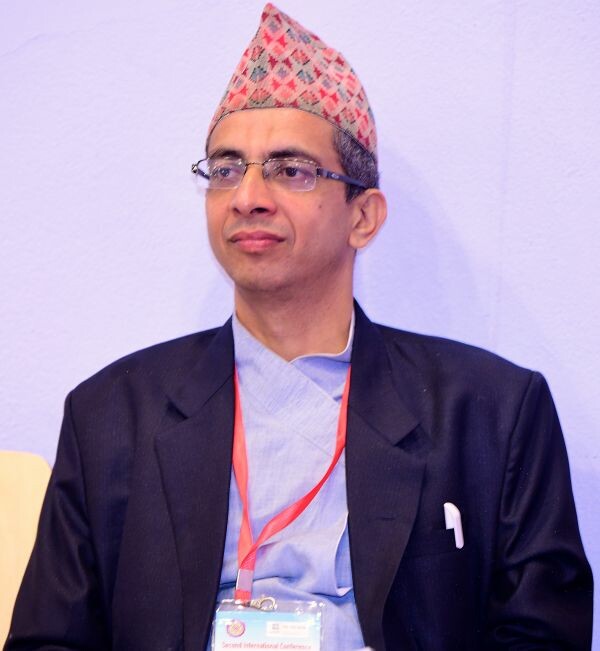 Bal Chandra Luitel. According to my parents, the Hindu priest of my naming ceremony in consultation with my father (who was an astrologer) chose my name as Bal Chandra, the English meaning of these Sanskrit words would be ‘young moon‘. These two words together with my family title, Luitel, which refers to a place in Western Nepal, have signified aspects of me since I started school. Currently, I work at Kathmandu University School of Education as Professor of Mathematics Education. My areas of expertise include transformative learning, cultural studies of mathematics education, integrated education and practitioner research.
 Peter Charles Sinclair Taylor. I have been in academia since 1982, after practising as a science/maths teacher in secondary schools in Australia and the UK and an adult educator in an Indigenous community in Central Australia. For 3 decades I worked at the Science and Mathematics Education Centre, Curtin University, Western Australia. As a postgraduate supervisor/advisor/mentor of many teacher educators from universities in Asia, Africa and the South Pacific, I became deeply attuned to their rich cultural capital, and came to appreciate the pressing need for education systems worldwide to protect and nurture biocultural diversity. This abiding ethical commitment was the driving force behind developing the approach of research as transformative learning, the theme of this book.